
If you love bagels but wish they packed more staying power, these High Protein Cottage Cheese Bagels are exactly what you need. They have a chewy, satisfying texture with a tender crumb, a mild tang from the cottage cheese, and a nutty finish from the whole wheat flour and everything seasoning. From start to finish, you are looking at just 40 minutes of your time, with 15 minutes of active prep.
This recipe is for anyone who wants a high-protein breakfast or snack that actually tastes good and keeps you full. It is a beginner-friendly baking project that delivers 17g of protein per serving without any complicated techniques or specialty ingredients. Whether you are meal prepping for the week or just craving a bagel that fits your macros, this one works.
What are High-Protein Cottage Cheese Bagels?
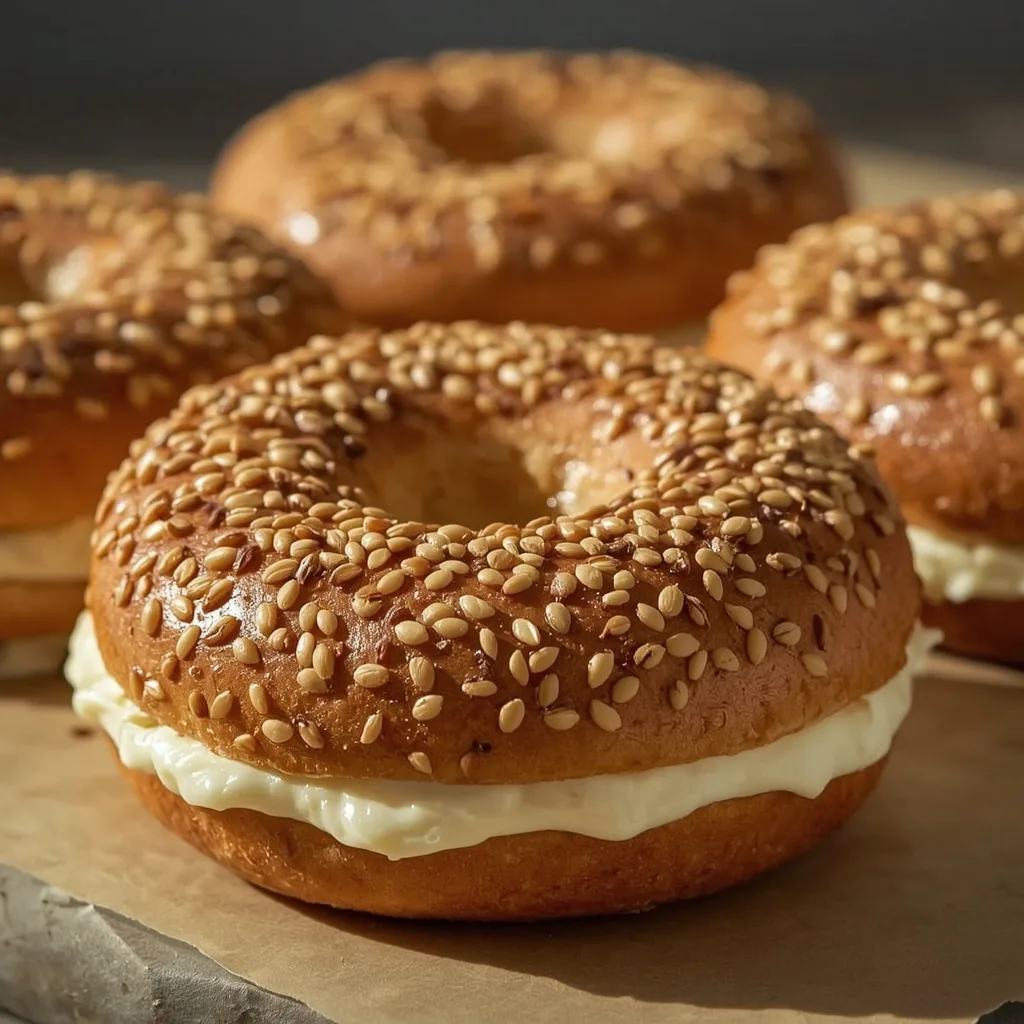
These are a protein-forward twist on a classic bagel, swapping out traditional cream cheese and refined flour for cottage cheese and whole wheat flour. The dough comes together quickly with just a handful of ingredients, and the bagels bake up golden with a soft interior and a slightly crisp exterior. The cottage cheese melts into the dough, leaving behind a subtle tang and a boost of protein that makes these far more satisfying than standard bagels. Bake a batch on Sunday and enjoy them all week long.
Why You’ll Love This Recipe
Here is why these bagels earn a permanent spot in my weekly rotation.
- 17 grams of protein per serving — This is not a light snack. Each bagel delivers a serious protein punch thanks to the cottage cheese and egg, making it a proper meal.
- Ready in 40 minutes — From mixing to cooling, you are done in under an hour. No yeast, no rising, no waiting overnight.
- A chewy, satisfying texture — The whole wheat flour gives these bagels a real bite, and the gentle kneading creates that classic bagel chew without overworking the dough.
- Toasts beautifully every time — Leftover bagels crisp up perfectly in the toaster, holding their shape and developing a lovely crunch on the outside.
- No specialty equipment required — You probably have everything already: a baking sheet, parchment paper, a mixing bowl, and a fork. That is it.
Ingredients Needed to Make High Protein Cottage Cheese Bagels
Eight ingredients, all of them pantry staples or easy finds. Here is what each one does for the dough.
Core Dough Ingredients
- 1 cup full-fat cottage cheese (about 225g) — This is the protein powerhouse. Full-fat gives the best texture; low-fat can make the dough dry. Whisk it well until mostly smooth before adding the flour.
- 1 large egg (50g, for dough) — Binds everything together and adds structure. Use a room-temperature egg for easier mixing.
- 1 1/2 cups whole wheat flour (180g) — The backbone of the dough. Whole wheat brings a nutty flavor and extra fiber. Do not swap for white flour without adjusting liquid.
- 1 teaspoon baking powder (4g) — The leavening agent that creates a soft crumb. Make sure it is fresh for proper rise.
- 1/2 teaspoon kosher salt (3g) — Balances the tang from the cottage cheese and seasons the dough throughout.
For the Topping and Wash
- 1 large egg (50g, for egg wash) — Gives the bagels that glossy, golden-brown crust. Whisk with a teaspoon of water until frothy.
- 1 tablespoon everything bagel seasoning (8g, for topping) — The classic savory finish. Substitute sesame seeds, poppy seeds, and dried garlic flakes if you prefer.
For the Pan
- Nonstick cooking spray or 1 teaspoon vegetable oil (for greasing) — Prevents the bagels from sticking to the parchment. Do not skip this step, even with nonstick paper.
Equipment Needed
You do not need a stand mixer or a bagel board for this recipe. Just a few basics.
- Large baking sheet — A rimmed half-sheet pan works best. It gives you enough room to space the bagels 2 inches apart.
- Parchment paper — Lining the pan prevents sticking and makes cleanup effortless. Spray it lightly after placing it on the sheet.
- Medium mixing bowl — For whisking the wet ingredients and stirring everything together. A glass or stainless steel bowl is fine.
- Rubber spatula — The best tool for folding the dough without overmixing. A wooden spoon works in a pinch.
- Pastry brush — For applying the egg wash evenly. A silicone brush is easiest to clean, but a clean paintbrush or folded paper towel works too.
Instructions to Make High Protein Cottage Cheese Bagels
These steps are straightforward, but a few small details make the difference between a good bagel and a great one. Follow along closely.
Step 1: Preheat and Prep the Pan
Set your oven to 375°F (190°C). Line a large baking sheet with parchment paper and lightly spray it with nonstick cooking spray. This double layer of protection ensures the bagels release cleanly after baking.
Step 2: Whisk the Wet Ingredients
In a medium mixing bowl, combine the full-fat cottage cheese and 1 large egg. Whisk vigorously with a fork until the mixture is mostly smooth, with only very small curds remaining. This step is crucial — large curd lumps lead to uneven pockets in the baked bagels.
Step 3: Add the Dry Ingredients
Add the whole wheat flour, baking powder, and kosher salt to the bowl. Stir with a rubber spatula until a shaggy, slightly sticky dough forms. If the dough seems too dry to come together, add 1 teaspoon of water at a time (up to 1 tablespoon) until it just holds together. Over-wetting yields dense, heavy bagels.
Step 4: Knead Gently
Lightly flour your work surface with about 1 tablespoon of all-purpose flour. Turn the dough out and knead it gently 4-6 times until it forms a cohesive, smooth ball. Do not over-knead — too much handling develops the gluten too far and makes the bagels tough. The dough should feel soft but not tacky.
Step 5: Shape the Bagels
Divide the dough into 4 equal pieces (about 90g each). Roll each piece into a 6-inch-long rope by pressing it against the work surface with your palms, starting from the center and rolling outward. Keep the rope even in thickness for uniform baking.
Step 6: Form the Rings
Bring the ends of each rope together to form a ring, overlapping the tips by about 1/2 inch. Press the overlapping ends firmly with your fingers to seal, then roll the seam gently on the work surface to smooth it. A weak seal will cause the bagels to burst open in the oven.
Step 7: Apply the Egg Wash and Topping
Place the 4 bagels on the prepared baking sheet, spacing them at least 2 inches apart. In a small bowl, beat the remaining egg with 1 teaspoon of water until frothy. Brush the top and sides of each bagel generously with the egg wash — this creates a glossy, golden crust and helps the seeds adhere.
Sprinkle the everything bagel seasoning evenly over the egg-washed bagels, using about 3/4 teaspoon per bagel. Gently press the seeds into the surface so they stick. Let the bagels rest uncovered for 5 minutes at room temperature. This short rest allows the gluten to relax slightly, producing a more tender bite.
Step 8: Bake
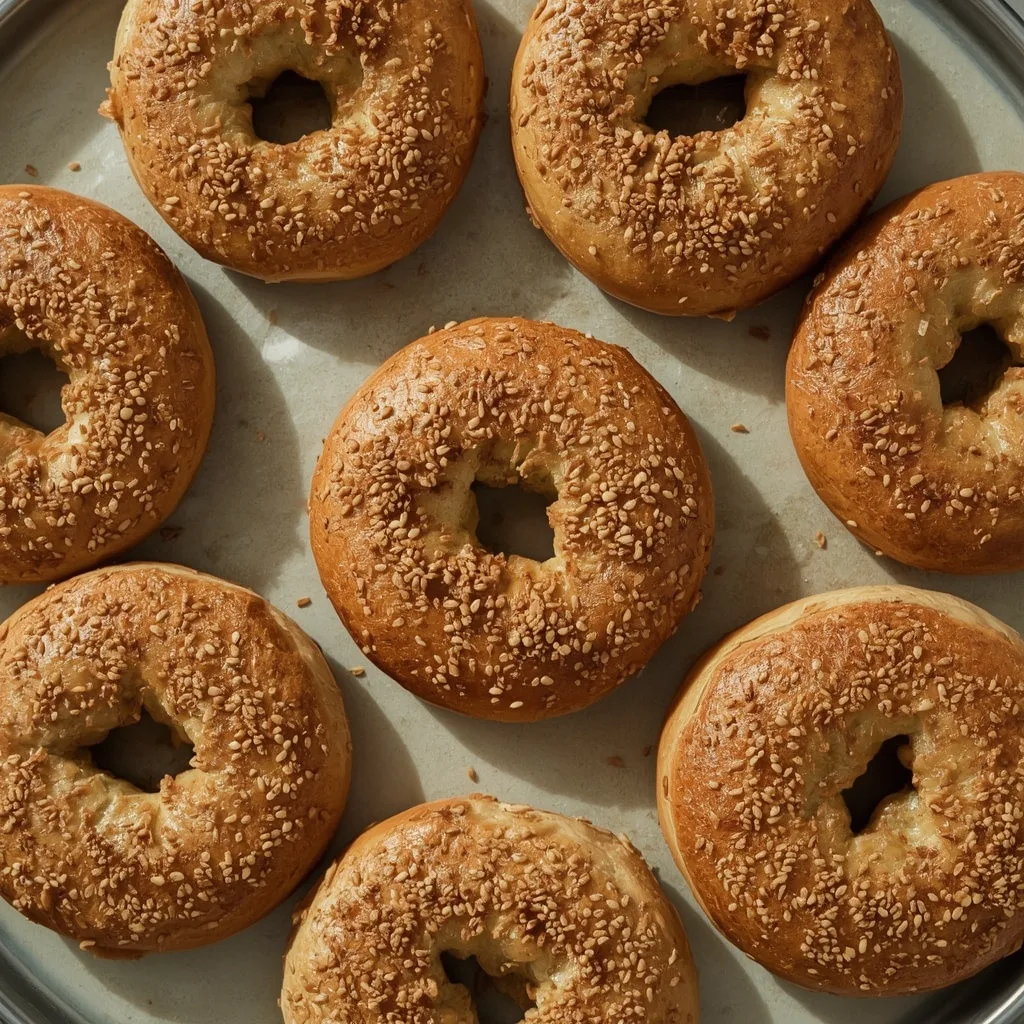
Bake the bagels in the preheated oven for 22-25 minutes, rotating the pan front-to-back halfway through. The bagels are done when they are deep golden brown on top and sound hollow when tapped on the bottom. A toothpick inserted into the thickest part should come out clean.
Step 9: Cool Completely
Remove the baking sheet from the oven and let the bagels cool on the sheet for 5 minutes. Transfer them to a wire rack to cool completely, at least 15 minutes, before slicing. Slicing while warm will compress the crumb and make them gummy. Patience here is rewarded.
What Went Wrong and How I Fixed It
Here are the most common hiccups I ran into the first few times, and exactly how to avoid them.
- Dense, heavy bagels — I added too much water to a dry-looking dough. Now I add water by the teaspoon, stopping the moment the dough holds together. Dry dough is better than wet dough here.
- Bagels burst open at the seam — I did not press the overlapping ends firmly enough. Now I pinch the seal hard, then roll it on the work surface to smooth and reinforce it.
- Seeds fell off during baking — I brushed the egg wash too thinly. A generous, even coat gives the seeds something to grip, and pressing them in gently makes the difference.
- Unevenly baked bagels — I skipped the pan rotation. Setting a timer for 12 minutes and rotating the pan front-to-back ensures even browning without dry edges.
- Gummy interior after slicing — I cut into a warm bagel. Cooling for at least 15 minutes on a wire rack allows the steam to escape and the crumb to set properly.
What Do I Serve With High Protein Cottage Cheese Bagels?
These bagels are versatile enough for breakfast, lunch, or a quick snack. Here are my favorite pairings.
- Smoked salmon and cream cheese — The classic combo. The bagel’s mild tang complements the rich, salty fish perfectly for a satisfying open-faced sandwich.
- Whipped ricotta and honey — A sweeter option. The creamy ricotta and floral honey balance the nutty whole wheat and savory seeds.
- Avocado, tomato, and flaky salt — A fresh, plant-based topping. The avocado’s creaminess and the tomato’s acidity cut through the bagel’s density.
- Scrambled eggs with chives — Double the protein in one meal. Soft, buttery eggs piled on a toasted bagel is a weekend breakfast favorite.
- Turkey, cheddar, and arugula — A hearty lunch option. Layer thinly sliced turkey, sharp cheddar, and peppery arugula between two bagel halves.
- Peanut butter and sliced banana — A filling post-workout snack. The protein from the bagel plus the peanut butter makes this an easy 30g+ protein meal.
Pro Tips to Make Perfect High Protein Cottage Cheese Bagels
These small adjustments take these bagels from good to consistently great.
- Whisk the cottage cheese thoroughly — Large curds create pockets in the dough. A minute of vigorous whisking with a fork breaks them down enough for a uniform crumb.
- Weigh your flour for accuracy — Scooping whole wheat flour can add 20-30g more than the recipe calls for. A kitchen scale gives you consistent results every time.
- Flour your hands, not the dough — If the dough feels sticky, dust your palms with a little flour rather than adding more to the dough. This prevents drying it out.
- Let the bagels rest before baking — That 5-minute rest after shaping is not optional. It relaxes the gluten, giving you a tender bite instead of a tough, rubbery texture.
- Spray the parchment even if it says nonstick — Cottage cheese dough can stick stubbornly. A light spray of cooking oil ensures your bagels lift off cleanly.
- Cool on a wire rack, not the pan — Leaving them on the hot baking sheet traps steam and softens the bottoms. Transferring to a rack keeps the crust crisp.
Variations of High Protein Cottage Cheese Bagels
Once you master the base recipe, these variations keep things interesting.
- Cinnamon raisin — Add 1/2 teaspoon cinnamon and 1/4 cup raisins to the dry ingredients. Omit the everything seasoning and brush with a little honey after baking for a sweet finish.
- Everything bagel with extra protein — Add 1 scoop (30g) unflavored or vanilla protein powder to the dry ingredients, and reduce the whole wheat flour by 2 tablespoons to maintain dough consistency.
- Garlic herb — Mix 1/2 teaspoon dried rosemary, 1/2 teaspoon dried thyme, and 1/4 teaspoon garlic powder into the flour. Top with flaky sea salt instead of everything seasoning.
- Jalapeño cheddar — Fold in 1/4 cup shredded sharp cheddar and 2 tablespoons finely diced pickled jalapeños after the dough comes together. Bake as directed.
- Sesame seed — Replace the everything seasoning with 2 tablespoons toasted sesame seeds. Press them firmly into the egg wash for maximum coverage.
- Plain everything-adjacent — If you do not have everything seasoning, mix 1/2 teaspoon each of sesame seeds, poppy seeds, dried minced garlic, and dried minced onion. It is the same blend without the store-bought label.
How Do I Store High Protein Cottage Cheese Bagels Leftovers?
Proper storage keeps these bagels fresh for days. Here is what works best.
- Room temperature container — Store cooled bagels in an airtight container at room temperature for up to 3 days. Line the container with a paper towel to absorb excess moisture.
- Refrigerator — For longer storage, refrigerate in an airtight bag or container for up to 5 days. The bagels will firm up slightly; toasting restores the texture.
- Freezer — Wrap each bagel tightly in plastic wrap, then place in a freezer-safe bag for up to 3 months. Squeeze out as much air as possible before sealing.
- Slice before freezing — Slice the bagels in half before wrapping. This lets you pop a frozen half directly into the toaster without thawing the whole bagel.
How Do I Reheat High Protein Cottage Cheese Bagels Leftovers?
Reheating brings back the fresh-baked texture. Choose your preferred method.
- Toaster (recommended) — Toast frozen or thawed bagel halves on medium setting for 3-4 minutes. This gives you a crisp exterior and a warm, soft center.
- Oven — Preheat to 350°F (177°C). Wrap the bagel loosely in foil and bake for 8-10 minutes. For a softer exterior, keep the foil on; for a crispier crust, unwrap for the last 3 minutes.
- Air fryer — Air fry at 350°F (177°C) for 3-4 minutes. This method gives the crispiest crust if that is your preference.
- Microwave (quick option) — Microwave a thawed bagel half for 15-20 seconds. The texture will be softer and less crisp, but it works in a pinch.
FAQs
Can I make High Protein Cottage Cheese Bagels gluten-free?
Not with this exact recipe. Whole wheat flour provides the structure and chew. A gluten-free all-purpose blend might work, but the texture will be different. I recommend testing a small batch first.
How long does High Protein Cottage Cheese Bagels last in the fridge?
They stay good for up to 5 days in the refrigerator when stored in an airtight container. The texture firms up, but toasting brings it right back to fresh.
Can I freeze High Protein Cottage Cheese Bagels for later?
Yes. Wrap each bagel tightly in plastic wrap, then place in a freezer bag. They keep well for up to 3 months. Thaw at room temperature for 30 minutes before toasting.
Why are my bagels dense and heavy?
You likely added too much water or over-kneaded the dough. The dough should be slightly sticky but not wet. Knead only 4-6 times, just until smooth. If it feels dry before adding water, trust that.
Can I use low-fat cottage cheese instead of full-fat?
You can, but the bagels will be drier and less tender. Full-fat cottage cheese has more moisture and fat, which gives a better crumb. If you must use low-fat, expect a denser result.
Try These Recipes
- High Protein Cottage Cheese Blueberry Bread
- High Protein Cottage Cheese Banana Bread
- High Protein Cinnamon Roll Protein Muffins
- High Protein Coffee Chia Pudding
- High Protein Blueberry Breakfast Quesadilla
Try These Recipes
Final Words
These High Protein Cottage Cheese Bagels deliver everything I want from a homemade bagel: a chewy bite, a golden crust, and a protein count that actually keeps me full until lunch. The recipe is forgiving once you know the key steps — thorough whisking, gentle kneading, and a proper cool-down before slicing. Give them a try this weekend, and see how easy it is to have a high-protein breakfast ready for the whole week.
PrintHigh Protein Cottage Cheese Bagels
These bagels are a protein-packed twist on the classic, using cottage cheese and whole wheat flour for a satisfying, chewy texture with a tender crumb. Each golden, seeded ring delivers a mild tang from the cottage cheese and a nutty finish from the optional everything seasoning. Perfect for a high-protein breakfast or snack, they toast beautifully and hold up to generous spreads.
- Prep Time: 15
- Cook Time: 25
- Total Time: 40
- Yield: 4 1x
- Category: Breakfast
- Method: Baking
- Cuisine: American
Ingredients
- 1 cup full-fat cottage cheese (about 225g)
- 1 large egg (50g, for dough)
- 1 large egg (50g, for egg wash)
- 1 1/2 cups whole wheat flour (180g)
- 1 teaspoon baking powder (4g)
- 1/2 teaspoon kosher salt (3g)
- 1 tablespoon everything bagel seasoning (8g, for topping), or substitute sesame seeds, poppy seeds, and dried garlic flakes
- Nonstick cooking spray or 1 teaspoon vegetable oil (for greasing)
Instructions
- Preheat your oven to 375°F (190°C). Line a large baking sheet with parchment paper, then lightly spray the paper with nonstick cooking spray to prevent the bagels from sticking.
- In a medium mixing bowl, combine the full-fat cottage cheese and 1 large egg. Whisk vigorously with a fork until the mixture is mostly smooth, with only very small curds remaining. This ensures a uniform dough and prevents lumps in the baked bagels.
- Add the whole wheat flour, baking powder, and kosher salt to the bowl. Stir with a rubber spatula until a shaggy, slightly sticky dough forms. If the dough seems too dry to come together, add 1 teaspoon of water at a time (up to 1 tablespoon) until it just holds together — but avoid over-wetting, which yields dense bagels.
- Lightly flour your work surface with about 1 tablespoon of all-purpose flour. Turn the dough out and knead it gently 4-6 times until it comes into a cohesive, smooth ball. Do not over-knead, or the bagels will become tough. The dough should feel soft but not tacky.
- Divide the dough into 4 equal pieces (about 90g each). Roll each piece into a 6-inch-long rope by pressing it against the work surface with your palms, starting from the center and rolling outwards. Keep the rope even in thickness for uniform baking.
- Bring the ends of each rope together to form a ring, overlapping the tips by about 1/2 inch. Press the overlapping ends firmly with your fingers to seal, then roll the seam gently on the work surface to smooth it. If the seal is not tight, the bagels will burst open in the oven.
- Place the 4 bagels on the prepared baking sheet, spacing them at least 2 inches apart. In a small bowl, beat the remaining egg with 1 teaspoon of water until frothy. Brush the top and sides of each bagel generously with the egg wash — this creates a glossy, golden crust and helps the seeds adhere.
- Sprinkle the everything bagel seasoning evenly over the egg-washed bagels, using about 3/4 teaspoon per bagel. Gently press the seeds into the surface so they stick, then let the bagels rest uncovered for 5 minutes at room temperature. This allows the gluten to relax slightly, producing a more tender bite.
- Bake the bagels in the preheated oven for 22-25 minutes, rotating the pan front-to-back halfway through. The bagels are done when they are deep golden brown on top and sound hollow when tapped on the bottom. A toothpick inserted into the thickest part should come out clean.
- Remove the baking sheet from the oven and let the bagels cool on the sheet for 5 minutes. Transfer them to a wire rack to cool completely, at least 15 minutes, before slicing. Slicing while warm will compress the crumb and make them gummy. Enjoy toasted or as is.
Notes
Store cooled bagels in an airtight container at room temperature for up to 3 days, or refrigerate for 5 days. To freeze, wrap each bagel tightly in plastic wrap and place in a freezer bag for up to 3 months. Reheat from frozen: thaw at room temperature 30 minutes, then toast in a toaster on medium setting (about 3-4 minutes) or in a 350°F (177°C) oven for 8-10 minutes. If you prefer a softer exterior, wrap loosely in foil before oven reheating. For extra protein, add 1 scoop (30g) unflavored or vanilla protein powder to the dry ingredients, reducing the flour by 2 tablespoons to maintain dough consistency.
Nutrition
- Calories: 252
- Sugar: 2g
- Sodium: 510mg
- Saturated Fat: 2g
- Carbohydrates: 34g
- Fiber: 5g
- Protein: 17g
- Cholesterol: 100mg
Keywords: high protein bagels, cottage cheese bagels, protein bagel recipe, healthy bagels, breakfast bagels, homemade bagels, high protein breakfast, easy bagel recipe, whole wheat bagels, everything bagels