
If you have been looking for a bread that is soft, tender, and actually filling, this is it. This High Protein Greek Yogurt Yeast Bread uses full-fat Greek yogurt and an egg to create a rich crumb with a subtle tang, all while packing over 13 grams of protein per serving. The entire process, from mixing to cooling, takes about 2 hours and 35 minutes.
It is an ideal recipe for beginner bakers who want a simple, no-knead-ish loaf that delivers professional results. Whether you need a sturdy base for your morning sandwich or a slice of toast that stays moist for days, this bread fits the bill. The difficulty is intermediate due to the yeast activation, but the steps are forgiving, and the payoff is high.
What is High-Protein Greek Yogurt Yeast Bread?
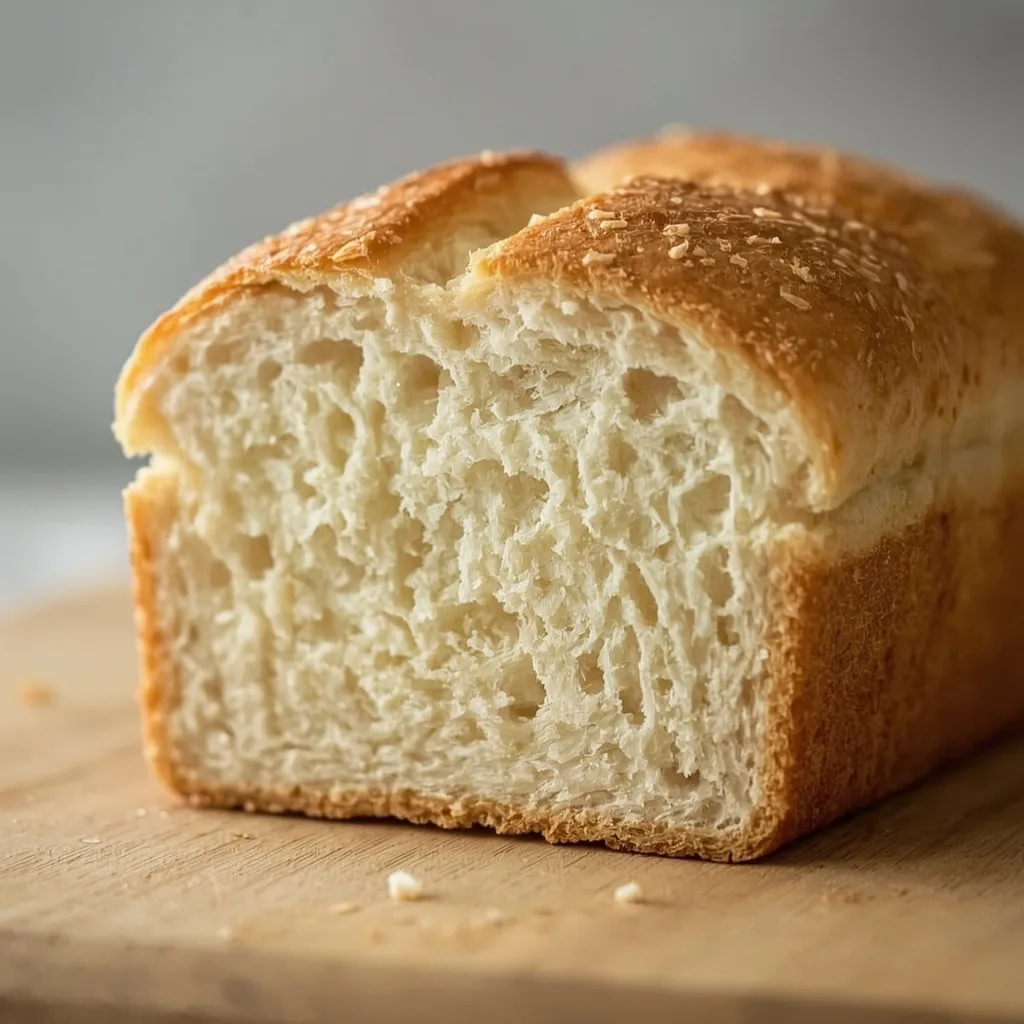
This is a soft, enriched yeast bread where full-fat Greek yogurt replaces most of the traditional milk or water. You combine the yogurt with an egg, a little honey, and butter to build a dough that is slightly sticky but easy to handle. The result is a loaf with a tight, moist crumb and a mild, tangy flavor, similar to a brioche but much leaner and higher in protein. It bakes in about 35 minutes and is perfect for sandwiches, toast, or French toast.
Why You’ll Love This Recipe
Here is what makes this bread stand out from your standard loaf.
- High protein content — Each serving delivers 13g of protein thanks to the Greek yogurt and egg, making it a genuinely filling bread that supports a high-protein diet.
- No complicated kneading required — The dough is soft and sticky, meaning you simply stir it together rather than working it on a counter. This method is approachable for anyone who finds traditional bread kneading intimidating.
- Stays fresh for days — The moisture from the yogurt keeps the crumb soft and tender at room temperature for up to four days. You do not have to eat the whole loaf in one sitting.
- Perfect for savory and sweet uses — The mild tang pairs beautifully with everything from deli meats and cheese to jam and butter. It is a true all-purpose bread.
- Simple ingredient list — You only need nine ingredients, most of which you probably already have. No specialty flours or hard-to-find items required.
Ingredients Needed to Make High-Protein Greek Yogurt Yeast Bread
Using the right ingredients in the correct state is key here. Here is what you need and why each one matters.
Wet Ingredients and Yeast
- 1 cup full-fat Greek yogurt (not nonfat; 20g protein) — This provides the bulk of the moisture and protein. Nonfat yogurt has too much water and will make the dough slack. Let it sit at room temperature for 15 minutes before starting, so it does not chill the yeast.
- 1 large egg (6g protein) — Adds richness and structure to the crumb. It also helps create a tender golden crust.
- 2 tablespoons warm water (105-110°F / 40-43°C) — The water activates the yeast. Too hot kills the yeast; too cold slows it down. Use a thermometer here for consistent results.
- 1 packet (2 1/4 teaspoons) active dry yeast — The leavening agent that makes the bread rise. Make sure it is within its expiration date.
- 1 tablespoon honey — Feeds the yeast and adds a hint of sweetness that balances the tang of the yogurt.
- 2 tablespoons unsalted butter, melted — Adds fat for a soft, rich crumb. Melted butter incorporates more evenly than softened butter here.
Dry Ingredients
- 1 1/2 cups all-purpose flour (about 200g; 13.2g protein total) — All-purpose flour works perfectly. Do not swap in bread flour without adjusting the liquid, as bread flour absorbs more water and will make the dough stiff.
- 1/2 teaspoon kosher salt — Controls yeast activity and enhances the overall flavor. Use kosher or fine sea salt, not iodized table salt, which can taste harsh.
For the Pan
- nonstick cooking spray or additional butter for the pan — Prevents sticking. A standard 8×4-inch loaf pan works best; you can also use a 9×5-inch pan, though the loaf will be shorter.
Equipment Needed
You do not need any special baking gear. Here is what you will need.
- Large mixing bowl — For combining the wet and dry ingredients. A glass or stainless steel bowl is fine; plastic can hold onto odors.
- Small bowl — For proofing the yeast. A clear glass bowl lets you see the foam easily.
- 8×4-inch loaf pan — The ideal size for this dough. A 9×5-inch pan will work but creates a shorter, wider loaf that bakes a bit faster.
- Plastic wrap or a damp kitchen towel — For covering the dough during the rises. A damp towel prevents the surface from drying out without trapping condensation.
- Wire cooling rack — Allows air to circulate around the loaf, preventing a soggy bottom. If you do not have one, use an overturned baking sheet with gaps.
Instructions to Make High-Protein Greek Yogurt Yeast Bread
Follow these steps in order for a loaf that rises well and bakes evenly. Each stage is straightforward, but the timing of the yeast activation is critical.
Step 1: Activate the Yeast
In a small bowl, combine the warm water (105-110°F / 40-43°C) and honey. Sprinkle the yeast on top and let it sit for 5–7 minutes until foamy. If the mixture does not foam, the yeast may be expired, or the water was too hot — start over with fresh yeast and cooler water. This step confirms your yeast is alive and active before you commit any other ingredients.
Step 2: Mix the Wet Ingredients
In a large mixing bowl, whisk together the Greek yogurt, egg, and melted butter until smooth. The yogurt should be at room temperature (take it out 15 minutes ahead) to avoid cooling the batter and slowing yeast activity. A smooth base here makes the final dough more uniform.
Step 3: Combine the Yeast with the Wet Ingredients
Pour the foamy yeast mixture into the yogurt mixture and stir gently with a spatula to combine. The batter will look slightly lumpy — that is fine. Do not over-stir; you are just incorporating the yeast liquid evenly.
Step 4: Add the Dry Ingredients
In a separate bowl, whisk the flour and kosher salt together. Add the dry ingredients to the wet ingredients in three additions, stirring with a wooden spoon or spatula after each addition until just combined. Do not overmix; you want a soft, slightly sticky dough. Overworking the dough at this stage develops too much gluten, making the bread tough.
Step 5: First Rise
Cover the bowl with plastic wrap or a damp kitchen towel and let the dough rise in a warm (75-80°F / 24-27°C), draft-free spot for 1 hour, or until nearly doubled in size. If your kitchen is cool, place the bowl in an oven with the light on (no heat) or over a water bath set to low. A consistent temperature here is more important than a high one.
Step 6: Prepare the Pan and Preheat
Preheat your oven to 350°F / 177°C. Grease an 8×4-inch loaf pan with nonstick cooking spray or butter. Getting the pan ready now ensures the dough goes into the oven immediately after the final rise.
Step 7: Shape the Dough
After the first rise, punch down the dough gently by folding it over itself 2–3 times with a spatula. Transfer the dough to the prepared loaf pan and smooth the top with a wet spatula or your fingers. It should fill about 2/3 of the pan. A wet spatula prevents sticking and gives a smooth surface.
Step 8: Second Rise
Cover the pan loosely with oiled plastic wrap and let it rise again for 30–40 minutes, until the dough crests just above the rim of the pan. The final rise should be slower so the bread gets a finer crumb. If it rises too quickly, the crumb will be coarse with large air pockets.
Step 9: Bake the Bread
Place the pan on the center rack of the preheated oven. Bake for 30–35 minutes, until the top is deep golden brown and a skewer inserted into the center comes out clean. If the top browns too quickly (after 20 minutes), tent loosely with foil. The internal temperature should reach about 200°F / 93°C for a fully baked loaf.
Step 10: Cool the Bread
Remove the bread from the oven and let it cool in the pan on a wire rack for 10 minutes. Then turn it out onto the rack to cool completely before slicing — at least 1 hour. Slicing while warm will compress the crumb and make it gummy. Patience here rewards you with clean, even slices.
What Went Wrong and How I Fixed It
Baking with yeast always has a few potential pitfalls. Here is what tripped me up the first few times and how to avoid each one.
- Bread did not rise enough — Your yeast was likely dead, or the water was too hot. Always proof the yeast first for 5-7 minutes. If it does not foam, toss it and start over with a fresh packet.
- Dough was too sticky to shape — The most common cause is using nonfat Greek yogurt, which has more water than full-fat. Stick with full-fat yogurt and do not add extra flour beyond the recipe amount.
- Crumb was dense and heavy — Either the dough was overmixed during the flour addition, or the second rise was too short. Mix only until combined and give the final rise the full 30-40 minutes.
- The top browned too quickly — Oven temperatures vary. After 20 minutes of baking, if the top looks very dark, tent the pan loosely with foil for the remaining time. This protects the crust while the center finishes.
- Bread was gummy inside after cooling — You sliced it while still warm. Let the loaf cool completely for at least 1 hour on a wire rack. The internal steam needs time to redistribute.
What Do I Serve With High-Protein Greek Yogurt Yeast Bread?
This bread is neutral enough to pair with almost anything. Here are some ideas to get you started.
- Classic avocado toast — Smash half an avocado over a thick slice, top with salt, pepper, and a pinch of red pepper flakes. The tangy bread complements the creamy avocado beautifully.
- Grilled cheese sandwich — The sturdy crumb holds up to melting cheese without turning soggy. Use cheddar or gruyère and cook on medium heat until golden.
- Bowl of hearty soup — A slice of this bread is perfect for dipping into tomato soup, lentil stew, or chicken noodle soup. It absorbs liquid without falling apart instantly.
- Smoked salmon and cream cheese — Spread a thin layer of cream cheese, top with smoked salmon, capers, and fresh dill. The slight tang of the bread mirrors the sour notes in the cream cheese.
- Drizzle of honey and sea salt — For a simple dessert or snack, toast a slice, drizzle with honey, and finish with a flaky sea salt. The contrast of sweet and salty works beautifully.
Pro Tips to Make Perfect High Protein Greek Yogurt Yeast Bread
These small adjustments make a big difference between a good loaf and an exceptional one.
- Bring the yogurt to room temperature — Cold yogurt straight from the fridge will slow down the yeast and lengthen the rise times. Pull it out 15 minutes before mixing.
- Use a kitchen scale for the flour — Volume measurements are inconsistent. Weighing the flour at exactly 200g ensures the dough is not too dry or too wet.
- Grease the plastic wrap for the second rise — Oiling the plastic wrap prevents it from sticking to the dough when you remove it. Use a light spray of cooking oil on the wrap before covering.
- Test doneness with a skewer, not just color — The top can look golden brown while the center is still raw. Insert a wooden skewer into the center; it should come out clean with no wet batter.
- Cool the bread completely before storing — If you wrap or bag the bread while it is still warm, condensation will make the crust soft and the crumb gummy. Let it cool fully first.
- Add an egg wash for a glossy crust — Before baking, brush the top with a beaten egg mixed with 1 tablespoon of water. This gives the crust a shiny, professional finish.
Variations of High Protein Greek Yogurt Yeast Bread
Once you have the basic recipe down, try these variations to change the flavor and texture.
- Cinnamon Swirl — After shaping the dough for the pan, sprinkle a mixture of 2 tablespoons sugar and 1 teaspoon cinnamon over the surface, then fold the dough over itself twice. This creates a subtle swirl throughout the loaf.
- Everything Bagel Topping — Before the second rise, spray the top of the dough lightly with water and sprinkle with a mix of sesame seeds, poppy seeds, dried garlic, and dried onion flakes. This gives a savory, crunchy crust.
- Seeded Seeded Loaf — Add 2 tablespoons each of sunflower seeds and pumpkin seeds to the dry ingredients. The seeds add texture, healthy fats, and an extra 4g of protein per serving.
- Herb and Garlic Bread — Mix 1 teaspoon dried rosemary, 1 teaspoon dried thyme, and 1/4 teaspoon garlic powder into the flour. The herbs infuse the crumb with a savory aroma that pairs with roasted meats.
- Higher-Protein Version — Add 1 scoop (25–30g) unflavored whey or casein protein powder in with the flour and increase the water by 1 tablespoon. The crumb will be denser but the protein jumps to about 18g per serving.
How Do I Store High Protein Greek Yogurt Yeast Bread Leftovers?
Proper storage keeps this bread fresh and prevents it from drying out or molding.
- Room temperature in foil — Wrap the cooled loaf tightly in aluminum foil or beeswax wrap. Store at room temperature for up to 4 days. Keep it away from direct sunlight or heat sources.
- Freeze for long-term storage — Slice the loaf first, then place the slices in a zip-top freezer bag. Squeeze out as much air as possible before sealing. Freeze for up to 3 months.
- Refrigerate only if necessary — Bread tends to dry out faster in the fridge. If you live in a very humid climate, refrigerate in a sealed bag for up to 5 days, but expect a slightly firmer crumb.
- Use a bread box for optimal freshness — A bread box with ventilation holes balances humidity and airflow. This is the best method for keeping the crust crisp and the inside soft.
How Do I Reheat High Protein Greek Yogurt Yeast Bread Leftovers?
Reheating can restore the crust and warm the crumb, but method matters.
- Toaster or toaster oven — Toast slices at 350°F / 177°C for 3–5 minutes, or in a standard toaster until golden brown. This method crisps the exterior while keeping the inside soft.
- Oven method for a whole slice — Place slices directly on the oven rack at 300°F / 150°C for 5–7 minutes. This gently warms the bread without drying it out, perfect for serving with butter.
- Microwave method (quick only) — Wrap a slice in a damp paper towel and microwave for 15–20 seconds. The steam softens the bread, but the crust will lose its crunch. Best if you are making a sandwich that will be toasted anyway.
FAQs
Can I use nonfat Greek yogurt instead of full-fat?
You can, but the bread will be less tender and more prone to drying out. Nonfat yogurt has more water, which can make the dough sticky and harder to shape. If you must use it, reduce the warm water by 1 tablespoon to compensate.
How long does High Protein Greek Yogurt Yeast Bread last in the fridge?
Stored in a sealed bag, it will stay good for up to 5 days in the refrigerator. Keep in mind that refrigeration speeds up staling, so the crumb will become firmer over time. Toasting revives the texture nicely.
Can I freeze High Protein Greek Yogurt Yeast Bread?
Yes, absolutely. Slice the loaf before freezing so you can grab individual slices as needed. Store in a zip-top freezer bag for up to 3 months. Thaw at room temperature or toast directly from frozen.
My dough was very sticky after mixing. Is that normal?
Yes, this dough is intentionally soft and slightly sticky. Do not be tempted to add more flour. The stickiness comes from the high moisture content of the yogurt, and it will become more manageable as the dough rests and rises.
Why did my bread have a strong yeast flavor?
This usually happens if the dough rose for too long or in a very warm spot. The yeast over-ferments and produces off-flavors. Stick to the 1-hour first rise and the 30-40 minute second rise at the recommended temperature range.
Try These Recipes
- High Protein Gingerbread Overnight Oats
- High Protein Granola Bars
- High Protein Egg Biscuits with Sun Dried Tomatoes and Spinach
- High Protein Creamy Brownie Batter Overnight Oats
- High Protein Cottage Cheese and Spinach Crustless Quiche
Try These Recipes
Final Words
This High Protein Greek Yogurt Yeast Bread is one of those recipes that proves you do not have to spend hours kneading to get a great loaf. The yogurt does the heavy lifting for both protein and tenderness, while the simple method keeps things approachable. Give it a try for your next sandwich or breakfast toast, and let me know how it turns out. I think you will be pleasantly surprised by how easy it is.
PrintHigh Protein Greek Yogurt Yeast Bread
This soft and tender yeast bread gets a major protein boost from full-fat Greek yogurt, creating a slightly tangy, rich crumb that stays moist for days. Perfect for sandwiches or toast, each slice packs over 9 grams of protein thanks to the yogurt and egg enrichment. A simple, no-knead-ish method makes this accessible for beginner bakers while delivering professional-quality texture.
- Prep Time: 15
- Cook Time: 35
- Total Time: 155
- Yield: 4 1x
- Category: Bread
- Method: Baking
- Cuisine: American
Ingredients
- 1 cup full-fat Greek yogurt (not nonfat; 20g protein)
- 1 large egg (6g protein)
- 2 tablespoons warm water (105-110°F / 40-43°C)
- 1 packet (2 1/4 teaspoons) active dry yeast
- 1 tablespoon honey
- 2 tablespoons unsalted butter, melted
- 1 1/2 cups all-purpose flour (about 200g; 13.2g protein total)
- 1/2 teaspoon kosher salt
- nonstick cooking spray or additional butter for pan
Instructions
- In a small bowl, combine the warm water (105-110°F / 40-43°C) and honey. Sprinkle the yeast on top and let sit for 5–7 minutes until foamy. If the mixture does not foam, the yeast may be expired or the water too hot — start over with fresh yeast and cooler water. This step confirms your yeast is alive and active.
- In a large mixing bowl, whisk together the Greek yogurt, egg, and melted butter until smooth. The yogurt should be at room temperature (take it out 15 minutes ahead) to avoid cooling the batter and slowing yeast activity.
- Pour the foamy yeast mixture into the yogurt mixture and stir gently with a spatula to combine. The batter will look slightly lumpy — that’s fine.
- In a separate bowl, whisk the flour and kosher salt together. Add the dry ingredients to the wet ingredients in three additions, stirring with a wooden spoon or spatula after each addition until just combined. Do not overmix; you want a soft, slightly sticky dough.
- Cover the bowl with plastic wrap or a damp kitchen towel and let the dough rise in a warm (75-80°F / 24-27°C), draft-free spot for 1 hour, or until nearly doubled in size. If your kitchen is cool, place the bowl in an oven with the light on (no heat) or over a water bath set to low.
- Preheat your oven to 350°F / 177°C. Grease an 8×4-inch loaf pan with nonstick cooking spray or butter.
- After the first rise, punch down the dough gently by folding it over itself 2–3 times with a spatula. Transfer the dough to the prepared loaf pan and smooth the top with a wet spatula or your fingers. It should fill about 2/3 of the pan.
- Cover the pan loosely with oiled plastic wrap and let it rise again for 30–40 minutes, until the dough crests just above the rim of the pan. The final rise should be slower so the bread gets a finer crumb.
- Place the pan on the center rack of the preheated oven. Bake for 30–35 minutes, until the top is deep golden brown and a skewer inserted into the center comes out clean. If the top browns too quickly (after 20 minutes), tent loosely with foil.
- Remove the bread from the oven and let it cool in the pan on a wire rack for 10 minutes. Then turn it out onto the rack to cool completely before slicing — at least 1 hour. Slicing while warm will compress the crumb and make it gummy.
Notes
Store the bread wrapped in foil or beeswax wrap at room temperature for up to 4 days. For longer storage, slice and freeze in a zip-top bag for up to 3 months. To reheat, toast slices at 350°F / 177°C for 3–5 minutes, or in a toaster until golden. For a higher-protein version, add 1 scoop (25–30g) unflavored whey or casein protein powder in with the flour and increase the water by 1 tablespoon, but note the crumb will be denser. This bread is excellent for French toast or grilled cheese.
Nutrition
- Calories: 302
- Sugar: 7g
- Sodium: 320mg
- Saturated Fat: 5g
- Carbohydrates: 38g
- Fiber: 1.5g
- Protein: 13g
- Cholesterol: 75mg
Keywords: high protein bread, Greek yogurt bread, yeast bread, high protein yeast bread, homemade bread, yogurt bread recipe, soft sandwich bread, enriched bread, high protein baking, healthy bread