
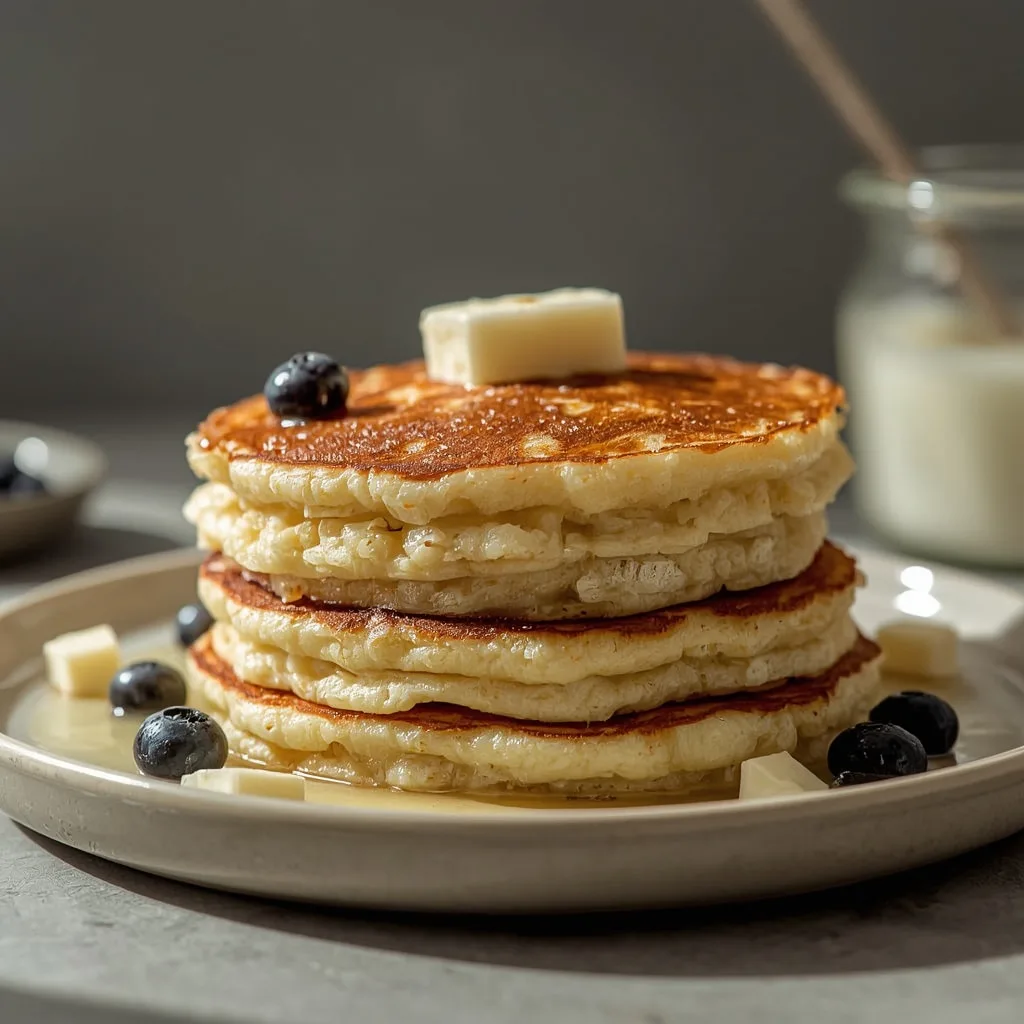
If you are looking for a breakfast that actually keeps you full until lunch, these High-Protein Cottage Cheese Hot Cakes are the answer. They are light, fluffy, and have those crisp golden edges you crave, all while packing a serious protein punch. In just 22 minutes, you can have a stack of 8-9 hot cakes ready to go.
This recipe is designed for real mornings—busy weekdays or lazy weekends. It is a beginner-friendly stovetop recipe that feels special but requires zero fancy skills. You get 28g of protein per serving from simple ingredients like cottage cheese, eggs, and oat flour, which makes this as satisfying as it is delicious.
What are High-Protein Cottage Cheese Hot Cakes?
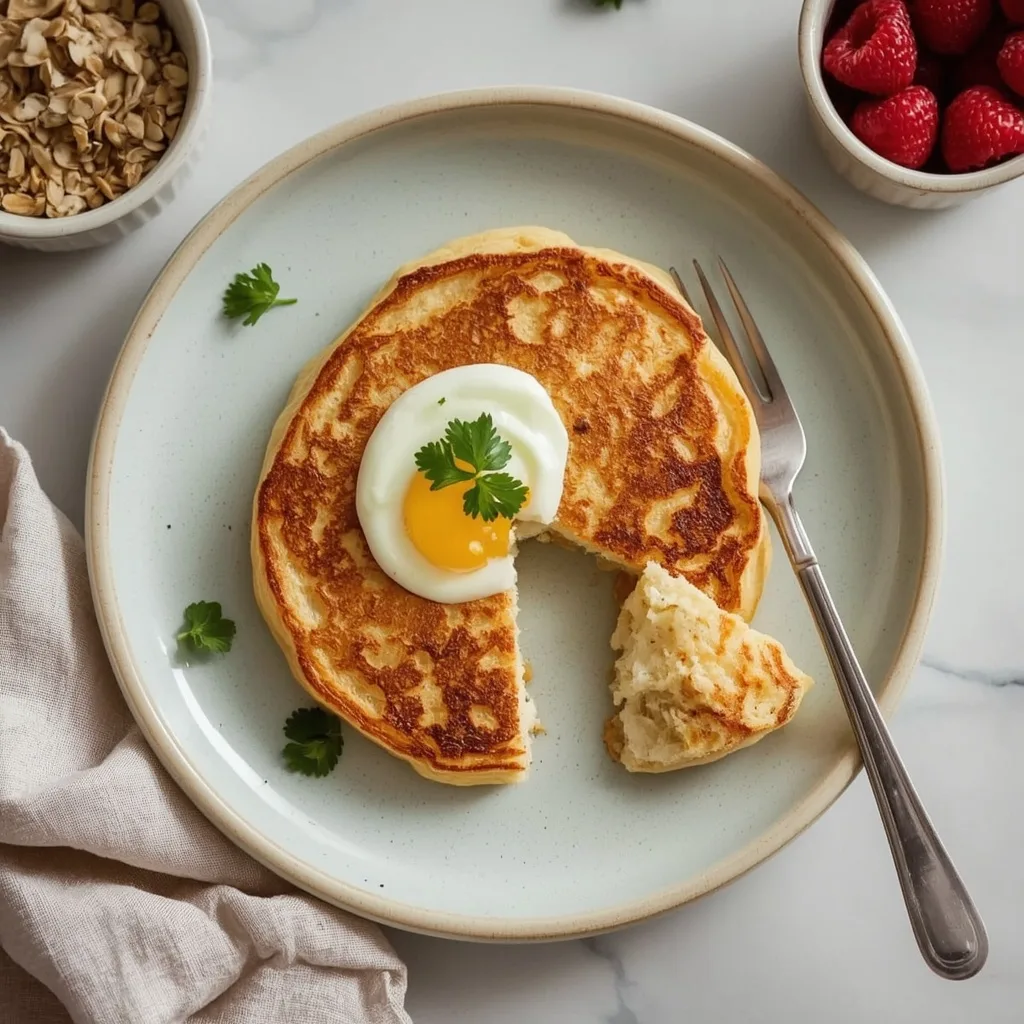
These are stovetop pancakes made by blending cottage cheese, eggs, and oat flour into a smooth, pourable batter. The result is a tender, custard-like interior with a lightly crisp, golden-brown exterior. Think of them as the protein-packed cousin of a classic pancake, with a subtle warmth from cinnamon and vanilla. They are perfect for a quick breakfast or a post-workout refuel.
Why You’ll Love This Recipe
Here is why this recipe earns a permanent spot in your breakfast rotation.
- Exceptional protein content — Each serving delivers 28g of protein thanks to cottage cheese, eggs, and the yogurt topping. This keeps hunger at bay for hours.
- Incredibly light texture — Blending the batter until smooth creates a fluffy, almost soufflé-like interior. No dense, gummy pancakes here.
- Simple pantry ingredients — You only need 8 base ingredients, most of which you probably already have. No specialty flours or complicated steps.
- Quick to make — From blender to plate in under 25 minutes. A 3-5 minute batter rest does most of the work for you.
- Versatile serving options — Top them sweet with berries and maple syrup, or go savory with avocado and a fried egg. The flavor base works both ways.
Ingredients Needed to Make High Protein Cottage Cheese Hot Cakes
Each ingredient plays a specific role here. Using the right type and measurement makes the difference between fluffy hot cakes and a flat disappointment.
Base Ingredients
- 1 cup (227g) full-fat cottage cheese (4% milkfat) — This is the protein backbone and provides moisture. Full-fat gives the best creamy texture; low-fat makes the batter too thin.
- 4 large eggs (50g each) — Eggs bind everything together and create structure. They also add lift and richness.
- 1/2 cup (60g) oat flour (certified gluten-free if needed) — Oat flour adds a mild, slightly sweet flavor and tender crumb. It hydrates quickly, so the 3-5 minute rest is critical.
Flavor and Leavening
- 1/2 tsp vanilla extract — A small amount that rounds out the eggy flavor and adds warmth. Pure extract tastes cleaner than imitation.
- 1/4 tsp ground cinnamon — Gives a subtle spice note without overpowering. You can double this if you love cinnamon.
- 1/4 tsp kosher salt — Balances sweetness and enhances the dairy flavors. Do not skip it.
- 1/2 tsp baking powder — This provides the fluffiness. Make sure it is fresh—old baking powder will give flat hot cakes.
For Cooking
- 2 tbsp (30g) unsalted butter, divided — Butter adds flavor and helps achieve those golden-brown edges. You will use 1 tablespoon per batch.
For Serving (Optional but Recommended)
- 1 cup (240g) plain Greek yogurt (full-fat) — Adds 12g more protein per serving plus a tangy contrast to the sweet cakes.
- 1 cup (150g) mixed fresh berries — Fresh berries provide brightness and antioxidants. Frozen berries work too, but thaw and pat them dry first to avoid watering down the yogurt.
- 2 tbsp (30ml) pure maple syrup — A drizzle adds just enough sweetness. Use it sparingly—the hot cakes are flavorful on their own.
Equipment Needed
You probably have most of these already. Here is what makes the process smooth.
- Blender (Vitamix or standard) — Essential for a silky-smooth batter with no curds. A food processor works in a pinch but may leave small lumps.
- Large nonstick skillet (12-inch) or griddle — Nonstick is crucial here because the batter is egg-heavy and can stick. A well-seasoned cast iron also works if you use enough butter.
- Thin, flexible spatula — A thin metal or silicone spatula slides under the hot cakes easily without tearing them. Avoid thick plastic spatulas.
- 1/4-cup measure — This gives consistent 4-inch rounds every time. Using a larger scoop makes them harder to flip.
- Baking sheet (if keeping warm) — Holds cooked hot cakes in a single layer in a 200°F oven for up to 15 minutes without drying them out.
Instructions to Make High Protein Cottage Cheese Hot Cakes
Follow these steps in order, and you will get perfect results on the first try. The key is not rushing the rest time or the pan preheating.
Step 1: Blend the Batter
In your blender, combine 1 cup full-fat cottage cheese, 4 large eggs, 1/2 cup oat flour, 1/2 tsp vanilla extract, 1/4 tsp ground cinnamon, 1/4 tsp kosher salt, and 1/2 tsp baking powder. Blend on high for 20-30 seconds until the batter is completely smooth and no curds remain. The batter should be thin enough to pour but not watery—if it looks too runny, add 1 tablespoon more oat flour and blend again.
Step 2: Rest the Batter and Heat the Pan
Pour the batter into a bowl or measuring cup and let it rest for 3-5 minutes. This allows the oat flour to hydrate fully, which ensures tender hot cakes instead of a gritty texture. Meanwhile, place your nonstick skillet or griddle over medium heat. Test the heat by flicking a drop of water—it should sizzle and evaporate within 2 seconds. If it evaporates instantly, the pan is too hot.
Step 3: Cook the First Batch
Add 1 tablespoon of unsalted butter to the hot pan and swirl to coat. The butter should foam gently, then subside. If it turns dark brown immediately, reduce the heat slightly and wipe the pan clean before continuing. Pour the batter using a 1/4-cup measure (about 60ml per hot cake), pouring slowly in a single spot so the batter spreads naturally into a 4-inch round. Leave at least 2 inches between each hot cake—do not overcrowd. This batch yields 8-9 hot cakes total, so cook in 2-3 batches.
Step 4: Flip and Finish
Cook for 2-3 minutes on the first side, until the edges look set and small bubbles appear on the surface. The bottom should be deep golden brown—lift a corner gently with your thin spatula to check. If it is pale, cook 30 seconds more. Flip carefully using the thin spatula, then cook for an additional 1-2 minutes on the second side, until golden brown and the hot cake springs back lightly when pressed in the center. Transfer to a plate and tent loosely with foil. Repeat with the remaining batter and remaining 1 tablespoon butter.
Step 5: Assemble and Serve
Divide the hot cakes among 4 plates. Top each serving with 1/4 cup Greek yogurt, scatter about 1/4 cup mixed berries on top, and drizzle with 1/2 tablespoon maple syrup if desired. Serve immediately while hot. For optimal texture, eat them fresh—they will soften as they sit. If cooking for a crowd, keep them warm in a 200°F / 93°C oven on a baking sheet in a single layer for up to 15 minutes.
What Went Wrong and How I Fixed It
Even simple recipes have a few tricky points. Here is what tripped me up the first few times.
- Batter was too thin and spread into a puddle — The cottage cheese you used might have been too watery. Use full-fat 4% milkfat cottage cheese, and do not drain it. If it still seems thin after blending, add 1 tablespoon of oat flour.
- Hot cakes stuck to the pan and tore when flipping — Your pan was not hot enough, or you did not use enough butter. The butter should foam and coat the entire surface. Preheating the pan properly on medium heat is non-negotiable.
- First side burned before the center cooked through — The heat was too high. Reduce to medium-low after the first batch, and wipe out any burnt butter before adding fresh butter and more batter.
- Hot cakes came out dense and flat — Old baking powder is the most common culprit. Also, skipping the 3-5 minute rest means the oat flour does not hydrate, leading to a dense texture.
- Gritty or grainy texture — You did not blend long enough, or you used oat flour that was not finely ground. Blend for the full 20-30 seconds and check for smoothness before resting.
What Do I Serve With High Protein Cottage Cheese Hot Cakes?
These hot cakes are versatile enough to go sweet or savory. Here are my favorite pairings.
- Fresh fruit and yogurt — The classic sweet option. Berries, sliced banana, or diced mango add natural sweetness and a fresh contrast to the warm cakes.
- Savory avocado and eggs — Skip the maple syrup and top with sliced avocado, a fried egg, and a sprinkle of red pepper flakes. This turns breakfast into a full meal.
- Nut butter and sliced apple — Spread almond or peanut butter on each hot cake and top with thin apple slices for crunch and healthy fats. A drizzle of honey works well here.
- Smoked salmon and cream cheese — Go completely savory with a thin layer of cream cheese, smoked salmon, capers, and fresh dill. It is surprisingly good and adds even more protein.
- Warm compote or jam — Simmer frozen berries with a splash of water and a teaspoon of maple syrup for a quick compote. It adds moisture and flavor without extra sugar.
Pro Tips to Make Perfect High Protein Cottage Cheese Hot Cakes
These small adjustments make a big difference in the final texture and ease of cooking.
- Blend until truly smooth — Stop only when no white curds remain visible. Any remaining cottage cheese lumps will turn into dense, wet spots in the cooked hot cakes.
- Rest the batter exactly 3-5 minutes — This is not optional. Oat flour absorbs liquid slowly, and skipping the rest leads to a gummy, undercooked interior.
- Use medium heat, not high — High heat burns the butter and the outside of the hot cake while leaving the inside raw. Medium heat gives you time to develop that golden crust.
- Wipe the pan between batches — After the first batch, the pan will have browned butter residue. Wipe it clean with a paper towel, add fresh butter, and continue. This prevents burnt-tasting hot cakes.
- Flip with confidence and speed — Slide the spatula fully under the hot cake, then flip in one quick motion. Hesitating can cause the hot cake to fold over or tear.
- Keep cooked hot cakes in a warm oven — Place them on a baking sheet in a single layer in a 200°F oven. Stacking them traps steam and makes them soggy.
- Add protein powder for even more protein — If you want to boost protein beyond 28g, add 1 scoop (30g) unflavored or vanilla protein powder to the blender. Increase blending time to 30 seconds and add 2 tablespoons of milk if the batter thickens too much.
Variations of High Protein Cottage Cheese Hot Cakes
Once you have the base down, these variations keep the recipe from getting boring.
- Chocolate chip hot cakes — Fold 1/4 cup dark chocolate chips into the batter after blending. The chips melt into pockets of richness.
- Lemon blueberry hot cakes — Add 1 tablespoon lemon zest to the blender and fold 1/2 cup fresh blueberries into the batter. The citrus cuts through the richness.
- Pumpkin spice hot cakes — Replace 2 tablespoons of oat flour with 2 tablespoons of pumpkin puree, and add 1/2 teaspoon pumpkin pie spice. This works best in fall.
- Savory cheddar and chive hot cakes — Omit the vanilla and cinnamon. Fold in 1/4 cup shredded sharp cheddar and 2 tablespoons chopped fresh chives into the batter. Serve with sour cream.
- Banana oat hot cakes — Reduce the oat flour by 2 tablespoons and add 1/2 medium ripe banana to the blender. The banana adds natural sweetness and moisture.
How Do I Store High Protein Cottage Cheese Hot Cakes Leftovers?
Leftovers store well, but the texture changes slightly. Here is how to keep them at their best.
- Refrigerate in an airtight container — Store leftover hot cakes (without any toppings) in a sealed container for up to 3 days. Place a piece of parchment paper between layers so they do not stick together.
- Freeze on a baking sheet first — Arrange cooled hot cakes in a single layer on a baking sheet and freeze for 1 hour. This prevents them from freezing into a solid block.
- Transfer frozen hot cakes to a freezer bag — After the initial freeze, move them to a labeled freezer bag. Squeeze out all the air before sealing. They stay good for up to 1 month.
- Do not refrigerate with toppings — Always store hot cakes plain. Berries and yogurt release moisture that turns the hot cakes mushy within hours.
- Reheat from frozen or thawed — You can reheat directly from frozen using a toaster or oven. Thawing in the fridge overnight is optional but makes reheating faster.
How Do I Reheat High Protein Cottage Cheese Hot Cakes Leftovers?
The method you choose changes the texture significantly. Pick the one that fits your morning.
- Toaster or toaster oven (best texture) — Toast frozen or thawed hot cakes at 350°F / 177°C for 5-7 minutes. They come out crisp on the edges and soft inside. Do not use the dark toast setting.
- Microwave at 50% power (fastest) — Place hot cakes on a microwave-safe plate and heat at 50% power for 45-60 seconds. Full power makes them rubbery and tough.
- Nonstick skillet on medium-low (close to fresh) — Reheat in a dry nonstick pan over medium-low heat for 1-2 minutes per side. Add a tiny pat of butter for extra crispness.
FAQs
Can I freeze High Protein Cottage Cheese Hot Cakes?
Yes, absolutely. Freeze them in a single layer on a baking sheet for 1 hour, then transfer to a freezer bag. They last up to 1 month and reheat well in a toaster or oven.
How long does High Protein Cottage Cheese Hot Cakes last in the fridge?
Stored in an airtight container without toppings, they last up to 3 days in the refrigerator. Layer parchment paper between stacks to prevent sticking.
Can I use low-fat cottage cheese instead of full-fat?
You can, but the batter will be thinner and the hot cakes less tender. If using low-fat, reduce the batter rest time to 2 minutes and expect slightly less fluffy results.
Why did my hot cakes turn out rubbery?
This usually happens when the batter is overmixed after resting or cooked on too high heat. Blend only until smooth, rest the batter, and cook on medium heat. Overcooking also causes rubberiness.
Can I make these dairy-free?
Yes, substitute the cottage cheese with a dairy-free cottage cheese alternative or silken tofu, use a plant-based yogurt for serving, and replace the butter with coconut oil. The texture will be slightly denser.
Try These Recipes
Final Words
These High Protein Cottage Cheese Hot Cakes are proof that a protein-packed breakfast does not have to be boring or dry. The blender does almost all the work, and the payoff is a stack of perfectly fluffy, golden-edged hot cakes that keep you full for hours. Give them a try this weekend—you might just find yourself making them every week.
PrintHigh Protein Cottage Cheese Hot Cakes
These cottage cheese hot cakes are light, fluffy, and packed with protein, making them a satisfying breakfast or snack. The combination of creamy cottage cheese, eggs, and oat flour creates a tender interior with crisp golden edges, while a hint of vanilla and cinnamon adds warmth.
- Prep Time: 10
- Cook Time: 12
- Total Time: 22
- Yield: 4 1x
- Category: Breakfast
- Method: Stovetop
- Cuisine: American
Ingredients
- 1 cup (227g) full-fat cottage cheese (4% milkfat)
- 4 large eggs (50g each)
- 1/2 cup (60g) oat flour (certified gluten-free if needed)
- 1/2 tsp vanilla extract
- 1/4 tsp ground cinnamon
- 1/4 tsp kosher salt
- 1/2 tsp baking powder
- 2 tbsp (30g) unsalted butter, divided, for cooking
- For serving: 1 cup (240g) plain Greek yogurt (full-fat), 1 cup (150g) mixed fresh berries, 2 tbsp (30ml) pure maple syrup (optional)
Instructions
- In a blender (Vitamix or standard), combine 1 cup full-fat cottage cheese, 4 large eggs, 1/2 cup oat flour, 1/2 tsp vanilla extract, 1/4 tsp ground cinnamon, 1/4 tsp kosher salt, and 1/2 tsp baking powder. Blend on high for 20-30 seconds until the batter is completely smooth and no curds remain. The batter should be thin enough to pour but not watery—add 1 tbsp more oat flour if too runny.
- Let the batter rest for 3-5 minutes. This allows the oat flour to hydrate fully, ensuring tender hot cakes. Meanwhile, place a large nonstick skillet (12-inch) or griddle over medium heat. A properly heated pan is key: test by flicking a drop of water—it should sizzle and evaporate within 2 seconds.
- Add 1 tablespoon (15g) of unsalted butter to the hot pan and swirl to coat. The butter should foam gently, then subside. If it burns (turns dark brown), the pan is too hot—reduce heat slightly and wipe clean before continuing.
- Pour the batter onto the pan using a 1/4-cup measure (about 60ml per hot cake). Pour slowly in a single spot so the batter spreads naturally into a 4-inch round. Do not overcrowd—leave at least 2 inches between each hot cake. This batch will yield 8-9 hot cakes; cook in 2-3 batches.
- Cook for 2-3 minutes on the first side, until the edges look set and small bubbles appear on the surface. The bottom should be deep golden brown—lift a corner gently with a thin spatula to check. If it’s pale, cook 30 seconds more.
- Flip carefully using a thin, flexible spatula. Cook for an additional 1-2 minutes on the second side, until golden brown and the hot cake springs back lightly when pressed in the center. Transfer to a plate and tent loosely with foil. Repeat with remaining batter and remaining 1 tbsp butter, adding more butter as needed between batches.
- To assemble, divide hot cakes among 4 plates. Top each serving with 1/4 cup (60g) Greek yogurt to add even more protein and a tangy contrast to the sweet cakes. Scatter 1/4 cup (about 38g) mixed berries on top, and drizzle with 1/2 tbsp maple syrup if desired.
- Serve immediately while hot. For optimal texture, hot cakes should be eaten fresh—they will soften as they sit. If making for a crowd, keep warm in a 200°F / 93°C oven on a baking sheet in a single layer for up to 15 minutes.
Notes
Storage: Refrigerate leftover hot cakes (without toppings) in an airtight container for up to 3 days. Freezing: Place cooled hot cakes in a single layer on a baking sheet, freeze 1 hour, then transfer to a freezer bag for up to 1 month. Reheating: Toast from frozen in a toaster or toaster oven at 350°F / 177°C for 5-7 minutes, or microwave on a plate at 50% power for 45-60 seconds. Avoid high power—it makes them rubbery. For a protein boost, add 1 scoop (30g) unflavored or vanilla protein powder (whey or plant-based) to the blender with the other ingredients; increase blending time to 30 seconds and add 2 tbsp milk if batter thickens too much.
Nutrition
- Calories: 405
- Sugar: 12g
- Sodium: 620mg
- Unsaturated Fat: 9g
- Trans Fat: 20g
- Carbohydrates: 26g
- Fiber: 3g
- Protein: 28g
- Cholesterol: 260mg
Keywords: high protein pancakes, cottage cheese pancakes, hot cakes, high protein breakfast, American breakfast, cottage cheese recipe, oat flour pancakes, healthy pancakes