
Deviled eggs are one of those appetizers that disappear before anything else hits the table. This version keeps the creamy, tangy filling you expect, but swaps most of the mayo for whipped cottage cheese. The result tastes light and fresh, with a classic Dijon-and-paprika kick.
Total time is 27 minutes, and I’d call this a beginner-friendly recipe. It’s perfect for potlucks, holiday spreads, or meal prep snacks. Each serving of four halves packs 16g of protein, most of it coming from the eggs plus the cottage cheese blended into the yolks. The one step worth slowing down for is peeling — cold eggs stick, so don’t skip the ice bath.
What Are High Protein Deviled Eggs?
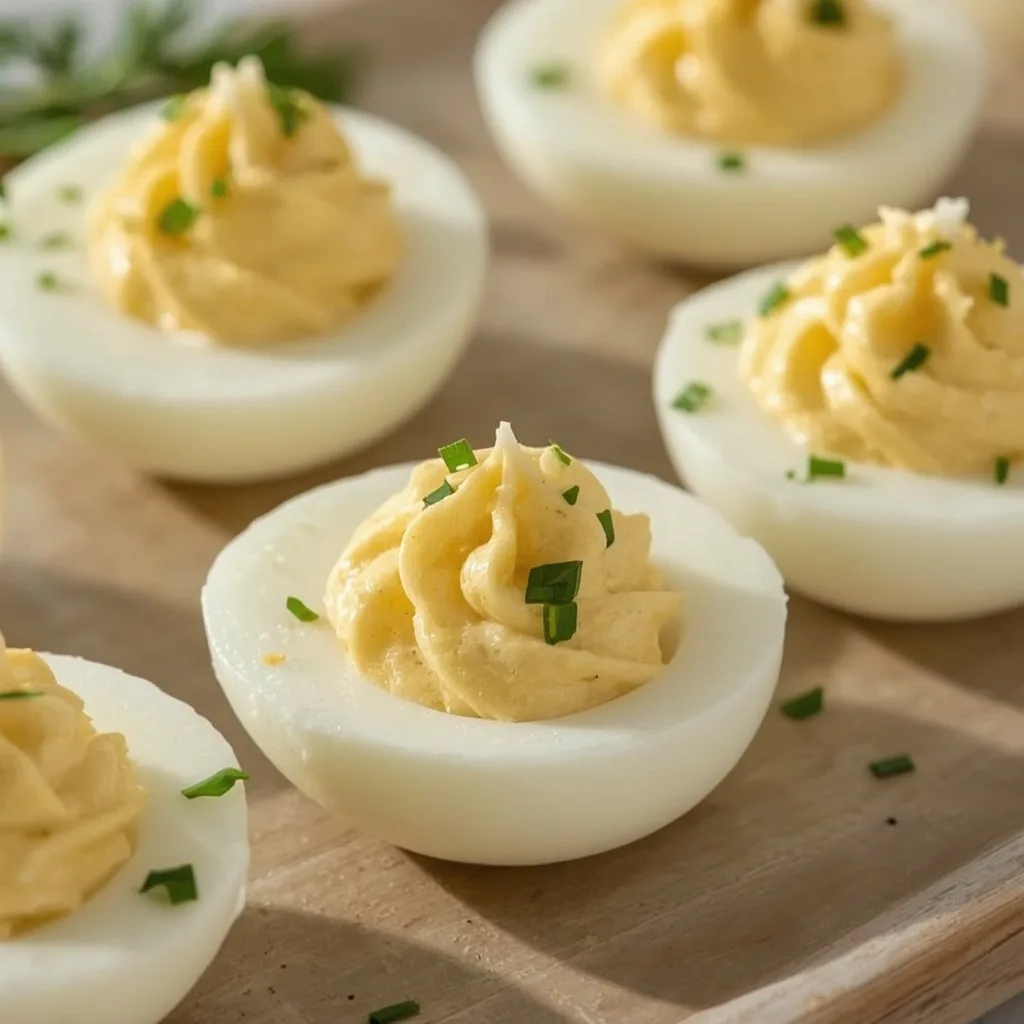
They’re hard-boiled eggs, halved, with the yolks mashed into a creamy filling and piped back into the whites. This version blends cottage cheese, Dijon mustard, white vinegar, and smoked paprika with the yolks for a smooth, tangy filling. The texture is silky rather than heavy, and the flavor leans savory with just a hint of smoke. They’re a staple of American picnic and party tables, but honestly, they work any time you want a protein-rich bite.
Why You’ll Love This Recipe
Here’s what keeps this one in my regular rotation:
- Protein you can feel — 16g per serving, with the eggs and cottage cheese doing the heavy lifting instead of mayo.
- Lighter filling — whipped cottage cheese brings creaminess without the grease of a mayo-heavy yolk mix.
- Fast from start to finish — 15 minutes of prep and 12 minutes of cooking, most of which is hands-off.
- Crowd-friendly — they vanish at every gathering I bring them to, and nobody guesses the swap.
- Make-ahead friendly — the filling stores beautifully, so you can pipe it fresh on serving day.
- Simple pantry seasoning — Dijon, vinegar, salt, pepper, and smoked paprika — no special shopping trip required.
Ingredients You’ll Need
You probably have most of these already, and the full list is short enough to memorize.
For the Base
- 8 large eggs — the foundation of the whole dish; fresher eggs peel more cleanly, though older ones release shells a bit easier.
- 1/2 cup full-fat cottage cheese (4% milkfat) — drain it if watery so the filling stays thick and pipeable.
For the Filling
- 1 tablespoon Dijon mustard — brings tang and a little bite; yellow mustard works in a pinch but tastes flatter.
- 1 teaspoon white vinegar — brightens the yolks and balances the dairy.
- 1/4 teaspoon kosher salt — season to taste; kosher flakes dissolve more evenly than table salt.
- 1/4 teaspoon freshly ground black pepper — fresh-cracked makes a real difference here.
- 1/8 teaspoon smoked paprika — the smoky backbone; sweet paprika is a fine substitute if that’s what you have.
For the Garnish
- 1 tablespoon fresh chives, finely chopped (optional) — adds a mild oniony pop and a bit of green color.
Tools You’ll Need
Nothing fancy here — a few basics get the job done.
- Medium saucepan — wide enough to hold the eggs in a single layer for even cooking.
- Large bowl — for the ice water bath that stops the cooking and makes peeling easier.
- Slotted spoon — lifts the eggs out without splashing hot water.
- Piping bag with a star tip — or a zip-top bag with a corner snipped off; two spoons work too.
- Small food processor (optional) — for an extra-silky filling, though a fork does the job.
How to Make these High Protein Deviled Eggs
The whole process is really two phases: cook and peel the eggs, then whip and pipe the filling.
Step 1: Boil and Cool the Eggs
Place the eggs in a single layer in a medium saucepan and cover with cold water by 1 inch. Bring to a rolling boil over high heat, then immediately cover, remove from the heat, and let stand for 12 minutes. This gentle method keeps the whites tender and prevents that green ring around the yolks.
Step 2: Ice Bath and Peel
While the eggs cook, set up an ice water bath in a large bowl. Transfer the eggs to the ice bath with a slotted spoon and cool for at least 5 minutes — this stops the cooking and makes peeling much easier. Tap each egg on a hard surface, roll it between your palms, and peel starting from the wide end. Pat the peeled eggs dry.
Step 3: Halve and Separate
Halve the eggs lengthwise with a sharp knife and carefully remove the yolks into a medium bowl. Arrange the whites on a serving platter, cut side up. If a white tears, don’t worry — the filling hides minor imperfections.
Step 4: Make the Filling
Mash the yolks with a fork until they’re fine crumbs, then add the cottage cheese, Dijon, vinegar, salt, pepper, and smoked paprika. Mix vigorously until smooth and creamy, or pulse briefly in a small food processor for an ultra-silky texture. Don’t overprocess — it can turn the filling runny.
Step 5: Taste and Adjust
Taste the filling and adjust: a pinch more salt, or a few drops of vinegar for tang. If it’s too thick to pipe, stir in a teaspoon of water or milk until it flows nicely.
Step 6: Pipe and Garnish
Transfer the filling to a piping bag with a star tip, or a zip-top bag with the corner snipped, and pipe into the whites, mounding slightly. Sprinkle with smoked paprika and chives. For the best flavor, refrigerate at least 30 minutes before serving so everything melds.

What Went Wrong and How I Fixed It
Here’s what tripped me up the first few times I made these:
- Rubbery whites — I used to boil the eggs hard for 15 minutes straight; the stand-and-cover method fixed that completely.
- Torn whites during peeling — skipping the ice bath was the culprit; a full 5-minute chill makes the shells slide off.
- Watery filling — cottage cheese that wasn’t drained added too much liquid; drain it first if it looks loose in the tub.
- Runny texture — overprocessing in the food processor breaks down the mixture; pulse just until combined.
- Bland yolks — under-seasoning was my early mistake; taste the filling before piping and adjust salt and vinegar.
- Filling cracked at the edges — piping too fast does this; a steady, even pressure gives cleaner mounds.
What to Serve With It
These eggs play well with plenty of other dishes, whether it’s a holiday spread or a casual lunch.
- Crudités platter — cucumber, carrots, and celery balance the richness with crunch.
- Smoked salmon — a small slice on top adds a savory, briny contrast.
- Pickled vegetables — sharp acidity cuts through the creamy filling.
- Sparkling water with citrus — cleanses the palate between bites without competing with the flavor.
- Green salad — a light vinaigrette-dressed one rounds out a lunch plate.
- Fresh fruit — grapes or melon bring a sweet counterpoint to the smoky paprika.
Pro Tips to Make High-Protein Deviled Eggs
A few small moves separate good eggs from great ones:
- Start with cold water — covering the eggs by an inch and bringing them up to a boil cooks them evenly.
- Chill thoroughly before peeling — at least 5 minutes in ice water; shell release depends on it.
- Drain your cottage cheese — a quick strain in a fine mesh sieve prevents a runny filling.
- Taste before piping — salt and vinegar levels vary by brand, so adjust at the end.
- Add protein-boosting garnishes — a tiny bit of smoked salmon or a pinch of nutritional yeast on top bumps the protein further.
- Chill the filling briefly — 10 minutes in the fridge firms it up for cleaner piping.
- Use a star tip — the ridges catch the paprika garnish and look polished with zero extra effort.
Easy Variations to Try
Once you’ve nailed the base, these twists are fun to play with:
- Herbed version — fold in a teaspoon of chopped dill or tarragon for a fresher flavor.
- Spicy kick — add a pinch of cayenne or a few drops of hot sauce to the filling.
- Extra protein — swap 2 tablespoons of the cottage cheese for plain Greek yogurt for a bit more protein per bite.
- Curry twist — stir in 1/4 teaspoon curry powder and a squeeze of lime.
- Avocado mash — replace 2 tablespoons of cottage cheese with mashed avocado for a creamier texture.
- Pickle-forward — swap the vinegar for a teaspoon of pickle juice and top with a tiny pickle slice.
Storage Tips
These keep well if you store them right:
- Airtight container — refrigerate leftovers for up to 3 days.
- Store filling separately — keeps the whites from getting soggy if you’re making them ahead.
- Make-ahead prep — the filling holds in a zip-top bag in the fridge for up to 2 days; snip and pipe when ready.
- Skip the freezer — freezing isn’t recommended because the filling turns watery after thawing.
- Cover tightly during chilling — a lid or plastic wrap keeps the whites from drying out.
How to Reheat It
These are best served cold or at cool room temperature, so reheating isn’t really necessary. If you do want them slightly warmer:
- Microwave — 10 seconds on medium power max; any longer and the filling splits.
- Oven — 5 minutes at 300°F (150°C) on a lined tray if you prefer them just barely warm.
- Counter rest — 15 minutes out of the fridge brings them to a pleasant cool temperature without appliances.
- Avoid the air fryer — the direct heat dries out the whites and can crack the filling.
Frequently Asked Questions
Can I make deviled eggs ahead of time?
Yes. Prepare the filling and store it in a zip-top bag in the fridge for up to 2 days, then pipe it into fresh whites when you’re ready to serve. This keeps the whites from getting soggy.
Can I freeze these eggs?
Freezing isn’t recommended. The filling becomes watery and grainy once thawed, and the whites turn rubbery.
How long does it last in the fridge?
Stored in an airtight container, they keep for up to 3 days. For best flavor and texture, eat them within the first day or two.
Can I use low-fat cottage cheese?
You can, but full-fat (4% milkfat) gives a creamier filling and better flavor. Low-fat versions tend to be thinner and less rich.
Do I have to use a food processor?
Not at all. A fork mashed vigorously works fine for a slightly rustic texture. Just don’t overwork it, or the filling turns runny.
Why did my filling turn out runny?
Usually it’s undrained cottage cheese or overprocessing. Drain the cottage cheese first, and if using a food processor, pulse only until just combined.
PrintHigh Protein Deviled Eggs (Cottage Cheese Filling)
These deviled eggs swap heavy mayonnaise for whipped cottage cheese, creating a light, tangy filling that still feels indulgent. Each serving of four halves delivers 16 grams of protein, making them a smart snack or elegant appetizer. The filling is smooth and creamy with a classic mustard-and-paprika kick.
- Prep Time: 15
- Cook Time: 12
- Total Time: 27
- Yield: 4 1x
- Category: Appetizer
- Method: Stovetop
- Cuisine: American
Ingredients
- 8 large eggs
- 1/2 cup full-fat cottage cheese (4% milkfat), drained if watery
- 1 tablespoon Dijon mustard
- 1 teaspoon white vinegar
- 1/4 teaspoon kosher salt
- 1/4 teaspoon freshly ground black pepper
- 1/8 teaspoon smoked paprika, plus more for garnish
- 1 tablespoon fresh chives, finely chopped (optional)
Instructions
- Place the eggs in a single layer in a medium saucepan and add cold water to cover by 1 inch. Bring to a rolling boil over high heat, then immediately cover, remove from heat, and let stand for 12 minutes. This gentle cooking method prevents rubbery whites and green-ringed yolks.
- While the eggs cook, prepare an ice water bath in a large bowl. After the standing time, transfer the eggs to the ice bath using a slotted spoon and let cool for at least 5 minutes. Cooling rapidly stops the cooking and makes peeling easier.
- Gently tap each egg on a hard surface to crack the shell all over, then roll it between your palms to loosen the shell. Peel starting from the wide end, where the air pocket usually is. If shells stick, peel under running cold water. Pat the peeled eggs dry with paper towels.
- Halve the eggs lengthwise with a sharp knife. Carefully remove the yolks and place them in a medium bowl. Arrange the egg white halves on a serving platter, cut side up. If any whites tear, you can still use them; the filling will cover minor imperfections.
- Mash the yolks with a fork until they are fine crumbs. Add the cottage cheese, Dijon mustard, white vinegar, kosher salt, black pepper, and smoked paprika. Mix vigorously with the fork until the mixture is smooth and creamy, or for an ultra-silky texture, transfer to a small food processor and pulse until just combined. Avoid overprocessing, which can make the filling runny.
- Taste the filling and adjust seasoning: add a pinch more salt if needed, or a few drops of vinegar for tang. If the mixture seems thick, stir in a teaspoon of water or milk until it reaches a pipeable consistency.
- Transfer the filling to a piping bag fitted with a star tip (or a zip-top bag with a corner snipped off). Pipe the filling into the egg white halves, mounding it slightly. Alternatively, spoon the filling using two spoons.
- Garnish each egg with a light sprinkle of smoked paprika and a pinch of chopped chives, if using. For best flavor, refrigerate for at least 30 minutes before serving to allow the flavors to meld. Serve chilled or at cool room temperature.
Notes
Storage: Store leftover deviled eggs in an airtight container in the refrigerator for up to 3 days. For best presentation, pipe the filling just before serving, or store filling and whites separately and assemble when ready. Freezing is not recommended, as the texture of the filling becomes watery upon thawing. To make ahead, prepare the filling and store it in a zip-top bag with the air removed; refrigerate for up to 2 days, then snip the corner and pipe into fresh egg whites.
Nutrition
- Calories: 210
- Sugar: 1g
- Sodium: 320mg
- Unsaturated Fat: 4g
- Carbohydrates: 2g
- Fiber: 0g
- Protein: 16g
- Cholesterol: 380mg
Keywords: high protein deviled eggs, cottage cheese deviled eggs, healthy deviled eggs, protein snack, appetizer recipe, low carb deviled eggs, easy deviled eggs, classic deviled eggs, picnic food, party appetizer