
If you want a breakfast that actually keeps you full until lunch, this High Protein Sheet Pan Cottage Cheese Eggs recipe is exactly what you need. It combines fluffy scrambled eggs with creamy cottage cheese and colorful roasted vegetables, all baked together on a single sheet pan in about 30 minutes. Each serving delivers over 30 grams of protein, making it a powerhouse start to your day.
This recipe is perfect for busy mornings, weekend brunch with friends, or anyone looking to add more protein to their diet without extra effort. The entire dish comes together with just 15 minutes of prep work, so even beginner cooks can nail it on the first try. You get crispy edges, tender eggs, and sweet roasted peppers in every bite.
What is High Protein Sheet Pan Cottage Cheese Eggs?
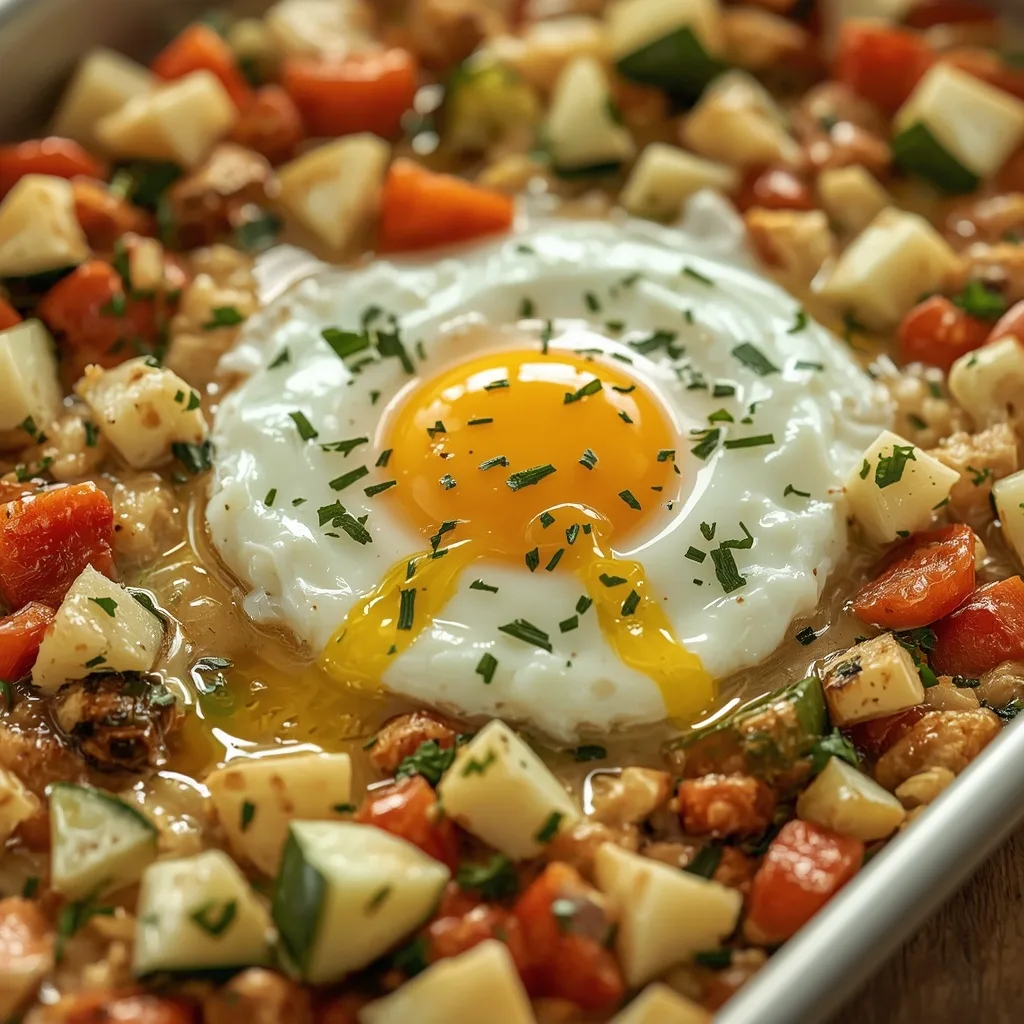
This is a baked egg dish where you whisk whole eggs with full-fat cottage cheese and milk, then pour the mixture over pre-roasted vegetables on a rimmed sheet pan. The cottage cheese melts into the eggs as they bake, creating an incredibly creamy texture without any heavy cream. The result is a fluffy, sliceable block of protein-rich eggs with slightly crispy edges and pockets of melted cheese. It is an American-style breakfast casserole made simpler by using one pan for roasting and baking.
Why You’ll Love This Recipe
Here is what makes this sheet pan breakfast stand out from standard scrambled eggs:
- Massive protein count — Each portion packs 30g of protein from the eggs, cottage cheese, and optional cheddar, keeping you satisfied for hours.
- One pan, zero fuss — You roast the vegetables and bake the eggs on the same sheet pan, meaning minimal cleanup after cooking.
- Meal prep friendly — The baked eggs slice into neat portions that stay fresh in the fridge for up to four days, perfect for grab-and-go mornings.
- Customizable base — The mild egg and cottage cheese mixture pairs well with almost any vegetable, meat, or cheese you have on hand.
- Texture variety — You get crisp roasted peppers, creamy egg centers, and a golden cheesy crust all in a single slice.
Ingredients Needed to Make High Protein Sheet Pan Cottage Cheese Eggs
You need just eleven simple ingredients for this recipe, and most are probably already in your kitchen.
Protein Base
- 12 large eggs — These provide the structure and bulk of the dish, contributing 72g of protein total. Use the freshest eggs you can find for the best texture.
- 1 cup full-fat cottage cheese — This adds creaminess and 25g of extra protein. Full-fat is important here because low-fat versions release too much water and make the eggs soggy.
- 1/4 cup whole milk — A small amount of milk thins the egg mixture slightly so it spreads evenly across the pan. Whole milk gives the richest texture, but 2% works fine too.
- 1/4 cup shredded sharp cheddar cheese — This is optional but adds 7g of protein and a beautiful golden crust on top. Sharp cheddar gives the most flavor per ounce.
Vegetables
- 1 medium red bell pepper — Diced into 1/2-inch pieces, it adds sweetness and color. Red peppers are the sweetest variety and hold up well to roasting.
- 1 medium green bell pepper — Also diced into 1/2-inch pieces, it provides a slightly grassy contrast to the sweet red pepper. Uniform dice size ensures even cooking.
- 1/2 cup red onion, finely diced — Red onion adds a mild sharpness that mellows and sweetens during roasting. Finely dice it so it cooks through in just 8 minutes.
Seasonings and Garnish
- 1/2 tsp kosher salt — Divided between the vegetables and the egg mixture. Kosher salt dissolves evenly and seasons without being harsh.
- 1/4 tsp black pepper, freshly ground — Freshly ground pepper has a floral heat that pre-ground pepper lacks. A pinch goes into the vegetables, the rest into the eggs.
- 2 tbsp olive oil — Used to coat the vegetables before roasting. It helps them brown and prevents sticking to the hot sheet pan.
- Fresh chives, chopped, for garnish — A sprinkle of chives adds a mild onion flavor and bright green color. You can substitute scallion greens if you prefer.
Equipment Needed
You probably already own everything required for this recipe. Here is what you need:
- 13×18-inch rimmed sheet pan — This size gives the eggs enough surface area to cook evenly without being too thick. A half-sheet pan is the exact fit. Without a rim, the egg mixture could spill in the oven.
- Large mixing bowl — You need enough room to whisk 12 eggs with cottage cheese and milk without splashing. A 4-quart bowl works well.
- Whisk — A whisk breaks up the eggs faster than a fork and incorporates the cottage cheese more evenly. Use a balloon whisk for the best results.
- Oven mitts — The sheet pan gets very hot when preheated, so sturdy mitts are essential for safe handling. Silicone-lined mitts provide the best grip.
- Spatula — A thin metal spatula lifts the baked egg slices cleanly from the pan without tearing them. A flexible fish spatula works especially well here.
Instructions to Make High Protein Sheet Pan Cottage Cheese Eggs
Follow these steps in order, and you will have a perfect sheet pan of eggs every time. The method has two distinct phases: roasting the vegetables first, then baking the egg mixture.
Step 1: Preheat the Pan
Preheat your oven to 375°F (190°C). Place the empty sheet pan inside while it heats. This step matters more than you might think — a hot pan creates an immediate sizzle when the egg mixture hits it, setting the bottom and preventing the eggs from sticking.
Step 2: Prepare the Vegetables
While the oven preheats, dice the bell peppers and red onion into uniform 1/2-inch pieces. Keeping them the same size ensures they roast evenly without some burning while others stay raw. Toss the diced vegetables with 2 tablespoons olive oil, 1/4 teaspoon kosher salt, and a pinch of black pepper on a small plate or in a bowl.
Step 3: Roast the Vegetables
Remove the hot sheet pan from the oven using oven mitts. Carefully spread the seasoned vegetables in a single layer across the pan. Return the pan to the oven and roast for 8 minutes. The peppers should be just tender and starting to brown at the edges. Roasting first concentrates their natural sweetness and prevents them from releasing water into the eggs later.
Step 4: Make the Egg Mixture
While the vegetables roast, crack 12 large eggs into a large mixing bowl. Add 1 cup full-fat cottage cheese, 1/4 cup whole milk, the remaining 1/4 teaspoon kosher salt, and 1/4 teaspoon black pepper. Whisk vigorously until the eggs are fully broken up and the cottage cheese is mostly incorporated. Small curds of cottage cheese will remain — these are good and create pleasant creamy pockets in the finished eggs.
Step 5: Combine and Bake
After 8 minutes, remove the sheet pan from the oven. Carefully pour the egg mixture evenly over the roasted vegetables. The hot pan will begin cooking the eggs immediately, creating steam that helps them puff up. Sprinkle the shredded cheddar cheese evenly over the top if using. Return the pan to the oven and bake for 12 to 15 minutes.
Step 6: Check for Doneness
The eggs are done when the center is set and just starts to pull away from the edges of the pan. To check, gently shake the pan — the center should no longer jiggle. A knife inserted into the center should come out clean. Do not overbake or the eggs will turn rubbery. Let the pan rest on a wire rack for 2 minutes before slicing.
What Went Wrong and How I Fixed It
Even simple recipes can trip you up. Here are the most common issues I ran into and exactly how to avoid them:
- Eggs stuck to the pan — I did not preheat the sheet pan before pouring the egg mixture. The hot pan creates an immediate seal that prevents sticking. Always preheat the pan for at least 10 minutes.
- Watery eggs after baking — I added raw vegetables directly to the egg mixture without roasting them first. Roasting the peppers and onions for 8 minutes removes excess moisture and concentrates their flavor.
- Rubbery, overcooked eggs — I left the pan in the oven for 18 minutes instead of checking at 12. The eggs continue cooking from residual heat after removal. Pull them when the center is just set, not firm.
- Uneven cooking — I diced the vegetables into different sizes, so small pieces burned while large pieces stayed raw. Keep all vegetable pieces at a uniform 1/2-inch dice.
- Bland flavor — I used low-fat cottage cheese, which added too much liquid and diluted the taste. Full-fat cottage cheese has more flavor and a creamier texture.
- Eggs deflated after slicing — I cut into the eggs immediately after removing them from the oven. Letting them rest for 2 minutes allows the structure to set properly.
What Do I Serve With High Protein Sheet Pan Cottage Cheese Eggs?
This protein-packed egg dish pairs well with a variety of sides to round out your meal. Here are some of my favorite combinations:
- Buttered whole-wheat toast — The crispy, warm bread soaks up any juices on the plate and adds complex carbohydrates for sustained energy. Toast it until golden for textural contrast.
- Fresh fruit salad — A bowl of mixed berries, sliced banana, and orange segments adds natural sweetness and vitamin C. The acidity of the fruit cuts through the richness of the eggs.
- Avocado slices with lime — Creamy avocado adds healthy fats that complement the protein in the eggs. A squeeze of lime brightens the whole plate and prevents the avocado from browning.
- Crispy hash browns — Shredded and pan-fried potatoes provide a crunchy, starchy base that contrasts with the soft eggs. Season them with smoked paprika for extra depth.
- Simple mixed greens salad — A light salad with lemon vinaigrette adds freshness and a peppery bite. The acidity helps balance the rich, cheesy eggs.
- Cold-pressed green juice — A vegetable-forward juice with celery, cucumber, and apple keeps the meal light and hydrating. It is a great option when you want something refreshing rather than hot.
Pro Tips to Make Perfect High Protein Sheet Pan Cottage Cheese Eggs
These tips come from multiple batches of testing. They make the difference between good eggs and great eggs:
- Preheat the sheet pan fully — Place it in the cold oven and let it heat for the entire preheat cycle. A properly hot pan creates immediate steam that helps the eggs puff up and prevents sticking.
- Use full-fat cottage cheese only — Low-fat and non-fat versions contain more whey and water, which separates during baking and creates a pool of liquid around the eggs. Full-fat cottage cheese stays creamy and cohesive.
- Whisk until mostly smooth — Break up the eggs completely and incorporate the cottage cheese until only small, pea-sized curds remain. Large cottage cheese clumps create water pockets in the finished dish.
- Roast vegetables until just tender — Eight minutes at 375°F is usually enough, but check for browning at the edges. Undercooked vegetables release moisture into the eggs; overcooked ones burn.
- Do not overbake — The eggs finish cooking from residual heat after you remove the pan from the oven. Pull them when the center is just set but still slightly jiggly — about 12 minutes is usually perfect.
- Let it rest before slicing — Two minutes on a wire rack allows the egg structure to firm up. Slicing too early causes the pieces to fall apart or stick to your knife.
- Season in layers — Add salt to both the vegetables and the egg mixture separately. This ensures every component is seasoned rather than relying on a single heavy dose.
Variations of High Protein Sheet Pan Cottage Cheese Eggs
Once you master the base recipe, try these variations to keep breakfast interesting all week:
- Southwest style — Replace the bell peppers with one diced poblano pepper and add 1/2 cup canned black beans (rinsed) and 1/4 cup corn kernels. Top with a sprinkle of cotija cheese before serving.
- Mediterranean version — Substitute the cheddar with crumbled feta cheese and add 1/4 cup chopped sun-dried tomatoes and 1/4 cup sliced Kalamata olives to the vegetable mix. Garnish with fresh oregano.
- Meat lovers variation — Add 1/2 cup cooked and crumbled breakfast sausage or diced ham to the egg mixture before pouring it onto the pan. The extra protein pushes each serving toward 40 grams.
- Veggie-packed boost — Add 2 cups of fresh spinach to the hot pan after roasting the peppers. Stir until the spinach wilts, then pour the egg mixture over. The spinach adds iron and volume without changing the flavor much.
- Extra protein upgrade — Stir 2 scoops of unflavored collagen peptides or 1/4 cup of unflavored whey protein powder into the egg mixture before whisking. This adds about 10g more protein per serving without altering the taste.
- Dairy-free adaptation — Replace the cottage cheese with 1 cup of silken tofu blended until smooth, and use unsweetened almond milk instead of whole milk. Omit the cheddar or use a vegan shred. The texture will be slightly less creamy but still satisfying.
How Do I Store High Protein Sheet Pan Cottage Cheese Eggs Leftovers?
Proper storage keeps these eggs tasting fresh for days. Here is exactly how to handle leftovers:
- Refrigerator storage — Let the eggs cool completely on a wire rack, then slice into portions and place them in an airtight container. They stay fresh for up to 4 days. Layer parchment paper between stacked portions to prevent sticking.
- Freezer preparation — Wrap each cooled portion tightly in plastic wrap, then wrap again in aluminum foil. Place the wrapped portions in a freezer-safe bag or container. They keep for up to 3 months.
- Thawing instructions — Move frozen portions from the freezer to the refrigerator the night before you plan to eat them. Thaw overnight for best texture. Do not thaw at room temperature, as the eggs can become watery.
- Portion size note — Slice the sheet pan into 4 equal portions before storing. This makes grab-and-go breakfasts effortless and prevents you from defrosting more than you need.
How Do I Reheat High Protein Sheet Pan Cottage Cheese Eggs Leftovers?
Reheating these eggs properly restores their texture and prevents them from turning rubbery. Choose the method that fits your schedule:
- Oven method — Place a portion on a parchment-lined baking sheet and reheat at 350°F (175°C) for 8 minutes. This restores the crispy edges and golden top better than any other method.
- Microwave method — Place a portion on a microwave-safe plate and heat on high for 60 to 90 seconds. The eggs will be soft throughout but will lose their crispy edges. Cover with a damp paper towel to prevent them from drying out.
- Air fryer method — Place a portion in the air fryer basket and heat at 350°F (175°C) for 4 to 5 minutes. This method combines the speed of a microwave with the crispiness of an oven. Check at 4 minutes to avoid overcooking.
FAQs
Can I make High Protein Sheet Pan Cottage Cheese Eggs without cottage cheese?
Yes, you can substitute the cottage cheese with 1 cup of ricotta cheese or 3/4 cup of plain Greek yogurt. Ricotta gives a similar creamy texture, while Greek yogurt adds tanginess and extra protein. The final protein count will drop slightly depending on your swap.
How long does High Protein Sheet Pan Cottage Cheese Eggs last in the fridge?
Stored in an airtight container, these eggs stay fresh for up to 4 days in the refrigerator. Make sure the eggs have cooled completely before sealing the container to prevent condensation from making them soggy.
Can I freeze High Protein Sheet Pan Cottage Cheese Eggs?
Yes, you can freeze individual portions for up to 3 months. Wrap each portion tightly in plastic wrap, then in aluminum foil, and place them in a freezer-safe bag. Thaw overnight in the refrigerator before reheating for the best texture.
Why are my baked eggs watery?
Watery eggs usually mean the vegetables released too much moisture into the egg mixture. Roast the vegetables for the full 8 minutes to concentrate their flavor and drive off excess water. Also, avoid using low-fat cottage cheese, which contains more whey that separates during baking.
Can I add other vegetables to this recipe?
Absolutely. Mushrooms, zucchini, and broccoli all work well, but they need different prep times. Slice mushrooms and zucchini into 1/2-inch pieces and roast them alongside the peppers. For broccoli, blanch it in boiling water for 2 minutes first to soften it before roasting.
Can I make this recipe dairy-free?
Yes. Replace the cottage cheese with 1 cup of silken tofu blended until smooth, and use unsweetened almond milk instead of whole milk. Omit the shredded cheddar or use a dairy-free alternative. The texture will be slightly less creamy, but the egg structure remains intact.
Try These Recipes
- High Protein Vanilla Overnight Oats
- Healthy Vegetarian Breakfast Sandwiches
- Healthy Tiramisu Chia Pudding
- Healthy Vegan Pancakes
- Healthy Zero Carb Yogurt Bread
Try These Recipes
Final Words
This High Protein Sheet Pan Cottage Cheese Eggs recipe proves that a healthy, protein-packed breakfast does not have to be complicated or time-consuming. With just 30 minutes and a single sheet pan, you get four servings of creamy, satisfying eggs with over 30 grams of protein each. Give it a try this weekend, and you will have breakfast sorted for the entire week ahead.
PrintHigh Protein Sheet Pan Cottage Cheese Eggs

A protein-packed sheet pan breakfast that combines fluffy scrambled eggs with creamy cottage cheese and crisp roasted vegetables. Each serving delivers over 30g of protein for a satisfying start to the day.
- Prep Time: 10
- Cook Time: 20
- Total Time: 30
- Yield: 4 1x
- Category: Breakfast
- Method: Baking
- Cuisine: American
Ingredients
- 12 large eggs (72g protein total)
- 1 cup full-fat cottage cheese (25g protein)
- 1/4 cup whole milk
- 1/2 tsp kosher salt
- 1/4 tsp black pepper, freshly ground
- 1 medium red bell pepper, seeded and diced into 1/2-inch pieces (1g protein)
- 1 medium green bell pepper, seeded and diced into 1/2-inch pieces (1g protein)
- 1/2 cup red onion, finely diced
- 2 tbsp olive oil (for roasting vegetables)
- 1/4 cup shredded sharp cheddar cheese (optional, adds 7g protein total)
- Fresh chives, chopped, for garnish
Instructions
- Preheat the oven to 375°F (190°C). Place a 13×18-inch rimmed sheet pan in the oven as it heats. This ensures the pan is hot when the egg mixture hits it, creating a sizzle that sets the bottom and prevents sticking.
- While the oven preheats, prepare the vegetables. Dice the bell peppers and red onion into uniform 1/2-inch pieces. Uniform size ensures even roasting without burning. Toss the diced vegetables with 2 tablespoons olive oil, 1/4 teaspoon kosher salt, and a pinch of black pepper on a small plate.
- Remove the hot sheet pan from the oven using oven mitts. Carefully spread the seasoned vegetables in a single layer on the pan. Return the pan to the oven and roast for 8 minutes, until the peppers are just tender and starting to brown at the edges. Roasting first concentrates their natural sweetness and prevents watery eggs.
- While the vegetables roast, prepare the egg mixture. In a large mixing bowl, crack 12 large eggs. Add 1 cup full-fat cottage cheese, 1/4 cup whole milk, remaining 1/4 teaspoon kosher salt, and 1/4 teaspoon black pepper. Whisk vigorously until the eggs are fully broken up and the cottage cheese is mostly incorporated—small curds will remain and are desirable for texture.
- After 8 minutes, remove the sheet pan from the oven. Carefully pour the egg mixture evenly over the roasted vegetables. The hot pan will begin to cook the eggs immediately, creating steam that helps the eggs puff up.
- Sprinkle the shredded cheddar cheese evenly over the top, if using. This adds a golden, bubbly crust and extra protein.
- Return the pan to the oven and bake at 375°F (190°C) for 12 to 15 minutes, until the eggs are set in the center and just starting to pull away from the edges of the pan. To check doneness, gently shake the pan—the center should no longer jiggle, and a knife inserted into the center should come out clean. Do not overbake or the eggs will become rubbery.
- Remove from the oven and let rest on a wire rack for 2 minutes. This allows the residual heat to finish cooking the eggs gently and makes them easier to slice.
- Slice the sheet pan eggs into 4 equal portions. Use a spatula to lift them from the pan. Garnish with fresh chopped chives. Serve immediately with toast or a side of fresh fruit for added carbohydrates.
- If meal prepping, let the eggs cool completely before covering. Store in an airtight container in the refrigerator for up to 4 days. To reheat, place a portion on a microwave-safe plate and microwave on high for 60 to 90 seconds, or reheat in a 350°F (175°C) oven for 8 minutes to restore a crispier edge.
Notes
Storage: Refrigerate in an airtight container for up to 4 days. Freezing: Wrap each portion tightly in plastic wrap, then in foil, and freeze for up to 3 months. To reheat from frozen, thaw overnight in the fridge, then microwave on high 90 to 120 seconds or reheat in a 350°F (175°C) oven for 10 minutes.
Nutrition
- Calories: 335
- Sugar: 4g
- Sodium: 590mg
- Saturated Fat: 7g
- Carbohydrates: 6g
- Fiber: 1g
- Protein: 30g
- Cholesterol: 565mg
Keywords: high protein eggs, cottage cheese eggs, sheet pan eggs, baked eggs, healthy breakfast, meal prep eggs, high protein breakfast, cottage cheese recipe, egg bake, sheet pan breakfast