
This High Protein Greek Salad is the salad I make when I want something fresh but actually filling enough to be dinner. It takes the classic Greek combination of cucumbers, tomatoes, olives, and feta, then adds chickpeas and hard-boiled eggs to turn it into a real meal. The lemon-oregano vinaigrette ties everything together with that bright, herby flavor you expect from Mediterranean cooking.
You can have this on the table in 25 minutes, and it’s beginner-friendly — the only cooking involved is boiling eggs, which is hard to mess up. Each serving delivers 26g of protein, which makes it a fantastic lunch or light dinner on a warm day. The only slightly fiddly part is peeling the eggs without tearing them, but a quick ice bath solves that.
What is High Protein Greek Salad?
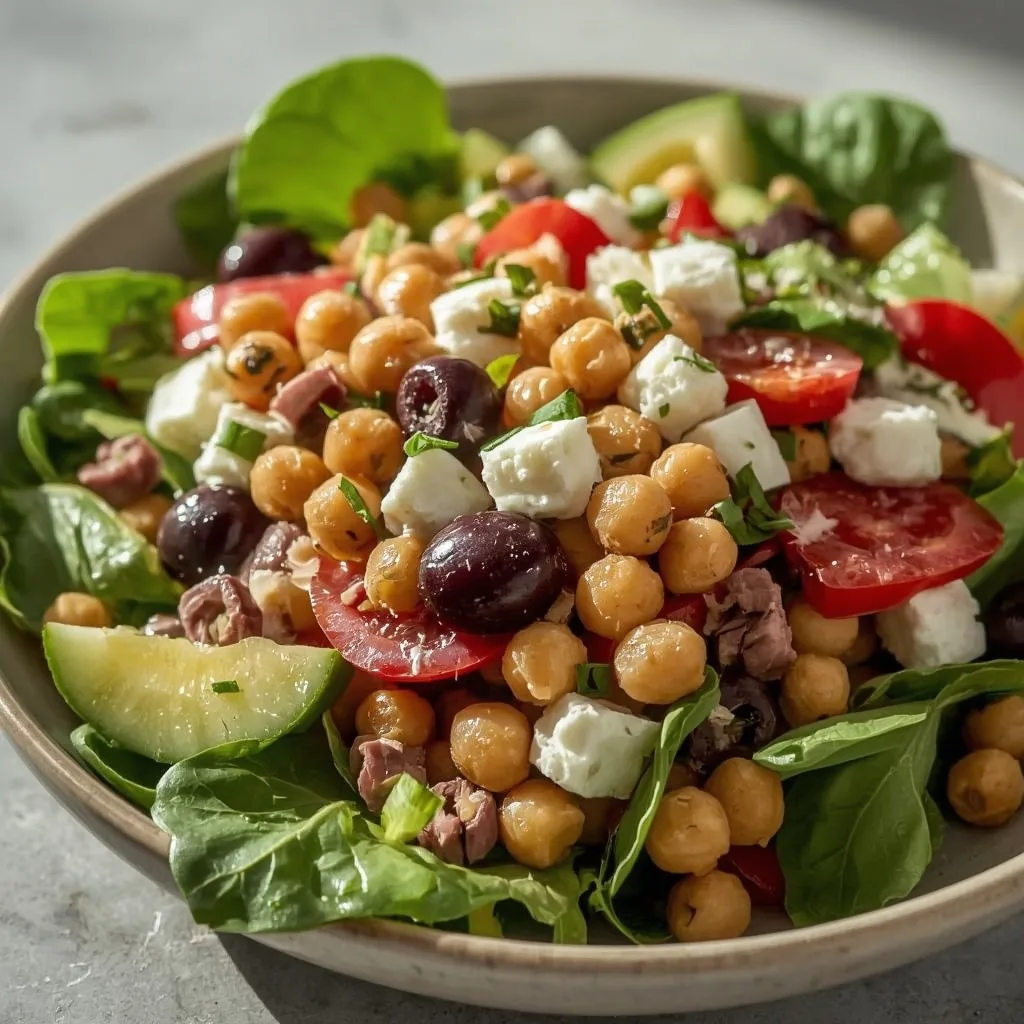
This is a Mediterranean-inspired main course that builds on the traditional Greek salad — known in Greece as horiatiki — by adding two protein powerhouses: chickpeas and hard-boiled eggs. The classic version typically features tomatoes, cucumber, red onion, olives, and a thick slab of feta on top. My version keeps all that freshness but makes it substantial enough to stand alone as a meal.
What makes this particular salad special is how the creamy feta and briny kalamata olives play off the crisp vegetables. The chickpeas add a nutty earthiness, while the eggs bring a rich, velvety texture that contrasts with the crunch. It’s a balanced bowl that hits every note — salty, tangy, fresh, and satisfying.
The dressing is where the magic happens. A simple emulsion of olive oil, red wine vinegar, Dijon mustard, and oregano coats every ingredient in a glossy, flavorful layer. Unlike creamy dressings, this one lets the vegetables shine while still adding plenty of punch.
Why You’ll Love This Recipe
Here’s what keeps me coming back to this salad week after week:
- Protein-packed — With 26g per serving, this salad keeps you full for hours without feeling heavy. The combination of eggs and chickpeas delivers complete protein that beats any sad desk lunch.
- No cooking required — Apart from the eggs, there’s zero heat involved. Chop, toss, dress, and you’re done in about 15 minutes of active time.
- Meal-prep friendly — The components hold up beautifully in the fridge, especially if you keep the dressing separate. Make it Sunday, eat it through Wednesday.
- Bright Mediterranean flavors — Oregano, red wine vinegar, and olive oil transport you straight to a seaside taverna. It’s fresh, zesty, and never boring.
- Customizable base — This salad welcomes additions like grilled chicken, shrimp, or extra vegetables. It’s a formula, not a rigid recipe.
- Vegetable-forward without being sad — This is the salad that converts people who claim they “don’t eat salads.” It’s hearty, textured, and genuinely satisfying.
Ingredients Needed to Make High Protein Greek Salad
You probably have most of these already — the shopping list is short and the payoff is big.
Protein Components
- 6 large eggs, hard-boiled and quartered — The star protein that adds richness and body. Cook them properly to avoid that gray ring around the yolk.
- 1 can (15 oz / 425 g) chickpeas, drained and rinsed — These bring plant-based protein and a satisfying bite. Rinsing removes excess sodium and that canned taste.
Fresh Vegetables
- 1 English cucumber, diced (about 2 cups / 280 g) — This variety has thin skin and few seeds, so no peeling needed. English cucumbers stay crisp longer than regular ones.
- 2 cups (300 g) cherry tomatoes, halved — Sweeter and juicier than large tomatoes, they pop in your mouth. Halving them helps the dressing cling better.
- 1 green bell pepper, diced (about 1 cup / 150 g) — Adds crunch and a slightly bitter edge that balances the richness. The green variety is more traditional than red or yellow.
- 1/2 cup (80 g) red onion, thinly sliced — Sharp and pungent, it cuts through the creaminess of feta and eggs. Slice it thin so it doesn’t overwhelm each bite.
Briny & Creamy Additions
- 1/2 cup (75 g) kalamata olives, pitted and halved — These bring that unmistakable Mediterranean brininess. Pitted ones save time, but check for stray pits anyway.
- 1 cup (150 g) full-fat feta cheese, cubed — Creamy, salty, and tangy, this is the soul of the salad. Full-fat feta holds its shape better than reduced-fat versions.
For the Vinaigrette
- 1/4 cup (60 ml) extra-virgin olive oil — The backbone of the dressing. Use good quality stuff here — you’ll taste the difference.
- 2 tablespoons (30 ml) red wine vinegar — Bright and fruity, it provides the acidity that balances the oil and salty ingredients.
- 1 teaspoon (5 g) Dijon mustard — Acts as an emulsifier to keep the dressing from separating. It also adds a subtle tangy warmth.
- 1 teaspoon (2 g) dried oregano — The signature Greek herb. It infuses the dressing with that earthy, slightly floral aroma.
- 1/4 teaspoon (1 g) kosher salt, plus more to taste — Seasoning is non-negotiable. Start with less — feta and olives add plenty of salt on their own.
- 1/8 teaspoon (0.5 g) freshly ground black pepper, plus more to taste — A gentle heat that rounds out the dressing. Freshly ground tastes significantly better than pre-ground.
Equipment Needed
Nothing fancy here — this recipe works with standard kitchen tools you likely already own.
- Medium saucepan — For boiling the eggs. Make sure it’s big enough to hold all six in a single layer.
- Large mixing bowl — Big enough to toss everything without spilling. I use a wide ceramic bowl that gives me room to fold gently.
- Small bowl — For whisking the vinaigrette. A bowl with a spout makes pouring easier.
- Whisk — Essential for emulsifying the dressing. If you don’t have one, a fork works in a pinch.
- Chef’s knife and cutting board — You’ll be dicing and slicing quite a bit. A sharp knife makes this step go faster and safer.
Instructions to Make High Protein Greek Salad
Follow these steps in order, and you’ll have a beautiful, restaurant-worthy salad in under half an hour.
Step 1: Prepare the Hard-Boiled Eggs
Place the eggs in a single layer in a medium saucepan and cover with cold water by about 1 inch. Bring to a rolling boil over high heat, then immediately remove from heat, cover, and let sit for exactly 9 minutes. This method yields perfectly cooked yolks — set but still creamy, no green ring.
Transfer the eggs to an ice bath and let them cool for 5 minutes. This stops the cooking process and makes them dramatically easier to peel. Once cool, peel and set aside.
Step 2: Make the Vinaigrette
In a small bowl, whisk together the olive oil, red wine vinegar, Dijon mustard, dried oregano, salt, and pepper. Whisk until the dressing is emulsified and slightly thickened — it should look uniform, not separated into oil and vinegar layers.
Taste it before pouring. The dressing should be pleasantly tangy with a clear oregano presence. Adjust salt and pepper now, knowing that feta and olives will add more salt later.
Step 3: Combine the Salad Base
In a large bowl, add the drained chickpeas, diced cucumber, halved cherry tomatoes, diced green bell pepper, sliced red onion, and halved kalamata olives. Toss gently to mix everything evenly. Make sure the chickpeas are fully drained — excess liquid will dilute the dressing.
This is your flavor base. The colors alone — green, red, purple, and cream — are worth the effort.
Step 4: Dress the Salad
Pour the vinaigrette over the salad and toss until all vegetables and chickpeas are evenly coated. You’re looking for a glossy sheen on every piece, with the dressing clinging rather than pooling at the bottom.
If you accidentally add too much dressing, don’t panic — just add a handful of fresh vegetables or extra chickpeas to absorb it.
Step 5: Add the Feta Cheese
Add the cubed feta and gently fold it in with a soft spatula. The goal is to distribute the feta without breaking the cubes into mush. You want distinct pieces that deliver a creamy, salty bite when you hit one.
Folding, not stirring, is the key here. Stirring aggressively will crumble the feta into the dressing and turn everything cloudy.
Step 6: Incorporate the Eggs
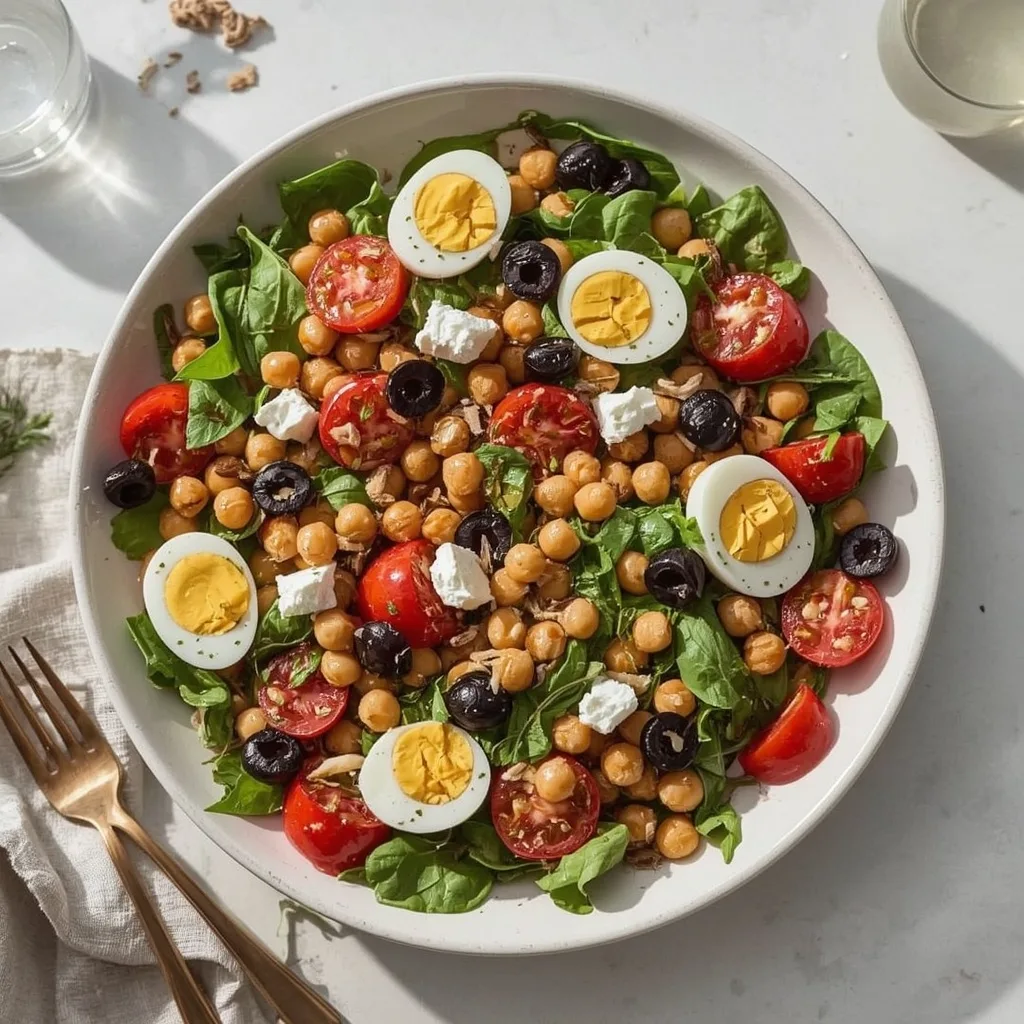
Quarter the hard-boiled eggs lengthwise and either place them on top of the salad for a dramatic presentation, or fold them in gently. If folding, use a soft spatula and take your time — the egg whites are delicate and will crumble under rough handling.
I prefer arranging them on top. It looks intentional and lets each person control how much egg they get in each bite.
Step 7: Let It Rest and Serve
Let the salad sit at room temperature for 5 minutes before serving. This brief rest allows the flavors to meld — the vegetables absorb the dressing, and the whole thing comes together. Serve immediately.
Trust me on this one. The salad tastes noticeably better after those 5 minutes than it does straight out of the bowl.
Step 8: Make Ahead Note
If you’re planning to make this ahead, keep the dressing separate and toss just before serving. This prevents the salad from becoming soggy. Dressed salad will last about a day, while undressed components last up to three.
What Went Wrong and How I Fixed It
I’ve made plenty of salad mistakes in my decade of cooking. These are the ones I see most often, along with fixes that actually work.
- Soggy vegetables — You dressed the salad too early, and the vegetables released water into the dressing. Fix it by salting the cucumbers lightly and letting them drain for 10 minutes before adding them.
- Gray egg yolks — You boiled the eggs too long, and that unappetizing ring appeared around the yolk. Stick to the 9-minute rest method and always use an ice bath to stop cooking.
- Feta crumbled into dust — You stirred too aggressively, and the feta broke apart into the dressing. Fold gently with a spatula, and consider tossing the feta with a teaspoon of olive oil to help it hold its shape.
- Dressing that separates — You didn’t whisk enough, or the ingredients were too cold. Whisk vigorously for a full 30 seconds, and make sure your vinegar is at room temperature.
- Overpowering onion — The red onion was too sharp and took over every bite. Soak sliced onions in cold water for 10 minutes and drain before adding — it tempers the bite significantly.
- Eggs that won’t peel — Fresh eggs are notoriously difficult to peel. Use eggs that are at least a week old, and peel them under running water to help separate the shell from the white.
What Do I Serve With High Protein Greek Salad?
This salad is hearty enough to stand alone, but these pairings take it to the next level.
- Warm pita bread — The soft, slightly charred bread is perfect for scooping up every last bit of dressing and feta. Toast it briefly or serve straight from the oven.
- Grilled chicken breast — Adding 4-6 ounces of sliced grilled chicken per plate pushes the protein to around 45g per serving. Season it simply with oregano, garlic, and lemon.
- Horiatiko psomi (Greek country bread) — A crusty, rustic loaf with a dense crumb that holds up to the juices. It’s excellent for dipping in extra olive oil.
- A glass of crisp white wine — A cold Assyrtiko or Sauvignon Blanc cuts through the richness of the feta and eggs beautifully. Look for something dry with citrus notes.
- Roasted lemon potatoes — Serve this on the side, and you have a full Greek feast. The starchy potatoes soak up the salad’s dressing wonderfully.
- Fresh fruit — Sliced watermelon or grapes offer a sweet contrast to the brine of the olives and feta. It’s a refreshing finish that doesn’t weigh you down.
Pro Tips to Make Perfect High Protein Greek Salad
These tips come from years of testing, adjusting, and occasionally failing. Save yourself the trial and error.
- Dry your vegetables thoroughly — After rinsing the chickpeas and washing the vegetables, pat them completely dry. Excess water dilutes the dressing and makes everything taste flat.
- Cube the feta large, not small — Aim for 1/2-inch cubes. Smaller pieces disintegrate into the dressing; larger ones give you that satisfying creamy pop in every few bites.
- Use a microplane for extra garlic — The recipe doesn’t call for garlic, but a small grated clove in the dressing adds another layer of flavor. Start with half a clove.
- Chill the bowl — If you’re serving this on a hot day, pop the mixing bowl in the fridge for 15 minutes before assembling. The cooler temperature keeps the vegetables crisper.
- Adjust seasoning after adding feta — Feta is notoriously salty. Always taste the dressed salad before adding additional salt — you’ll likely need much less than you think.
- Add fresh oregano if you have it — Double the amount if using fresh instead of dried. Fresh oregano has a milder, more floral flavor that’s bright and lovely in summer.
- Keep eggs slightly undercooked — Aim for yolks that are just set with a tiny bit of softness in the center. They look prettier and taste richer than fully hard-cooked yolks.
Variations of High Protein Greek Salad
This recipe is remarkably flexible. Here’s how I adapt it depending on the season and my pantry.
- Mediterranean Tuna Version — Swap the eggs for a can of drained tuna and add a handful of chopped fresh parsley. You’ll get a simpler protein boost with a completely different character.
- Grilled Shrimp Addition — Toss 8 ounces of grilled shrimp with lemon and oregano, then layer on top. The sweetness of shrimp against the briny olives is exceptional.
- Low-Carb Option — Skip the chickpeas and double the cucumber and bell pepper instead. You’ll cut carbs nearly in half while keeping most of the protein from the eggs and feta.
- Creamy Herbed Variation — Mix 2 tablespoons of Greek yogurt into the vinaigrette for a creamier, tangier dressing. This adds about 2g more protein per serving and a luscious texture.
- Roasted Vegetable Twist — Swap the raw peppers and tomatoes for roasted versions tossed in olive oil and oregano. Roasting adds sweetness and depth, making this a cold-weather option.
- Avocado Boost — Add one diced avocado just before serving. The creaminess complements the feta, and the healthy fats make it even more satisfying.
How Do I Store High Protein Greek Salad Leftovers?
Proper storage means the difference between delicious leftovers and a sad, soggy mess.
- Keep dressing separate — If the salad is undressed, store the vinaigrette in a separate airtight container. Combine only when ready to eat. This extends the salad’s life to the full 3 days.
- Use an airtight container — Glass containers with tight-fitting lids work best. They don’t absorb odors and let you see the salad’s condition at a glance.
- Store eggs on top — If you’ve already assembled the salad, layer the eggs on top rather than mixed in. This keeps them from getting crushed during storage.
- Refrigerate within 2 hours — Don’t leave the salad at room temperature for more than 2 hours, especially on warm days. 40°F or below is your target.
- Refresh before serving — When bringing leftovers back, let them sit at room temperature for 15 minutes and add a splash of olive oil or red wine vinegar to revive the flavors.
How Do I Reheat High Protein Greek Salad Leftovers?
Honestly, this salad is best served cold or at room temperature. But if you want to warm it up, here are your options.
- Room temperature method (best) — Remove the salad from the fridge 20-30 minutes before serving. This takes the chill off without cooking the vegetables or eggs.
- Microwave (last resort) — Heat only the chickpeas and vegetables on high in 20-second bursts for about 1 minute total. Add the eggs and feta after heating — they don’t hold up well to microwaving.
- Stovetop quick warm — Heat a skillet over medium heat for 2 minutes, then add just the chickpeas for 1-2 minutes until warmed through. Toss with the rest and serve. The contrast of warm chickpeas with cool vegetables is actually lovely.
- Oven method (for roasts only) — Not recommended for the salad itself. If you’re pairing with roasted vegetables, keep them separate and warm them at 350°F for 5 minutes.
FAQs
Can I freeze High Protein Greek Salad?
No, freezing is not recommended. The fresh vegetables, eggs, and feta will become watery and mushy when thawed. This salad is best enjoyed fresh or within 3 days of making.
How long does High Protein Greek Salad last in the fridge?
Stored in an airtight container, the dressed salad lasts 1-2 days. If you keep the dressing separate, the components stay fresh for up to 3 days. The eggs alone can be made up to 5 days in advance.
Can I substitute the feta cheese?
You can use goat cheese for a similar creamy texture, though the flavor will be tarter. For a dairy-free option, try a firm vegan feta or cubed firm tofu marinated in olive oil and lemon juice.
Is this salad suitable for meal prep?
Absolutely. Layer the chickpeas, vegetables, and olives in one container, keep the dressing in a small jar, and leave the eggs and feta on top. Assemble everything when you’re ready to eat for the best texture.
How many carbs are in a serving of this salad?
Each serving contains 24g of carbohydrates, with 7g of fiber. That nets out to about 17g of net carbs per serving, which is moderate and fits into most balanced eating plans.
Can I add grilled chicken to this salad?
Absolutely. Adding 6 ounces of sliced grilled chicken per serving brings the total protein to around 45g per serving. Season the chicken simply with oregano, garlic, and lemon juice to keep the Greek theme consistent.
Try These Recipes
Final Words
This High Protein Greek Salad has become my go-to for busy weeknights and meal prep Sundays alike. It’s proof that a salad doesn’t have to be boring or leave you hungry an hour later — not when it’s loaded with eggs, chickpeas, and feta.
Make it once, and you’ll see why it earns a permanent spot in your rotation. The flavors are bright, the texture is satisfying, and you get 26g of protein without turning on the oven. Give it a try — I think you’ll be as hooked as I am.
PrintHigh Protein Greek Salad
A protein-packed twist on the classic Greek salad, featuring creamy feta, briny kalamata olives, crisp vegetables, and a lemon-oregano vinaigrette. The addition of chickpeas and hard-boiled eggs makes it a satisfying main course that’s both refreshing and filling.
- Prep Time: 15
- Cook Time: 10
- Total Time: 25
- Yield: 4 1x
- Category: Main Course
- Method: No-Cook (with optional stovetop egg cooking)
- Cuisine: Greek
Ingredients
- 6 large eggs, hard-boiled and quartered
- 1 can (15 oz / 425 g) chickpeas, drained and rinsed
- 1 English cucumber, diced (about 2 cups / 280 g)
- 2 cups (300 g) cherry tomatoes, halved
- 1 green bell pepper, diced (about 1 cup / 150 g)
- 1/2 cup (80 g) red onion, thinly sliced
- 1/2 cup (75 g) kalamata olives, pitted and halved
- 1 cup (150 g) full-fat feta cheese, cubed
- 1/4 cup (60 ml) extra-virgin olive oil
- 2 tablespoons (30 ml) red wine vinegar
- 1 teaspoon (5 g) Dijon mustard
- 1 teaspoon (2 g) dried oregano
- 1/4 teaspoon (1 g) kosher salt, plus more to taste
- 1/8 teaspoon (0.5 g) freshly ground black pepper, plus more to taste
Instructions
- Prepare the hard-boiled eggs: Place 6 large eggs in a single layer in a medium saucepan and cover with cold water by about 1 inch (2.5 cm). Bring to a rolling boil over high heat, then immediately remove from heat, cover the pot, and let sit for 9 minutes. Transfer the eggs to an ice bath and let cool for 5 minutes, then peel and set aside.
- Make the vinaigrette: In a small bowl, whisk together the extra-virgin olive oil, red wine vinegar, Dijon mustard, dried oregano, 1/4 teaspoon kosher salt, and 1/8 teaspoon black pepper. Whisk until the dressing is emulsified and slightly thickened. Taste and adjust with more salt or pepper if needed.
- Combine the salad base in a large bowl: Add the drained chickpeas, diced cucumber, halved cherry tomatoes, diced green bell pepper, sliced red onion, and halved kalamata olives. Toss gently to mix the ingredients evenly.
- Pour the vinaigrette over the salad and toss until all vegetables and chickpeas are evenly coated. The dressing should cling to the ingredients, and you should see a glossy sheen on the vegetables.
- Add the cubed feta cheese and gently fold it into the salad. Be careful not to break the feta cubes too much; you want them distinct.
- Quarter the hard-boiled eggs lengthwise and place the quarters on top of the salad, or fold them in gently if you prefer. If folding, do so with a soft spatula to keep the eggs from crumbling.
- Let the salad sit at room temperature for 5 minutes before serving to allow the flavors to meld. Serve immediately, or refrigerate for later.
- If making ahead, keep the dressing separate and toss just before serving to prevent the salad from becoming soggy.
Notes
Storage: This salad can be stored in an airtight container in the refrigerator for up to 3 days. Keep the dressing separate if you plan to store the salad for more than 1 day. Hard-boiled eggs can be made up to 5 days in advance and refrigerated. Freezing is not recommended, as the fresh vegetables and eggs will become watery and lose texture. To re-energize leftovers, bring the salad to room temperature for 15 minutes and add a splash of olive oil or red wine vinegar to freshen the dressing.
Nutrition
- Calories: 512
- Sugar: 8g
- Sodium: 944mg
- Unsaturated Fat: 11g
- Carbohydrates: 24g
- Fiber: 7g
- Protein: 26g
- Cholesterol: 301mg
Keywords: high protein Greek salad, Greek salad with chickpeas, protein salad, Mediterranean salad, feta and egg salad, healthy main course, no-cook salad, high protein lunch, Greek salad recipe, chickpea salad, hard-boiled egg salad, low-carb salad