
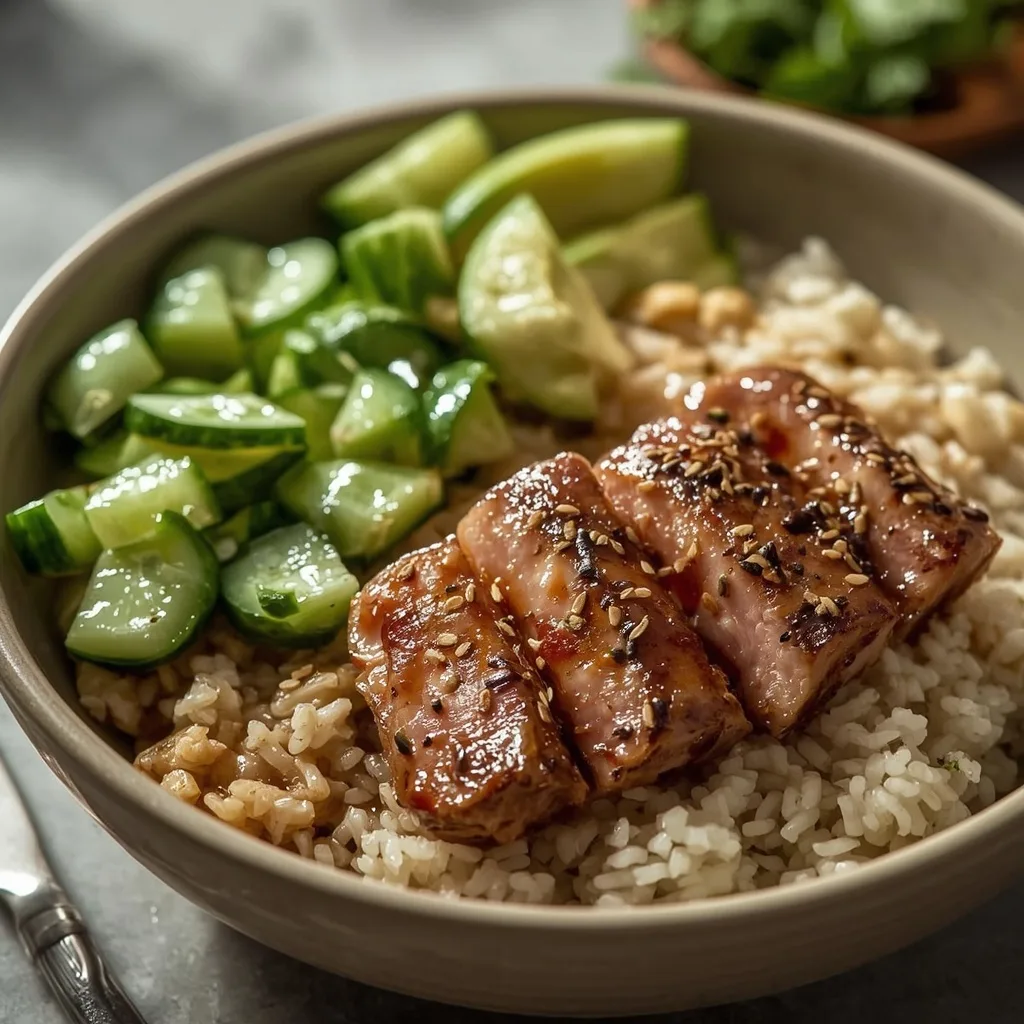
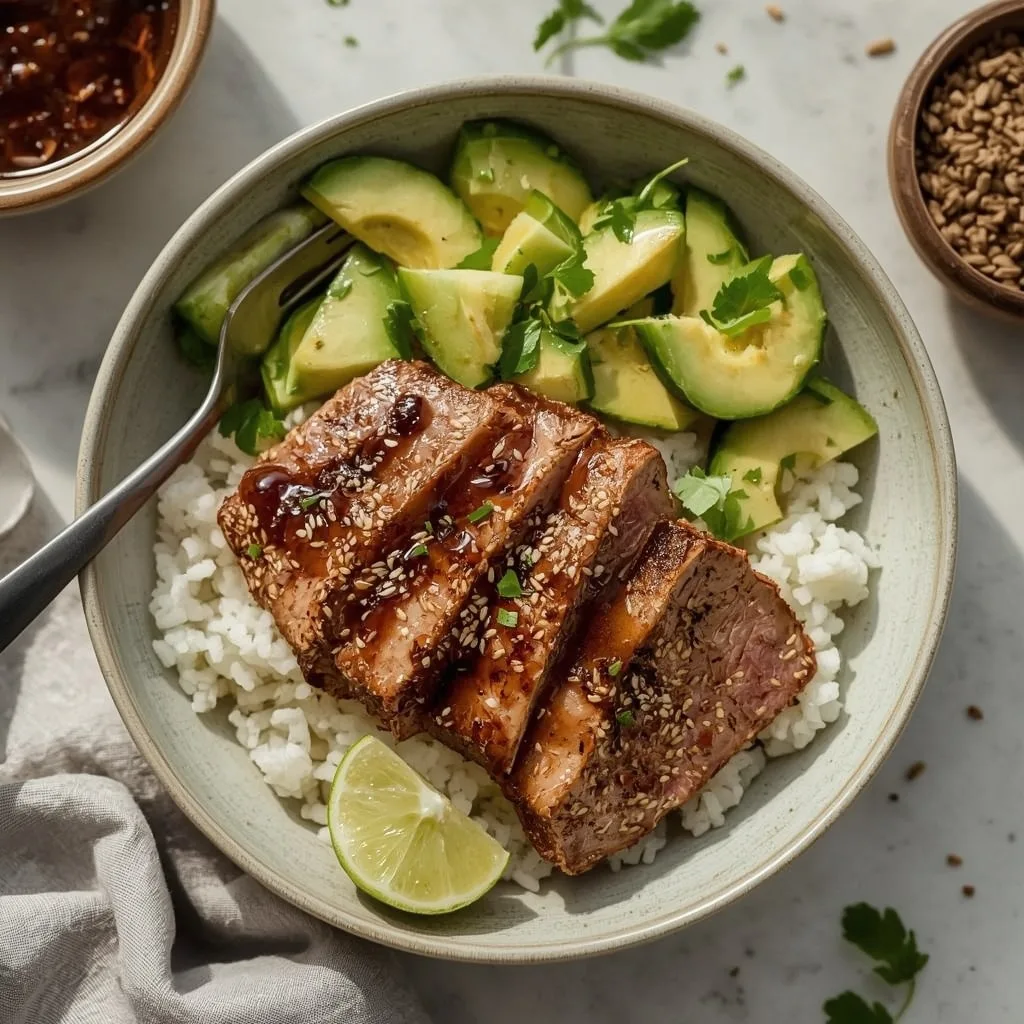
The High Protein Tuna Rice Bowl is my go-to when I want something that feels fresh but still keeps me full for hours. Seared tuna steaks with a nutty sesame crust sit on top of seasoned jasmine rice, paired with a cool cucumber-avocado salad and a tangy soy-ginger dressing.
It takes 35 minutes from start to finish, and I’d call it beginner-friendly even though searing fish can feel intimidating at first. Each serving packs 48g of protein, making it a fantastic choice for lunch or a light dinner that doesn’t weigh you down.
What is High Protein Tuna Rice Bowl?
This bowl brings together the best of Japanese-inspired cooking with the convenience of a one-bowl meal. It’s built on a base of fluffy jasmine rice that gets a quick toss with rice vinegar and salt, giving it that subtle sushi-rice character without any extra effort.
The star, of course, is the tuna. Thick steaks are pressed with toasted sesame seeds and seared briefly in a hot skillet so the outside gets golden and crunchy while the inside stays tender and pink. This is the kind of dish you’d expect at a trendy fusion restaurant, but it’s completely doable in your own kitchen.
What makes this bowl special is how the components work together. The creamy avocado balances the salty soy dressing, the cucumber adds a refreshing crunch, and the warm rice ties everything into one satisfying bite. It’s a balanced meal that doesn’t sacrifice flavor for nutrition.
Why You’ll Love This Recipe
Here is what makes this one stand out from other rice bowls I’ve tried over the years:
- 48g of protein per serving — Tuna steaks are incredibly protein-dense, and this recipe gives you a serious boost that keeps you satisfied well past dinner.
- Ready in 35 minutes — The whole thing comes together faster than takeout delivery, and you control exactly what goes into every bite.
- Restaurant-quality flavors — The sesame crust, tangy dressing, and fresh toppings create a complex taste profile that feels far more expensive than the ingredient list suggests.
- Naturally gluten-free — With low-sodium soy sauce (or tamari if you need it strictly gluten-free), this bowl works for most dietary preferences.
- Perfect for meal prep — You can store the components separately and assemble bowls throughout the week, making weekday lunches effortless.
Ingredients Needed to Make High Protein Tuna Rice Bowl
You probably have most of these pantry staples already. The fresh items are minimal, and the dressing ingredients are things I keep on hand for stir-fry nights anyway.
For the Rice
- 1 1/2 cups uncooked jasmine rice — This long-grain rice stays fluffy and separate when cooked properly. Basmati works too, but jasmine has that subtle floral aroma that pairs beautifully with Asian flavors.
- 1 1/2 cups water — The standard 1:1 ratio for jasmine rice on the stovetop. Don’t be tempted to add more.
- 1 tbsp rice vinegar — This gives the rice that gentle tang reminiscent of sushi rice. Apple cider vinegar works as a substitute in a pinch.
- 1 tsp kosher salt, divided — Half goes into the rice while cooking, half gets stirred in after. Kosher salt dissolves evenly and seasons without that harsh salty bite.
For the Tuna
- 4 (6 oz) tuna steaks, about 1 inch thick — Look for sushi-grade tuna at the fish counter. The steaks should feel firm and look bright red without any brown spots.
- 2 tbsp toasted sesame seeds (black and white mixed) — The combination looks gorgeous and provides that nutty crunch. Buy them already toasted for convenience.
- 1 tbsp avocado oil — Its high smoke point handles the intense heat needed for a proper sear. Grapeseed or canola oil work as alternatives.
For the Salad and Dressing
- 1 large cucumber, seeded and cut into 1/2-inch dice — Seeding prevents the salad from getting watery. English cucumbers have fewer seeds and work great here.
- 1 medium avocado, diced — Choose one that’s ripe but still slightly firm so it holds its shape when tossed with the dressing.
- 1/4 cup green onions, sliced thin — Both the white and green parts add mild onion flavor and a pop of color.
- 2 tbsp low-sodium soy sauce — Regular soy sauce will be too salty with the other dressing ingredients, so stick with low-sodium.
- 1 tbsp fresh lime juice — Bottled lime juice just doesn’t compare. The fresh stuff brightens the whole dish.
- 1 tsp toasted sesame oil — A little goes a long way. This adds that unmistakable nutty aroma.
- 1 tsp honey — Balances the acidity and salt. Maple syrup works as a swap if you’re out of honey.
- 1 tsp fresh ginger, grated — Use a microplane for the finest grate. Pre-minced ginger from a jar won’t have the same punch.
- 1 clove garlic, minced — Freshly minced is essential here. Jarred garlic can taste bitter.
- Optional: 1/4 cup edamame, shelled — This bumps the protein even higher and adds a lovely green pop. I always include it when I have it on hand.
- Fresh cilantro leaves for garnish — Totally optional, but I love the freshness it adds at the end.
Equipment Needed
Nothing fancy required here. These are tools most home cooks already own:
- Medium saucepan with tight-fitting lid — You need that lid to trap steam for perfect rice. A glass lid lets you peek without lifting it.
- Large cast-iron or heavy-bottomed skillet — Cast iron holds heat best for that aggressive sear. Stainless steel works too, but avoid nonstick for the best crust.
- Paper towels — Absolutely essential for patting the tuna dry. This single step makes or breaks your sear.
- Sharp chef’s knife — Slicing the tuna against the grain into thin pieces requires a blade that actually cuts. A dull knife will shred the fish.
- Small bowl for the dressing — Anything works, but a vessel with a spout makes drizzling over assembled bowls much easier.
- Cutting board — Ideally one you don’t mind getting stained by sesame oil and tuna juices.
Instructions to Make High Protein Tuna Rice Bowl
The key is multitasking — getting the rice going first while you prep everything else, then searing the tuna last so it’s still warm when you serve. Here’s the full breakdown.
Step 1: Cook the Jasmine Rice
Rinse the jasmine rice under cold running water until the water runs completely clear, which takes about 1-2 minutes. This removes the excess starch that would otherwise make your rice gummy and clumpy. Combine the rice, water, and 1/2 teaspoon of kosher salt in your medium saucepan over high heat.
Once it reaches a full, rolling boil, reduce the heat to low, cover with the tight-fitting lid, and let it simmer for exactly 15 minutes. Do not lift that lid no matter how curious you get — the steam is doing important work in there. After 15 minutes, turn off the heat and let the rice sit, still covered, for 5 minutes before fluffing with a fork. Stir in the rice vinegar and remaining 1/2 teaspoon of salt, then keep it covered until you’re ready to build the bowls.
Step 2: Make the Soy-Ginger Dressing
Whisk together the soy sauce, lime juice, toasted sesame oil, honey, grated ginger, and minced garlic in a small bowl. Keep whisking until the honey fully dissolves — this takes about 30 seconds of active mixing. Set it aside while you handle the tuna.
Step 3: Prep and Sear the Tuna
Pat the tuna steaks completely dry with paper towels. I cannot overstate how important this is. Any moisture on the surface will create steam instead of a sear, and you’ll end up with gray, sad-looking fish. Press the sesame seeds onto both flat sides of each steak, using gentle but firm pressure so they stick properly. Season lightly with salt if desired — the seeds aren’t salty on their own, so I add about 1/2 teaspoon total across all four steaks.
Heat your cast-iron skillet over high heat until it’s smoking slightly, which takes about 2-3 minutes. Add the avocado oil and swirl to coat the bottom. Carefully place the tuna in the skillet — you should hear a strong sizzle right away. Cook for 1-2 minutes per side for medium-rare, or 3 minutes per side if you prefer well done. Resist the urge to move the steaks while they sear. Let them sit and develop that golden crust.
Step 4: Rest and Slice the Tuna
Transfer the seared tuna to a cutting board and let it rest for 5 minutes. I know it’s tempting to slice right away, but resting allows the juices to redistribute throughout the fish. If you cut too soon, those juices end up on your cutting board instead of in your bowl. After resting, slice against the grain into 1/4-inch thick pieces.
Step 5: Prepare the Cucumber-Avocado Salad
In a medium bowl, combine the diced cucumber, diced avocado, and sliced green onions. Gently toss with 2 tablespoons of the dressing, being careful not to mash the avocado. This salad is delicate, so a light hand is the way to go.
If you’re using edamame, bring a small pot of water to a boil, add it, and cook for 3-4 minutes until tender. Drain and immediately rinse with cold water to stop the cooking. Pat dry.
Step 6: Assemble the Bowls
Divide the seasoned rice among 4 bowls. Top each with an equal portion of the cucumber-avocado salad, the sliced tuna arranged in overlapping pieces, and edamame if using. Drizzle the remaining dressing over everything, then garnish with fresh cilantro if that’s your thing. Serve immediately while the rice is warm and the tuna is still slightly pink in the middle.
What Went Wrong and How I Fixed It
I’ve made this bowl more times than I can count, and I’ve hit every snag along the way. Here’s what tripped me up and how I solved it:
- My rice came out mushy — I was adding extra water out of habit. Once I stuck to the exact 1:1 ratio and stopped lifting the lid during simmering, it came out perfect every time.
- The sesame seeds fell off during cooking — I wasn’t pressing them on firmly enough. Now I apply real pressure and the seeds stay put through the sear.
- My tuna stuck to the pan — The skillet wasn’t hot enough, or I tried to flip too early. Wait for that strong sizzle, then let the fish release naturally before flipping.
- The avocado got mushy in the salad — I was tossing too aggressively. Now I fold the dressing in gently with a spatula, and the avocado stays intact.
- Overcooked tuna that was tough and dry — I left it on the heat too long, thinking it needed more time. For 1-inch thick steaks, 1-2 minutes per side is genuinely enough for medium-rare.
- Dressing was too salty — Regular soy sauce made it borderline inedible. Low-sodium is non-negotiable here.
What Do I Serve With High Protein Tuna Rice Bowl?
This bowl is honestly a full meal on its own, but if you’re feeding a crowd or want extra variety, these pairings work exceptionally well:
- Miso soup — A warm, savory starter that complements the fresh flavors without overwhelming them.
- Edamame with flaky salt — More soybeans never hurt anyone. They add extra protein and make the meal feel even more indulgent.
- Pickled ginger and wasabi — If you’re craving that sushi-bar experience, serve these on the side for DIY customization.
- Crispy spring rolls — The crunch contrasts nicely with the tender tuna and creamy avocado.
- Iced green tea or jasmine tea — Something light and slightly bitter helps balance the richness of the sesame oil and avocado.
- Light sesame or ginger cookies for dessert — A subtle sweet ending that nods to the flavors in the main dish.
Pro Tips to Make Perfect High Protein Tuna Rice Bowl
These are the little things that separate a good bowl from a spectacular one. I’ve learned all of these through trial and error:
- Dry the tuna until truly dry — Use multiple paper towels and pat each side several times. Moisture is the enemy of a good sear.
- Let the pan get properly hot — Wait until you see the first wisp of smoke before adding oil. Too-low heat means the sesame seeds will burn before the fish cooks.
- Slice against the grain — Tuna steaks have visible muscle fibers. Cutting perpendicular to them makes each piece tender instead of chewy.
- Taste the rice before assembling — Adjust the vinegar and salt to your preference. Rice that’s perfectly seasoned elevates everything on top of it.
- Keep the salad separate for meal prep — If making ahead, store the cucumber-avocado salad separately to prevent sogginess and avocado browning.
- Add sriracha or chili flakes if you like heat — The dish is balanced without spice, but a drizzle of sriracha takes it to a whole new level if you’re into that.
- Warm your bowls before serving — Pop them in a low oven or microwave for 30 seconds. It keeps the rice warm longer while you eat.
Variations of High Protein Tuna Rice Bowl
Once you master the base recipe, the possibilities are endless. These are my favorite ways to switch things up:
- Spicy tuna version — Mix the sliced tuna with a spoonful of sriracha and a drizzle of sesame oil before arranging on the rice. It adds heat and a glossy, appetizing finish.
- Quinoa swap — Replace jasmine rice with cooked quinoa for an extra 8g of protein per cup and a nuttier flavor profile.
- Mango addition — Toss diced ripe mango into the cucumber salad for a sweet contrast to the salty soy dressing. It’s unexpectedly wonderful.
- Even more protein — Add a soft-boiled egg on top. The runny yolk mixes with the rice and dressing, making everything richer and adding another 6g of protein.
- Crunchy topping version — Sprinkle fried shallots or crushed nori sheets over the finished bowl for texture and that umami ocean flavor.
- Warm rice, cold toppings contrast — Keep the rice hot and the salad well-chilled. That temperature difference makes every bite feel exciting.
How Do I Store High Protein Tuna Rice Bowl Leftovers?
Storage is straightforward as long as you follow one golden rule: keep everything separate. Here’s how I handle leftovers:
- Separate airtight containers — Store the rice, tuna, and cucumber-avocado salad in their own containers. The rice stays good for 3-4 days, the tuna for 2 days, and the salad for just 1 day before the avocado starts browning.
- Refrigerate within 2 hours — Don’t leave assembled bowls sitting out. The fish and avocado are perishable and need cold temperatures promptly.
- Freeze the rice for up to 3 months — Store cooked jasmine rice in a sealed freezer bag. It reheats beautifully in the microwave.
- Freeze cooked tuna for up to 2 months — The texture will change slightly upon thawing, so this works better for flaked tuna over salads than for beautiful seared slices.
- Keep dressing on the side — If you’re storing dressing separately, it keeps in the fridge for up to a week in a sealed container.
How Do I Reheat High Protein Tuna Rice Bowl Leftovers?
Reheating isn’t complicated, but each component needs different treatment:
- Microwave for the rice — Cover with a damp paper towel and heat for 1-2 minutes until steaming hot. The moisture prevents it from drying out.
- Skillet for the tuna — Heat gently over medium heat for 1-2 minutes per side, just until warm. Be careful not to overcook it further or it’ll become tough.
- Enjoy the salad cold — The cucumber-avocado salad is best served cold and doesn’t need reheating at all. It actually tastes better chilled.
- Poke-style option — Skip reheating the tuna entirely and enjoy it cold over the rice. This works surprisingly well and keeps the fish’s texture intact.
FAQs
Can I use canned tuna instead of fresh tuna steaks for High Protein Tuna Rice Bowl?
You absolutely can, but the dish becomes something different entirely. Canned tuna won’t have that beautiful seared crust or steak-like texture, though it still delivers protein. If you go this route, skip the searing step and just mix the canned tuna with a bit of the dressing before adding to the bowl.
How long does High Protein Tuna Rice Bowl last in the fridge?
The assembled bowl is best eaten immediately, but stored separately, the components have different timelines. Rice lasts 3-4 days, tuna lasts 2 days, and the cucumber-avocado salad is best enjoyed within 1 day.
Is it safe to eat tuna that’s still pink in the middle?
Yes, as long as you buy sushi-grade tuna from a reputable fish counter. The recipe calls for a medium-rare finish at 125°F internal temperature, which is safe when the fish is properly handled and stored.
Can I make High Protein Tuna Rice Bowl ahead of time?
Prepping components ahead is fine, but I don’t recommend fully assembling the bowls more than a few hours before eating. Store the parts separately and assemble just before serving for the best texture and flavor.
What if I don’t like sesame seeds?
Skip the crust entirely and just season the tuna with salt and pepper before searing. You’ll lose that nutty crunch, but the fish still tastes great with the soy-ginger dressing.
Can I use brown rice instead of jasmine rice?
Brown rice works nutritionally but requires a different cooking time and more water. Use your preferred brown rice method and season it with the rice vinegar and salt the same way when it’s done.
Try These Recipes
Final Words
This High Protein Tuna Rice Bowl has become a regular in my weekly rotation because it hits every mark — quick enough for weeknights, impressive enough for company, and packed with 48g of protein per serving. The combination of textures and flavors keeps me coming back week after week.
Whether you’re new to cooking fish or a seasoned home cook, this recipe is forgiving enough to build confidence while still feeling special. Give it a try and let me know how it turns out in your kitchen.
PrintHigh Protein Tuna Rice Bowl
A quick, satisfying bowl featuring seared tuna steaks over seasoned rice with a vibrant cucumber and avocado salad. The tuna is crusted with sesame seeds for a nutty crunch, while a tangy soy-ginger dressing ties everything together, delivering a protein-packed meal that’s perfect for lunch or a light dinner.
- Prep Time: 20
- Cook Time: 15
- Total Time: 35
- Yield: 4 1x
- Category: Main Course
- Method: Stovetop
- Cuisine: Asian Fusion
Ingredients
- 1 1/2 cups uncooked jasmine rice
- 1 1/2 cups water
- 1 tbsp rice vinegar
- 1 tsp kosher salt, divided
- 4 (6 oz) tuna steaks (about 1 inch thick)
- 2 tbsp toasted sesame seeds (black and white mixed)
- 1 tbsp avocado oil (or high smoke point oil)
- 1 large cucumber, seeded and cut into 1/2-inch dice (about 1 cup)
- 1 medium avocado, diced
- 1/4 cup green onions, sliced thin (white and green parts)
- 2 tbsp low-sodium soy sauce
- 1 tbsp fresh lime juice
- 1 tsp toasted sesame oil
- 1 tsp honey
- 1 tsp fresh ginger, grated
- 1 clove garlic, minced
- Optional: 1/4 cup edamame, shelled (for extra protein)
- Fresh cilantro leaves for garnish (optional)
Instructions
- Rinse the jasmine rice under cold running water until the water runs clear (about 1-2 minutes). This removes excess starch and prevents the rice from becoming gummy. Combine the rice, water, and 1/2 teaspoon of the kosher salt in a medium saucepan over high heat.
- Bring the rice to a full, rolling boil, then reduce the heat to low, cover with a tight-fitting lid, and simmer for 15 minutes. Do not lift the lid during cooking. Turn off the heat and let the rice sit, covered, for 5 minutes. Then fluff with a fork and stir in the rice vinegar and remaining 1/2 teaspoon of salt. Keep covered until ready to serve.
- While the rice cooks, prepare the dressing. In a small bowl, whisk together the soy sauce, lime juice, sesame oil, honey, grated ginger, and minced garlic until honey is dissolved. Set aside.
- Pat the tuna steaks completely dry with paper towels. This is crucial for a good sear. Press the sesame seeds onto both flat sides of each steak, applying gentle but firm pressure so the seeds adhere well. Season lightly with salt and pepper if desired (note: sesame seeds can be salt-free, so add 1/2 tsp salt if you want more seasoning).
- Heat a large cast-iron or heavy-bottomed skillet over high heat until it’s smoking slightly (about 2-3 minutes). Add the avocado oil, swirling to coat the pan. Carefully place the tuna steaks in the skillet (you should hear a strong sizzle). Cook for 1-2 minutes per side, depending on thickness, for a medium-rare finish (internal temperature of 125°F / 52°C). For well done, cook 3 minutes per side until internal temp reaches 140°F / 60°C. Avoid moving the steaks while searing to get a golden crust.
- Transfer the seared tuna to a cutting board and let it rest for 5 minutes. Resting allows the juices to redistribute, keeping the fish moist. After resting, slice against the grain into 1/4-inch thick slices.
- Meanwhile, prepare the fresh toppings: in a medium bowl, combine the diced cucumber, diced avocado, and sliced green onions. Gently toss with 2 tablespoons of the dressing, being careful not to mash the avocado.
- For the optional edamame: if using, bring a small pot of water to a boil, add the edamame, and cook for 3-4 minutes until tender. Drain and immediately rinse with cold water to stop cooking. Pat dry.
- To assemble the bowls: Divide the seasoned rice among 4 bowls. Top each bowl with an equal portion of the cucumber-avocado salad, sliced tuna (arrange overlapping pieces), and edamame if using. Drizzle the remaining dressing over the top, and garnish with fresh cilantro, if desired. Tips: For a warm rice bowl, serve immediately. For meal prep, store components separately and reheat the rice and tuna before assembling.
- Serving and seasoning check: Taste the bowl before serving. The soy sauce and rice vinegar should give a balanced salty-sour tang. If you prefer a spicier kick, add a drizzle of sriracha or a sprinkle of chili flakes. Adjust the dressing with an extra squeeze of lime if desired.
Notes
Storage: Store leftovers in an airtight container in the refrigerator for up to 2 days. Keep the rice, tuna, and cucumber-avocado salad in separate containers to avoid sogginess. The rice will keep for 3-4 days, the tuna for 2 days, and the salad for 1 day (avocado may brown). Freezing: Cooked tuna can be frozen for up to 2 months, but the texture will change upon thawing; it’s best enjoyed fresh. Store cooked rice in the freezer for up to 3 months in a sealed bag. Reheating: For the rice, microwave with a damp paper towel for 1-2 minutes until hot. For the tuna, reheat gently in a skillet over medium heat for 1-2 minutes per side, being careful not to overcook; or enjoy cold in a poke-style bowl. The salad is best served cold and does not need reheating.
Nutrition
- Calories: 540
- Sugar: 4g
- Sodium: 720mg
- Saturated Fat: 3g
- Carbohydrates: 51g
- Fiber: 5g
- Protein: 48g
- Cholesterol: 60mg
Keywords: tuna rice bowl, high protein bowl, seared tuna, sesame tuna, rice bowl recipe, healthy dinner, quick lunch, Asian fusion, fish recipe, protein meal prep