
The first time I made this High Protein Korean BBQ Chicken Sandwich, I was shocked at how quickly it came together. Between the sweet-spicy gochujang marinade and those quick-pickled vegetables, it tastes like something from a trendy Korean restaurant — but it all happens in one skillet.
You’ll need about 35 minutes from start to finish, and this one sits comfortably at an intermediate level. Each sandwich packs 43g of protein, making it a genuinely filling dinner that doesn’t weigh you down. The only slightly finicky part is getting that deep golden crust on the chicken without burning the marinade.
What is High Protein Korean BBQ Chicken Sandwich?
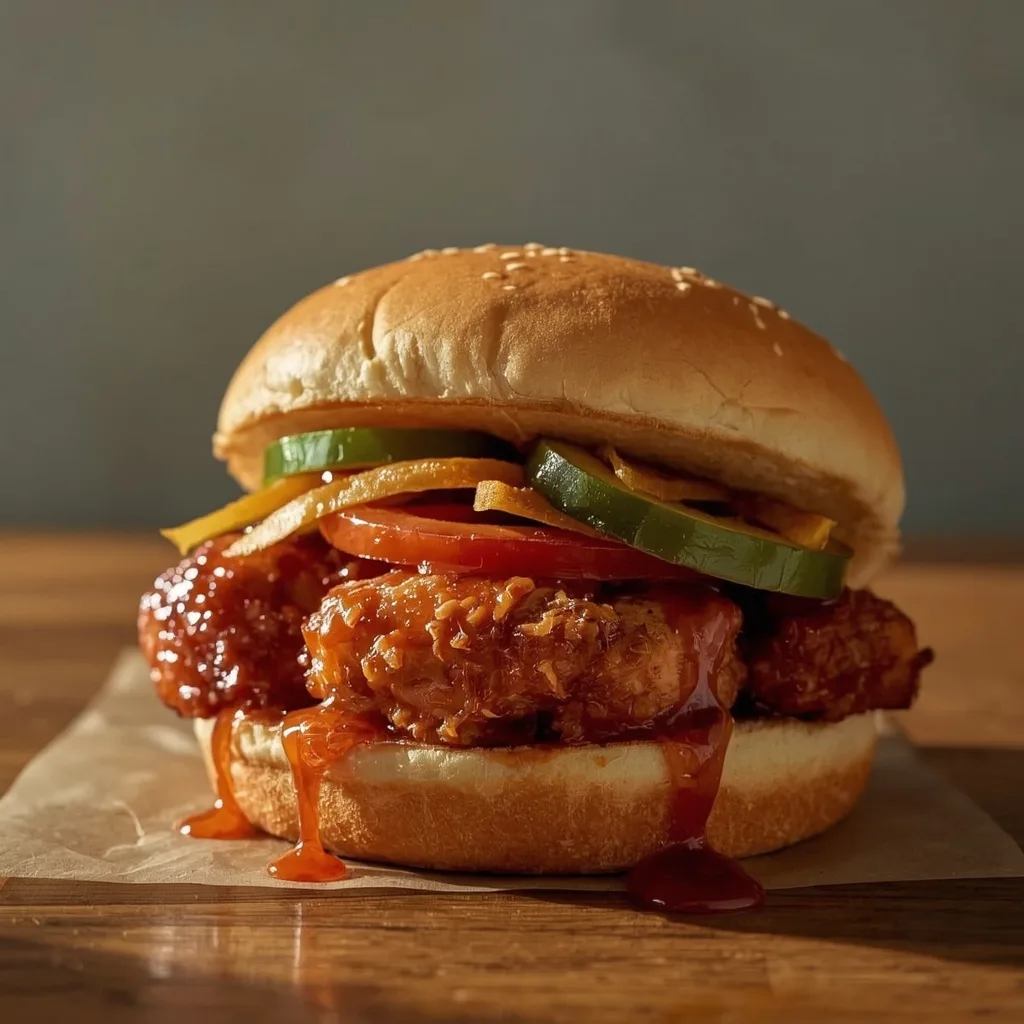
This sandwich takes Korean barbecue flavors and stacks them between soft brioche buns. The star is boneless chicken thighs marinated in a bold mixture of soy sauce, gochujang, honey, and sesame oil, then seared until caramelized. It’s a fusion of Korean cooking techniques with the familiar comfort of an American sandwich.
Korean BBQ traditionally uses beef — think bulgogi or galbi — but chicken thighs work beautifully here because they stay juicy under high heat. The gochujang brings that signature fermented chili depth, while the honey balances it with sweetness. Toasted buns, spicy mayo, and crunchy pickled veggies complete the picture.
What makes it special is the layering of textures and temperatures. Warm, savory chicken meets cold, tangy vegetables, all held together by that creamy gochujang mayo. Every bite hits a different note, which is why it never gets boring.
Why You’ll Love This Recipe
There are plenty of reasons to add this one to your regular rotation. Here is what stands out most:
- Protein-heavy — At 43g per serving, this sandwich will keep you satisfied for hours. The chicken thighs deliver serious staying power without feeling heavy.
- Bold flavors — The marinade hits sweet, savory, spicy, and umami all at once. This is not a timid sandwich; it makes its presence known.
- Quick pickles — You don’t need to wait days for these vegetables. Fifteen minutes in a vinegar-sugar-salt bath transforms them into bright, crunchy toppings.
- One skillet meal — The chicken cooks entirely in a cast-iron pan. Less cleanup, more eating.
- Make-ahead friendly — Marinate the chicken overnight, prep the pickles in advance, and dinner comes together in under 20 minutes on busy nights.
- Crowd-pleaser — Even people who usually skip spicy food tend to love this one. The heat is present but not overwhelming.
Ingredients Needed to Make High Protein Korean BBQ Chicken Sandwich
The ingredient list looks long at first glance, but most items are pantry staples once you stock Korean pantry basics. Here is everything broken down by category.
Chicken and Marinade
- 2 lb boneless, skinless chicken thighs (about 8 thighs) — Thighs are essential here. They stay moist during searing, unlike lean chicken breast which dries out quickly. Don’t swap for breast unless you’re willing to risk chewy meat.
- 1/2 cup low-sodium soy sauce — This acts as the salty base for the marinade. Low-sodium matters because the gochujang and pickles also bring salt to the table.
- 1/4 cup gochujang (Korean chili paste) — The heart of Korean BBQ flavor. Fermented, slightly sweet, and spicy, it adds that deep red color and complex heat you can’t replicate with regular hot sauce.
- 3 tbsp honey — Balances the heat and helps create that beautiful caramelized crust during cooking.
- 2 tbsp rice vinegar — Brightens the marinade with a gentle tang. It also helps tenderize the meat slightly.
- 1 tbsp toasted sesame oil — Adds that unmistakable nutty aroma that defines Korean cooking. Toasted, not regular, is key here.
- 1 tbsp fresh ginger, grated — Brings warmth and zing. Fresh ginger is noticeably better than ground, so take the extra minute to grate it.
- 4 cloves garlic, minced — Garlic is non-negotiable in this marinade. It gives the sauce its savory backbone.
Spicy Gochujang Mayo
- 1/2 cup mayonnaise — The creamy counterpoint to all that spice. Use a good quality mayo — it matters here.
- 1 tbsp gochujang — Extra chili paste for the sauce, because the mayo needs its own hit of that fermented pepper flavor.
- 1 tbsp rice vinegar — Thins the mayo slightly and adds acidity to cut through the richness.
- 1 tsp honey — A touch of sweetness rounds out the heat in the mayo.
Quick-Pickled Vegetables
- 1 cup shredded red cabbage — Crunchy, colorful, and slightly sweet. Red cabbage holds up well to the pickling liquid without turning mushy.
- 1 medium carrot, julienned — Adds sweetness and a satisfying snap. Julienne means thin matchsticks — aim for roughly 2-inch strips.
- 1/2 cup cucumber, thinly sliced — Cooling and refreshing, it cuts through the rich chicken. English cucumbers work best because they’re less watery.
- 1/4 cup rice vinegar — The base of the pickling liquid. Rice vinegar is milder than white vinegar, which keeps the vegetables fresh-tasting rather than harsh.
- 1 tbsp sugar — Balances the vinegar’s acidity. Don’t skip it — the sweetness is what makes these pickles addictive.
- 1/2 tsp kosher salt — Draws moisture out of the vegetables and seasons them thoroughly.
For Assembly
- 4 brioche buns (or other soft sandwich buns) — Brioche is ideal because it’s pillowy enough to hold all the fillings but sturdy enough not to fall apart. Any soft sandwich bun works in a pinch.
- 2 tbsp unsalted butter, softened — For toasting the buns. Room-temperature butter spreads more evenly than cold.
- 1 tbsp toasted sesame seeds — A final sprinkle that adds nuttiness and visual appeal. Toast them briefly in a dry pan if they’re not already toasted.
- 2 green onions, thinly sliced — Fresh, sharp, and slightly oniony. They add a pop of color and brightness on top.
Equipment Needed
You probably have most of these already in your kitchen. Here’s what you’ll want on hand:
- Large cast-iron or heavy-bottomed skillet — This holds heat evenly and helps develop that deep golden crust on the chicken. A stainless steel pan works too; just watch for sticking.
- Instant-read thermometer — Non-negotiable for hitting exactly 165°F / 74°C. Guessing leaves you with either dry or undercooked chicken.
- Medium mixing bowls — You’ll need several for the marinade, the mayo, and the pickles. Glass or stainless steel both work fine.
- Large zip-top bag or shallow dish — For marinating the chicken. A bag allows the marinade to coat every surface evenly.
- Cutting board and sharp knife — For slicing the chicken against the grain after resting. A dull knife will shred the meat instead of slicing it cleanly.
Instructions to Make High Protein Korean BBQ Chicken Sandwich
This recipe moves quickly once you start cooking, so read through the steps first. Here is the full breakdown from marinade to assembled sandwich.
Step 1: Make the Marinade
Whisk together soy sauce, 1/4 cup gochujang, honey, rice vinegar, sesame oil, ginger, and garlic in a medium bowl until smooth. Reserve 1/4 cup of this mixture in a separate container — you’ll use it for basting later. Keep the rest for the chicken.
Step 2: Marinate the Chicken
Place the chicken thighs in a large zip-top bag or shallow dish. Pour the remaining marinade over the chicken and ensure each piece is fully coated. Seal the bag, squeeze out excess air, and refrigerate for at least 30 minutes. You can go up to 2 hours for deeper flavor, but don’t exceed that — the acid will start breaking down the meat’s texture, leaving it mushy.
Step 3: Prepare the Gochujang Mayo
While the chicken marinates, combine mayonnaise, the extra gochujang, rice vinegar, and honey in a small bowl. Whisk until completely smooth and refrigerate until assembly time. This sauce thins out as it sits, so give it a quick stir before spreading.
Step 4: Make the Quick Pickles
Mix rice vinegar, sugar, and salt in a bowl until the sugar and salt dissolve completely. Add the shredded cabbage, julienned carrot, and cucumber slices, then toss to coat. Let everything sit at room temperature for at least 15 minutes, tossing occasionally. Drain well before serving — soggy pickles will make the bun fall apart.
Step 5: Cook the Chicken
Remove the chicken from the marinade and let excess drip off. Discard the used marinade — it has raw chicken juices in it. Heat 1 tablespoon of neutral oil (like canola) in a large cast-iron skillet over medium-high heat until it shimmers. Add the chicken thighs in a single layer; work in batches if your pan isn’t big enough to avoid overcrowding.
Cook for 5-6 minutes without moving the thighs. This lets a deep golden crust develop. Flip, then cook another 5-6 minutes. During the last 2 minutes, brush the reserved marinade over the chicken. The chicken is done at an internal temperature of 165°F / 74°C.
Step 6: Rest and Slice the Chicken
Transfer the cooked chicken to a cutting board and let it rest for 5 full minutes. This isn’t optional — resting redistributes the juices so they don’t run out when you slice. Cut the chicken into 1/2-inch thick strips against the grain.
Step 7: Toast the Buns
While the chicken rests, butter the cut sides of each brioche bun with the softened butter. Heat a clean skillet over medium heat and toast the buns cut-side down for 1-2 minutes, until golden and fragrant. This step adds texture and prevents the buns from getting soggy.
Step 8: Assemble the Sandwiches
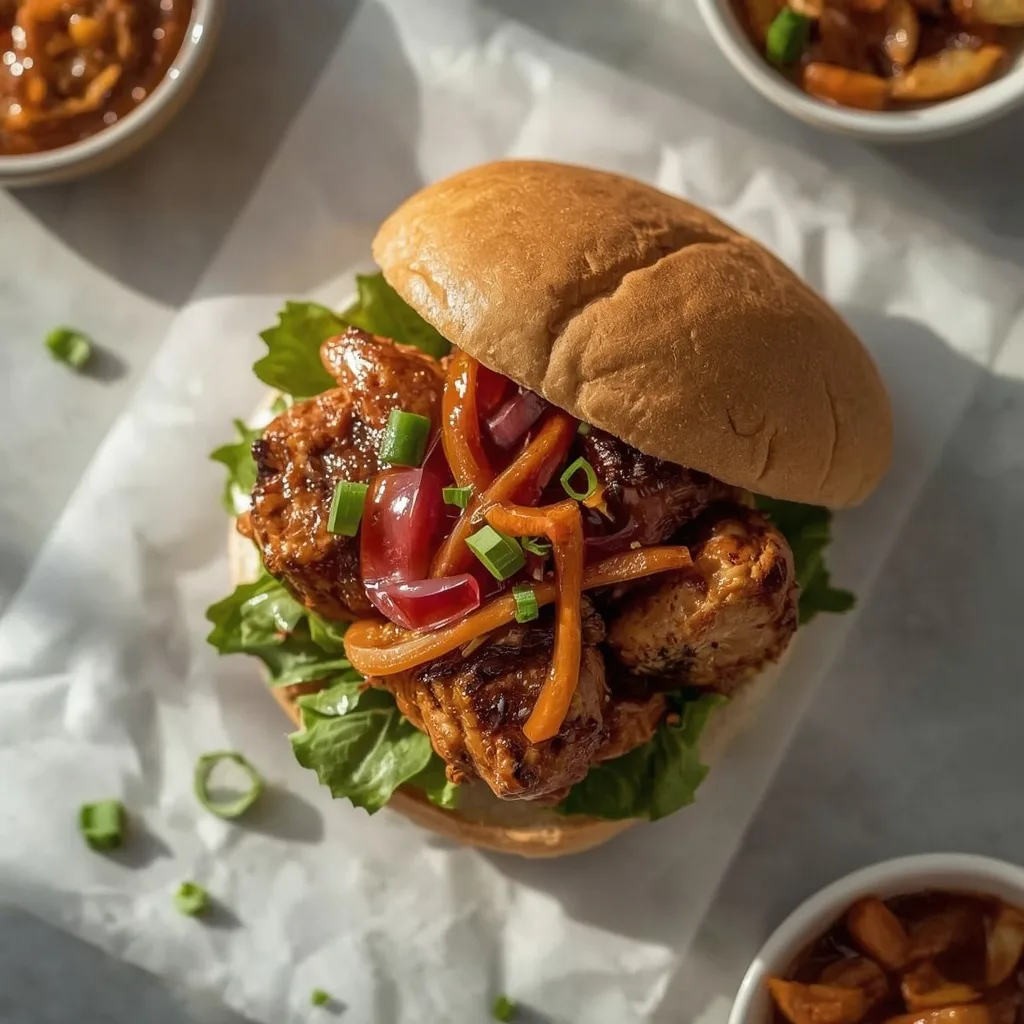
Spread a generous amount of gochujang mayo on both the top and bottom of each bun. Place about 1/2 lb of sliced chicken on the bottom bun. Top with a handful of drained pickled vegetables, then sprinkle with sesame seeds and sliced green onions. Place the top bun on and press gently. Serve immediately while the chicken is warm and the bun is crisp.
What Went Wrong and How I Fixed It
Here are the mistakes I made the first few times so you don’t have to.
- Burning the marinade — The honey and gochujang caramelize and burn quickly. I now keep the heat at medium rather than high, and I watch the chicken closely during the last 2 minutes.
- Dry chicken — I once skipped a marinade because I was in a hurry, and the results were mediocre. Skipping the 30-minute soak means less flavor and slightly tougher meat. Give it the full time.
- Soggy buns — Overloading the pickles without draining them first turns the brioche into a mess. Squeeze out excess liquid before piling them on.
- Overcrowded pan — Cooking too many thighs at once steamed them instead of searing them. Work in batches if needed — the crust is worth the extra few minutes.
- Raw marinade contamination — I accidentally used the leftover marinade as a sauce once. Don’t do that. Always reserve a clean portion before adding raw chicken.
What Do I Serve With High Protein Korean BBQ Chicken Sandwich?
This sandwich is filling on its own, but a few sides round out the meal nicely. Here are some options:
- Kimchi fried rice — The spicy, tangy rice pairs naturally with the sandwich’s Korean flavors. It’s a hearty side that keeps everything on theme.
- Roasted broccoli with sesame — Charred broccoli tossed with sesame oil and seeds gives you a vegetable side that matches the savory umami notes.
- Asian cucumber salad — Thinly sliced cucumbers with rice vinegar, garlic, and chili flakes offer a cool, refreshing contrast to the warm chicken.
- Simple miso soup — A light, warming bowl of miso broth balances the sandwich’s richness. Quick to make and always comforting.
- Sweet potato fries — The sweetness of the fries echoes the honey in the marinade. Bake or air-fry them so they stay crispy.
- Lemon sorbet for dessert — After all that spicy, savory flavor, something cold and citrusy cleanses the palate perfectly.
Pro Tips to Make Perfect High Protein Korean BBQ Chicken Sandwich
These tips come from trial and error. Follow them and your results will be consistently excellent.
- Pat the chicken before cooking — After removing it from the marinade, pat each thigh dry with paper towels. This helps the surface sear properly instead of steaming.
- Slice against the grain — Cutting perpendicular to the muscle fibers shortens them, making each bite more tender. Look for the lines in the meat and cut across them.
- Double up on the pickles — These vegetables are so good you might want to make an extra batch. They keep in the fridge for up to a week, so there’s no waste.
- Let the meat rest fully — Those 5 minutes of resting are crucial for juicy chicken. Cutting early releases all those flavorful juices onto the cutting board instead of your bun.
- Warm the buns gently — Don’t toast them on high heat or they’ll burn before the inside gets warm. Medium heat gives you an even golden crust without the charred bitterness.
- Boost the protein further — Add a fried or over-easy egg on top for an extra 6-7g of protein. The runny yolk also adds another layer of richness.
Variations of High Protein Korean BBQ Chicken Sandwich
This recipe is flexible once you know what you’re doing. Here are some twists that work well:
- Spicy Bulgogi-Style Beef Version — Swap the chicken for thinly sliced sirloin and reduce the cooking time to 2-3 minutes per side. Beef cooks faster, so keep an eye on it.
- Low-Carb Lettuce Wrap — Skip the buns and serve the chicken and vegetables in butter lettuce cups. It’s the same flavor with fewer carbs and makes it keto-friendly.
- Cheesy Korean BBQ Melt — Add a slice of provolone or mozzarella during the last minute of cooking so it melts over the chicken. Goodness, the cheese pulls stretch for days.
- Chicken Tender Strips Version — Cut the thighs into strips before marinating and cook for just 3-4 minutes total. This works great for kids or for filling wraps.
- Grilled Version — Cook the marinated thighs on a hot grill for extra smoky flavor. You won’t get the sticky glaze the same way, so brush with the reserved marinade during the last 2 minutes.
- Extra Protein Boost — Add a scoop of unflavored collagen peptides to the marinade — it dissolves unnoticed and adds about 10g more protein per serving. You’re welcome.
How Do I Store High Protein Korean BBQ Chicken Sandwich Leftovers?
Proper storage keeps leftovers flavorful for days. Here is what has worked for me:
- Separate components — Store the chicken and pickled vegetables in separate airtight containers. The buns should be kept separate too, or they’ll go stale.
- Refrigerate within 2 hours — Don’t leave the sandwich sitting at room temperature. Bacteria grows quickly in that window after cooking.
- Airtight containers only — The chicken will dry out if you don’t seal it properly. Airtight containers keep moisture in for up to 3 days.
- Freeze the marinated chicken — Uncooked marinated thighs freeze beautifully for up to 2 months. Thaw overnight in the fridge before cooking. The cooked chicken also freezes, but it’s best reheated gently.
- Keep pickles separate — The pickles stay fresh for about a week in the fridge, but they’ll get softer over time. They’re best used within 3 days for that crunch.
How Do I Reheat High Protein Korean BBQ Chicken Sandwich Leftovers?
Reheating properly makes a huge difference. Here are the methods that work:
- Skillet method — Place the chicken in a skillet over medium heat with a splash of water or extra sauce. Cover and heat for 3-4 minutes until hot throughout. This is the best method for maintaining texture.
- Oven method — Preheat the oven to 350°F / 175°C. Warm the chicken for 8-10 minutes, but skip the buns in the oven — toast them fresh instead.
- Microwave method — In a pinch, microwave the chicken on medium power for 60-90 seconds, covered with a damp paper towel to keep it moist. It works, but the texture will suffer slightly.
FAQs
Can I freeze High Protein Korean BBQ Chicken Sandwich?
Yes, the marinated chicken freezes exceptionally well for up to 2 months. Thaw it overnight in the refrigerator before cooking. The assembled sandwich doesn’t freeze well because the pickles get soggy, so freeze components separately.
How long does High Protein Korean BBQ Chicken Sandwich last in the fridge?
The cooked chicken and pickled vegetables keep for 3 days in airtight containers in the refrigerator. The buns are best eaten fresh, but you can toast them again if they’re not too stale.
Can I use chicken breast instead of thighs?
You can, but the results won’t be the same. Chicken breast dries out quickly in the hot skillet since there’s less fat. If you must use breast, reduce the cooking time and watch the internal temperature carefully.
Is gochujang very spicy?
Gochujang has a mild-to-medium heat level with sweetness underneath. It’s not like habanero hot sauce — it’s more of a warm, building heat. If you’re sensitive, use a little less in the marinade and mayo.
What can I substitute for gochujang?
A combination of sriracha and a pinch of miso paste works in a pinch, though the flavor won’t be identical. Gochujang is fermented, so it has a depth that regular hot sauce can’t replicate. It’s worth ordering online if you can’t find it locally.
Can I make this chicken sandwich spicier?
Absolutely. Add a teaspoon of gochujang extra to the marinade or sprinkle sliced chili peppers on top. Your heat tolerance is the only limit.
Try These Recipes
Final Words
This High Protein Korean BBQ Chicken Sandwich has earned a permanent spot in my dinner rotation. It hits that perfect balance of sweet, spicy, savory, and tangy while delivering serious protein. The quick pickles and gochujang mayo make it feel special without extra effort.
Give it a try on a weeknight when you want something bold but manageable. I think you’ll find yourself coming back to it, just like I do.
PrintHigh Protein Korean BBQ Chicken Sandwich
This sandwich features tender, juicy chicken thighs marinated in a boldly sweet and savory Korean BBQ sauce, then seared to perfection and piled onto a toasted bun with quick-pickled vegetables and a spicy gochujang mayo. Each bite delivers a satisfying crunch, a kick of heat, and over 40 grams of protein for a truly filling meal.
- Prep Time: 20
- Cook Time: 15
- Total Time: 35
- Yield: 4 1x
- Category: Main Course
- Method: Stovetop
- Cuisine: Korean
Ingredients
- 2 lb boneless, skinless chicken thighs (about 8 thighs)
- 1/2 cup low-sodium soy sauce
- 1/4 cup gochujang (Korean chili paste)
- 3 tbsp honey
- 2 tbsp rice vinegar
- 1 tbsp toasted sesame oil
- 1 tbsp fresh ginger, grated
- 4 cloves garlic, minced
- 1/2 cup mayonnaise
- 1 tbsp gochujang (extra for mayo)
- 1 tbsp rice vinegar (extra for mayo)
- 1 tsp honey (extra for mayo)
- 1 cup shredded red cabbage
- 1 medium carrot, julienned
- 1/2 cup cucumber, thinly sliced
- 1/4 cup rice vinegar (for pickling)
- 1 tbsp sugar
- 1/2 tsp kosher salt
- 4 brioche buns (or other soft sandwich buns)
- 2 tbsp unsalted butter, softened (for toasting buns)
- 1 tbsp toasted sesame seeds (for garnish)
- 2 green onions, thinly sliced (for garnish)
Instructions
- In a medium bowl, whisk together soy sauce, 1/4 cup gochujang, 3 tbsp honey, 2 tbsp rice vinegar, sesame oil, ginger, and garlic until smooth. Reserve 1/4 cup of the marinade for later basting; keep separate.
- Place chicken thighs in a large zip-top bag or shallow dish. Pour the remaining marinade over the chicken, ensuring each piece is well coated. Seal and refrigerate for at least 30 minutes, or up to 2 hours for deeper flavor. Do not marinate longer than 2 hours as the acid can break down the meat texture.
- While chicken marinates, make the gochujang mayo: In a small bowl, combine mayonnaise, 1 tbsp gochujang, 1 tbsp rice vinegar, and 1 tsp honey. Whisk until smooth. Refrigerate until ready to use.
- Make quick pickles: In a small bowl, combine 1/4 cup rice vinegar, 1 tbsp sugar, and 1/2 tsp salt. Stir until dissolved. Add shredded cabbage, julienned carrot, and cucumber slices. Toss to coat. Let sit at room temperature for at least 15 minutes, tossing occasionally. Drain before serving.
- Remove chicken from marinade, letting excess drip off. Discard the used marinade.
- Heat a large cast-iron or heavy-bottomed skillet over medium-high heat. Add 1 tbsp of neutral oil (such as canola) and swirl to coat. Once the oil shimmers, add chicken thighs in a single layer, being careful not to overcrowd. Work in batches if needed.
- Cook chicken for 5-6 minutes without moving, until a deep golden-brown crust forms. Flip and cook another 5-6 minutes, brushing with the reserved 1/4 cup marinade during the last 2 minutes of cooking. The chicken is done when it reaches an internal temperature of 165°F / 74°C on an instant-read thermometer. Transfer to a cutting board and let rest for 5 minutes before slicing.
- While chicken rests, butter the cut sides of each brioche bun with the softened butter. In a clean skillet over medium heat, toast buns cut-side down for 1-2 minutes, until golden and toasted. Set aside.
- Slice the rested chicken into 1/2-inch thick strips against the grain.
- To assemble, spread a generous amount of gochujang mayo on both the top and bottom of each bun. Place a portion of sliced chicken (about 1/2 lb per sandwich) on the bottom bun.
- Top with a generous handful of drained pickled vegetables, then sprinkle with toasted sesame seeds and sliced green onions.
- Place the top bun on and press gently. Serve immediately while the chicken is still warm and the bun is toasted. Enjoy!
Notes
Storage: Store leftover chicken and pickled vegetables separately in airtight containers for up to 3 days in the refrigerator. To reheat chicken, place in a skillet over medium heat with a splash of water or extra sauce, cover, and heat through until hot (about 3-4 minutes). Toast buns fresh. Freezing: The uncooked marinated chicken can be frozen for up to 2 months. Thaw overnight in the refrigerator before cooking. The cooked chicken also freezes, but best texture if reheated gently. Pickles are best fresh but can be kept up to 1 week.
Nutrition
- Calories: 685
- Sugar: 20g
- Sodium: 1450mg
- Unsaturated Fat: 9g
- Carbohydrates: 45g
- Fiber: 3g
- Protein: 43g
- Cholesterol: 155mg
Keywords: Korean BBQ chicken sandwich, high protein sandwich, gochujang chicken, Korean chicken sandwich, spicy chicken sandwich, chicken thigh recipe, Korean BBQ, high protein meal, weeknight dinner, Korean fusion, pickled vegetables sandwich