
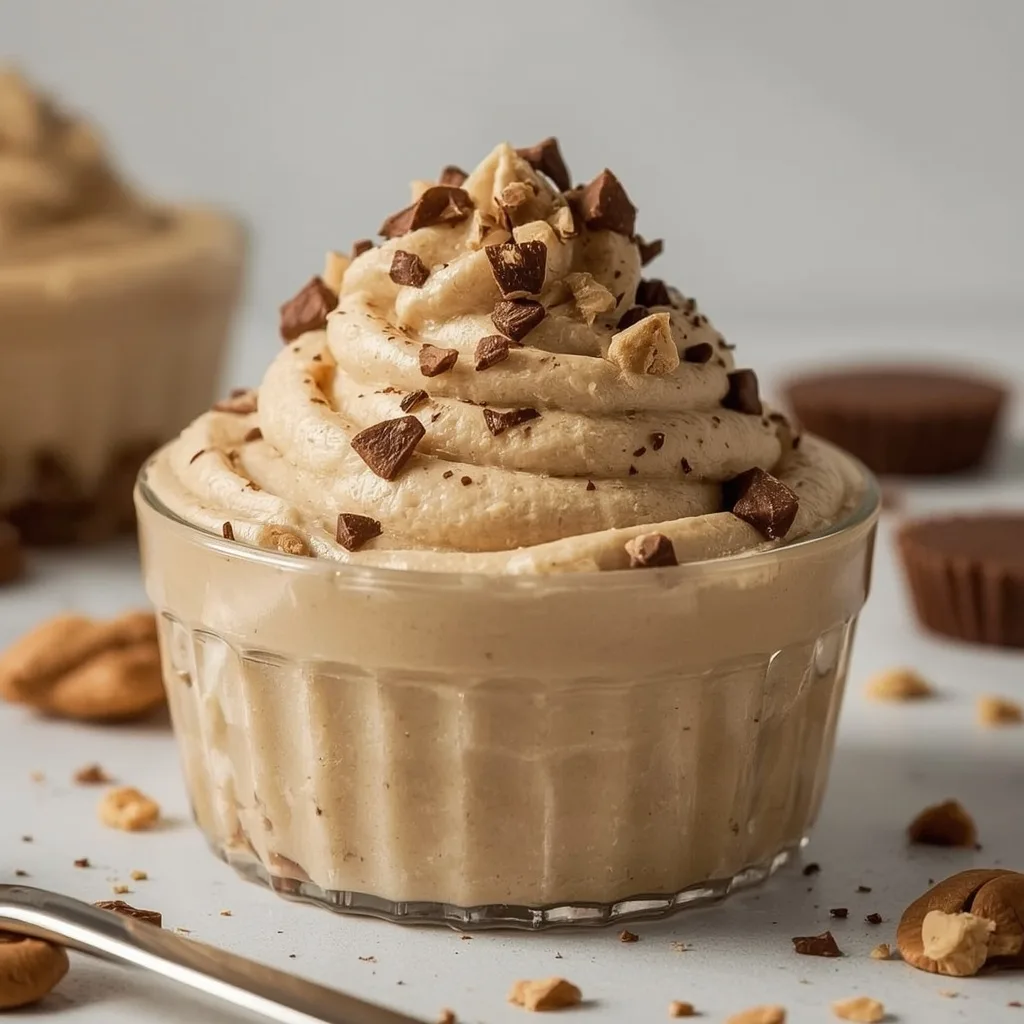
High Protein Peanut Butter Cup Cottage Cheese Mousse is a creamy, no-cook dessert that tastes like a peanut butter cup but comes together in 10 minutes with a blender. It combines cottage cheese, Greek yogurt, creamy peanut butter, and a touch of melted dark chocolate for a light, airy texture that still feels indulgent.
This is a beginner-friendly recipe with no stovetop work and no baking. It’s best for a quick weeknight treat, meal-prep snack, or a lighter dessert after dinner. Each serving packs 21g of protein, so it actually keeps you full. The one step worth slow-ing down for is drizzling in the melted chocolate — add it too fast and it can seize.
What is High Protein Peanut Butter Cup Cottage Cheese Mousse?
It’s a no-cook mousse made by blending cottage cheese, Greek yogurt, peanut butter, sweetener, vanilla, and salt until completely smooth, then folding in melted sugar-free dark chocolate. The result tastes like a chocolate peanut butter cup, but the texture is closer to a light cheesecake filling than a dense pudding. Serve it chilled as a dessert or a high-protein snack. It’s an American-style treat that fits low-sugar eating without tasting like a compromise.
Why You’ll Love This Recipe
Here’s what keeps this one on repeat in my kitchen.
- Seriously creamy — Blending cottage cheese until the curds vanish gives you a silky base without any cream cheese or heavy whipping cream.
- Protein that actually satisfies — 21g per serving from cottage cheese, Greek yogurt, and peanut butter means you won’t be hunting the pantry an hour later.
- No baking, no stove — The whole thing happens in a blender, so there’s no oven to preheat and barely any cleanup.
- Low sugar, big flavor — Sugar-free chocolate and powdered erythritol keep it at 6g of sugar while still tasting like dessert.
- Meal-prep friendly — Portion it into jars and it’s ready to grab for up to 3 days.
Ingredients Needed to Make High Protein Peanut Butter Cup Cottage Cheese Mousse
You probably have most of these already, and the swaps are easy if you don’t.
The Creamy Base
- Full-fat cottage cheese (4% milkfat) — 2 cups; this is the backbone of the mousse, so use full-fat for the creamiest texture. Low-fat works but comes out slightly thinner.
- Full-fat plain Greek yogurt — 1/2 cup; adds tang and extra protein. Plain, not vanilla, so you control the sweetness.
- Creamy peanut butter (no added sugar) — 1/2 cup; the star flavor. Natural peanut butter blends smoother than the stiff, stabilized kind.
Sweetener and Flavor
- Powdered erythritol or powdered monk fruit sweetener — 2 tbsp, or to taste. Powdered dissolves cleanly; granulated can leave a gritty feel.
- Vanilla extract — 1 tsp; rounds out the peanut butter and chocolate.
- Kosher salt — 1/4 tsp; a small amount makes the chocolate and peanut flavors pop.
Chocolate and Toppings
- Sugar-free dark chocolate chips — 1/4 cup, melted and slightly cooled. Lily’s is my go-to.
- Chopped roasted peanuts — 2 tbsp, optional topping for crunch.
- Unflavored or vanilla protein powder — 1 scoop, optional, if you want to push the protein even higher.
Equipment Needed
Nothing fancy here — a blender does most of the work.
- Blender or food processor — Essential for getting the cottage cheese completely smooth. A high-speed blender gives the best result.
- Measuring cups and spoons — For accuracy, especially with the sweetener and salt.
- Microwave-safe bowl — For melting the chocolate chips in short bursts.
- 4 small serving dishes or jars — For portioning and chilling.
- Spatula — For scraping down the blender sides so no curds sneak through.
Instructions to Make High Protein Peanut Butter Cup Cottage Cheese Mousse
The whole process is blending and chilling, but the order matters.
Step 1: Blend the Base
Combine the cottage cheese, Greek yogurt, peanut butter, sweetener, vanilla, and salt in your blender. Blend on high for 60-90 seconds, stopping to scrape down the sides as needed. You want zero visible curds — if it still looks grainy, keep going.
Step 2: Add Protein Powder (Optional)
If you’re using protein powder, add it now and blend another 15-20 seconds. Taste and adjust the sweetness one teaspoon at a time. Do this before the chocolate goes in, since the chocolate shifts the flavor.
Step 3: Melt the Chocolate
Melt the chocolate chips in 20-second microwave intervals, stirring between each, until smooth — or use a double boiler. Let it cool slightly before adding it. Warm chocolate hitting the cold mixture can seize into little flecks.
Step 4: Stream In the Chocolate
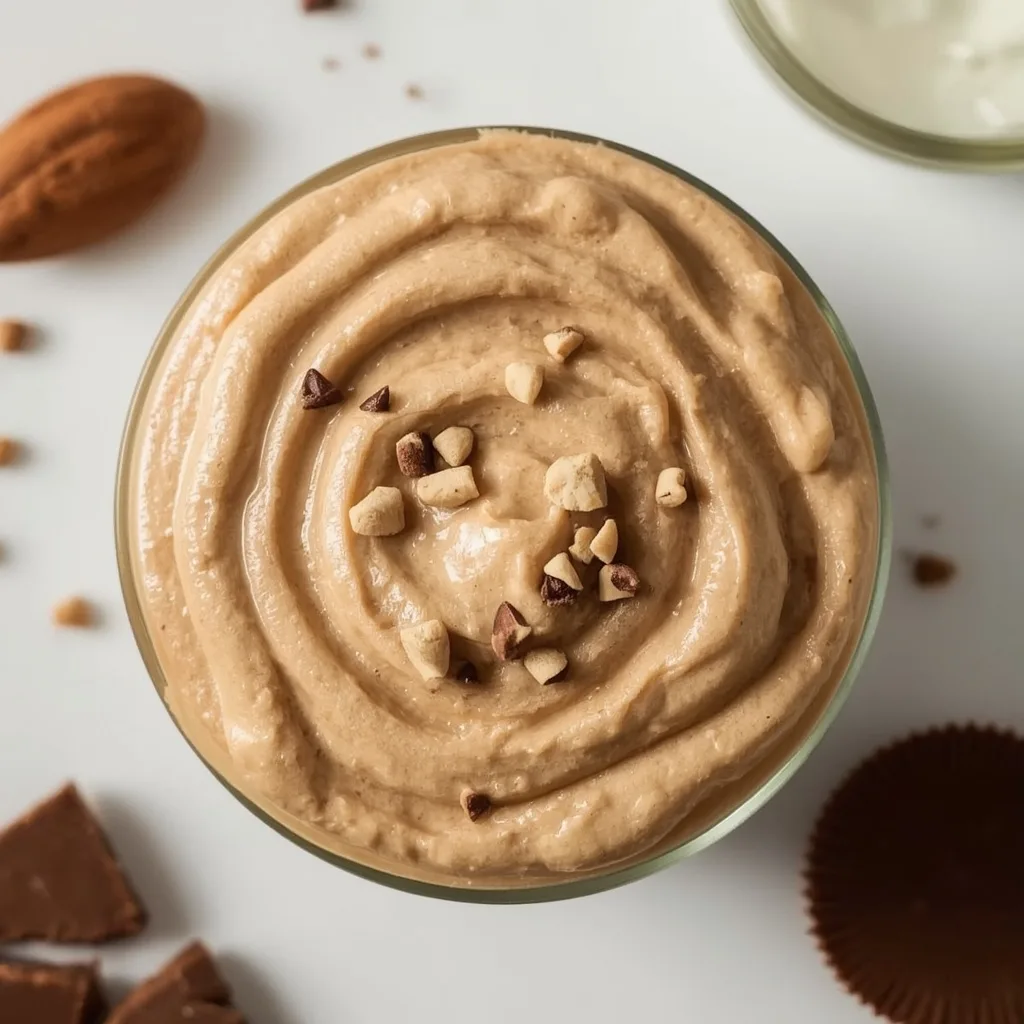
With the blender running on low, slowly drizzle in the melted chocolate until fully incorporated. The mixture should turn a light brown with a glossy sheen. Scrape down once more to catch any chocolate clinging to the sides.
Step 5: Chill
Spoon the mousse into 4 small jars, cover with plastic wrap, and refrigerate at least 1 hour. This lets the flavors meld and the texture firm up slightly.
Step 6: Serve
Top with chopped peanuts, extra chocolate chips, or a small dollop of whipped cream before serving. Serve chilled, and store leftovers in an airtight container for up to 3 days.
What Went Wrong and How I Fixed It
Here’s what tripped me up the first few times.
- Gritty texture — Under-blending leaves curds behind. Fix it by blending a full 90 seconds and scraping down twice.
- Chocolate seized into specks — Adding chocolate that was still too warm caused this. Let it cool for a couple minutes first, then drizzle slowly.
- Too thin to set — Low-fat cottage cheese and watery yogurt are usually the culprits. Stick with full-fat, or add 1 tbsp melted coconut oil or 1/2 tsp gelatin dissolved in water.
- Flat, dull flavor — Skipping the salt or under-sweetening hides the peanut butter. Add the full 1/4 tsp salt and taste before chilling.
- Separation after a day — If it looks watery on day two, give it a quick stir. Natural peanut butter separates more than stabilized brands.
What Do I Serve With High Protein Peanut Butter Cup Cottage Cheese Mousse?
It stands on its own, but a few pairings make it feel like a full dessert.
- Fresh strawberries — The tartness cuts the richness and adds a nice contrast.
- A drizzle of melted chocolate — An extra layer on top makes it more of a showpiece.
- Graham cracker crumbs — Sprinkled over the top, they mimic a peanut butter cup crust.
- Cold brew coffee — The bitterness balances the sweet, nutty mousse.
- Banana slices — Peanut butter and banana is a classic pairing for a reason.
- Crushed pretzels — A salty crunch against the creamy base works surprisingly well.
Pro Tips to Make Perfect High Protein Peanut Butter Cup Cottage Cheese Mousse
These small adjustments make a noticeable difference.
- Blend longer than you think — A full 90 seconds is the difference between silky and slightly gritty mousse.
- Use a powdered sweetener — Granular sweetener won’t dissolve fully and leaves a sandy mouthfeel.
- Room-temperature peanut butter — Stir it well first so it blends evenly instead of clumping.
- Cool the chocolate to lukewarm — Warm is fine; hot will seize. Aim for slightly warm to the touch.
- Add protein powder for extra protein — A scoop of unflavored or vanilla powder bumps the protein up without changing the flavor much.
- Chill at least an hour — Skipping this leaves it loose. The rest also deepens the peanut butter flavor.
- Taste before chilling — Once it’s cold, the sweetness reads slightly lower, so adjust a touch higher than you think.
Variations of High Protein Peanut Butter Cup Cottage Cheese Mousse
Once you’ve nailed the base, these twists are easy.
- Chocolate-first version — Swap half the peanut butter for extra melted chocolate for a deeper cocoa flavor.
- Add protein powder — A full scoop of vanilla protein powder pushes the protein past 25g per serving.
- Espresso twist — Add 1/2 tsp instant espresso powder to the base for a mocha edge.
- Frozen bites — Spoon into a silicone mold and freeze for a firmer, ice-cream-like treat.
- Dairy-free option — Use dairy-free yogurt and skip the cottage cheese, though protein will drop.
- Crunchy peanut butter swap — Use crunchy peanut butter instead of creamy for added texture.
How Do I Store High Protein Peanut Butter Cup Cottage Cheese Mousse Leftovers?
Storage is simple, but a couple of details matter.
- Airtight container — Keep it sealed in the fridge for up to 3 days.
- Plastic wrap on the surface — Press it directly onto the mousse to prevent a skin from forming.
- Individual jars — Portioning ahead makes grab-and-go easier and limits air exposure.
- Keep it cold — Leave it out no more than 30 minutes before serving.
- Skip the freezer — Freezing alters the texture and makes it grainy once thawed.
How Do I Reheat High Protein Peanut Butter Cup Cottage Cheese Mousse Leftovers?
Honestly, this one is best eaten cold — but here’s how to handle it if needed.
- Microwave — 10-15 seconds on low just to take the chill off. Watch closely; it thins quickly if overheated.
- Room temperature — Let it sit out 10-15 minutes for a softer, spoonable texture without any heat.
- Stovetop — Not recommended; gentle heat over low can still cause the mousse to separate.
- Air fryer — Skip it entirely, since the fan and dry heat will ruin the texture.
FAQs
Can I freeze High Protein Peanut Butter Cup Cottage Cheese Mousse?
I don’t recommend it. Freezing changes the texture and makes it grainy once thawed. If you want a frozen version, portion it into a silicone mold and eat it straight from the freezer as a firmer bite.
How long does High Protein Peanut Butter Cup Cottage Cheese Mousse last in the fridge?
Up to 3 days in an airtight container. Press plastic wrap directly onto the surface to prevent a skin from forming, and give it a stir before serving.
Can I use low-fat cottage cheese instead of full-fat?
You can, but the mousse comes out thinner and slightly less creamy. If that’s all you have, add 1 tbsp melted coconut oil or 1/2 tsp gelatin dissolved in water to firm it up.
Do I have to use a sweetener, or can I use regular sugar?
Regular sugar works, but it adds carbs and calories. Powdered erythritol or monk fruit dissolves best — granulated versions can leave a gritty texture in the finished mousse.
Can I make this without a blender?
A food processor works just as well. A hand mixer won’t get the cottage cheese smooth enough, so you’ll end up with a slightly grainy result.
How much protein is in one serving?
Each serving has 21g of protein, or more if you add a scoop of protein powder. Most of it comes from the cottage cheese, Greek yogurt, and peanut butter.
Try These Recipes
Final Words
This High Protein Peanut Butter Cup Cottage Cheese Mousse is proof that a dessert can be creamy, low-sugar, and genuinely filling at the same time. It takes 10 minutes and a blender, and the payoff is a jar of something that tastes a lot richer than it is. Give it a try this week — I think it’ll earn a permanent spot in your fridge.
PrintHigh Protein Peanut Butter Cup Cottage Cheese Mousse
A creamy, dreamy mousse that tastes like a peanut butter cup but is packed with protein from cottage cheese and Greek yogurt. The texture is light and airy, with a rich peanut butter flavor and a hint of chocolate. Perfect for a guilt-free dessert or snack.
- Prep Time: 10
- Total Time: 10
- Yield: 4 1x
- Category: Dessert
- Method: No-Cook
- Cuisine: American
Ingredients
- 2 cups full-fat cottage cheese (4% milkfat)
- 1/2 cup full-fat plain Greek yogurt
- 1/2 cup creamy peanut butter (no added sugar)
- 2 tbsp powdered erythritol or powdered monk fruit sweetener (or to taste)
- 1 tsp vanilla extract
- 1/4 tsp kosher salt
- 1/4 cup sugar-free dark chocolate chips (such as Lily’s), melted and slightly cooled
- Optional topping: 2 tbsp chopped roasted peanuts
- Optional: 1 scoop unflavored or vanilla protein powder (for extra protein)
Instructions
- In a blender or food processor, combine the cottage cheese, Greek yogurt, peanut butter, sweetener, vanilla extract, and salt. Blend on high speed for 60-90 seconds, stopping to scrape down the sides as needed, until the mixture is completely smooth and creamy. There should be no visible curds remaining.
- If using protein powder, add it now and blend for another 15-20 seconds until fully incorporated. Taste the mixture and adjust sweetness if desired by adding more sweetener, 1 teaspoon at a time.
- Melt the chocolate chips in a microwave-safe bowl in 20-second intervals, stirring between each, until smooth. Alternatively, melt over a double boiler. Let cool slightly so it doesn’t seize when added to the cold mixture.
- With the blender running on low speed, slowly drizzle in the melted chocolate until fully incorporated. The mixture should be a light brown color with a smooth, glossy texture.
- Spoon the mousse into 4 small serving dishes or jars. Cover with plastic wrap and refrigerate for at least 1 hour to allow the flavors to meld and the mousse to firm up slightly.
- Before serving, top with chopped peanuts if desired. For a prettier presentation, you can also add a small dollop of whipped cream or a few extra chocolate chips.
- Serve chilled. Store leftovers in an airtight container in the refrigerator for up to 3 days.
Notes
Storage: Keep refrigerated in an airtight container for up to 3 days. Freezing is not recommended as it will alter the texture. For a firmer mousse, you can add 1 tablespoon of melted coconut oil or 1/2 teaspoon of gelatin dissolved in water. To make it vegan, use dairy-free yogurt and skip the cottage cheese, but note that protein content will be lower. For extra protein, add a scoop of protein powder as noted.
Nutrition
- Calories: 330
- Sugar: 6g
- Sodium: 480mg
- Saturated Fat: 7g
- Carbohydrates: 12g
- Fiber: 3g
- Protein: 21g
- Cholesterol: 25mg
Keywords: high protein mousse, peanut butter cup mousse, cottage cheese dessert, healthy dessert, no cook dessert, protein packed, Greek yogurt mousse, sugar free dessert, keto dessert, low carb dessert, chocolate peanut butter, easy dessert